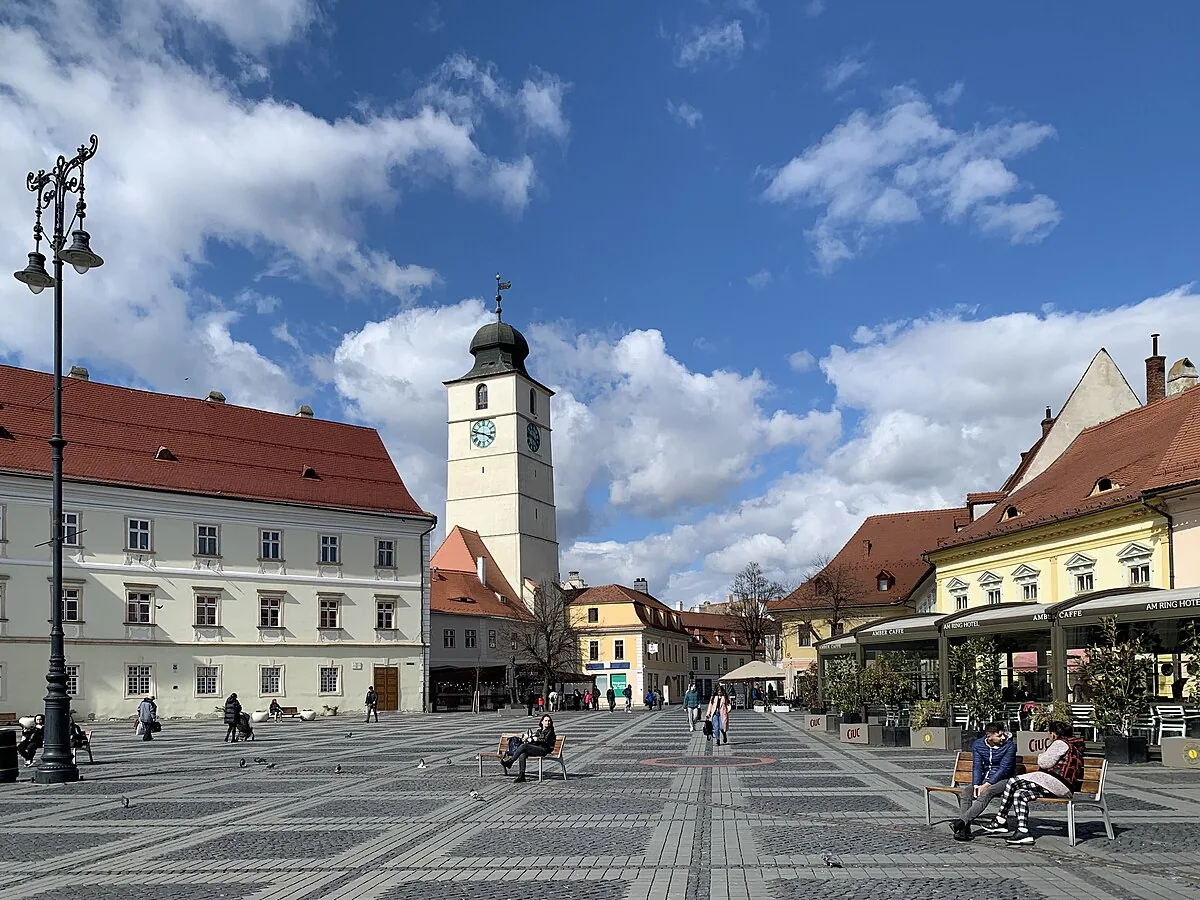
Thousands of attic windows shaped like human eyes watch your every move from the rooftops of Sibiu, ensuring that the city's medieval grain stores never stop breathing.
About Piața Mare
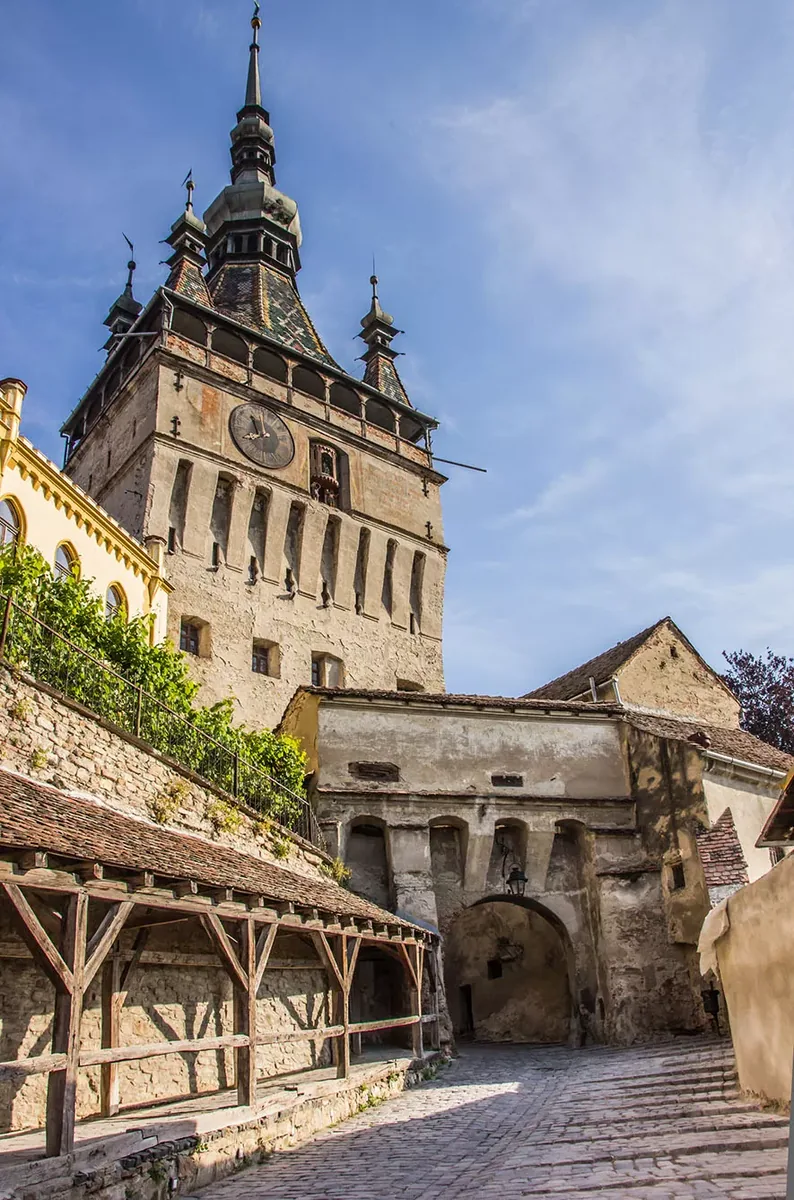
First mentioned in documents in 1411 as a grain market, the square became the epicenter of the Saxon community's resistance against the Ottoman threat. The Council Tower, which separates the Great Square from the Lesser Square, was built in the 13th century but collapsed in 1585, only to be rebuilt with the iconic roofline seen today. Baron Samuel von Brukenthal, the governor of Transylvania, added his magnificent palace in the late 1700s to house one of Europe’s finest art collections. The square has functioned as a prison, a marketplace, and a gallows, witnessing the rise and fall of empires while maintaining its rigid, Germanic geometry.
What Piața Mare actually is
Hundreds of heavy lidded eyes watch you from the sloping tile roofs of Sibiu, a silent architectural gaze that has defined this square for centuries. Piața Mare, or the Great Square, acts as the sprawling heart of a city that once stood as the wealthiest and most powerful of the seven walled citadels of Transylvania. This vast limestone expanse is a stage where medieval gravity meets Baroque elegance, anchored by the Brukenthal Palace and the imposing Jesuit Church. The scale of the square is deceptive; while it is like a grand open theater, the narrow passages fanning out from its corners hint at a secretive, defensive past. Every footstep on the worn stones echoes against facades of pale ochre and sage green, making every visitor feel like a protagonist in a centuries-old drama.
Germanic settlers known as the Transylvanian
Germanic settlers known as the Transylvanian Saxons laid the foundations of this square in the late 14th century, intending it to be a hub of commerce and civic justice. By the 15th century, it was the site of every major public event, from busy markets to the somber spectacles of public executions. The 'eyes' in the roofs are actually specialized ventilation slats designed to cool the attics where merchants stored vast quantities of grain and cured meats, protecting the city's wealth from rot. During the 18th century, the square underwent a transformation as the Habsburgs asserted their influence, introducing the soaring Baroque lines of the Roman Catholic Church. Sibiu’s inclusion as a European Capital of Culture in 2007 spurred a meticulous restoration that stripped away decades of grime, revealing the vibrant, multi-layered history that had been hiding under the dust of the communist era.
Standing in the center of the square during the blue hour, The way the 'eyes' on the roofs seem to glow as lights flicker on in the attic windows. The environment carries the scent of fresh pretzels from the corner bakeries and the faint, dry smell of sun-warmed stone. Leading is the pigeons circling the iron fountain, their wings flapping in sharp contrast to the stillness of the Brukenthal’s statues. A sense of the temperature drop as the shadows of the Council Tower stretch across the cobbles, signaling the evening transition. The first thing you register is the sound of a distant cello being played in one of the vaulted entryways, the notes lingering longer than they should in the open air. People generally look straight ahead at the grand palaces, but you should notice the heavy iron rings embedded in the ground, remnants of the days when livestock and merchant carts were tethered here. You discover a smooth, slightly uneven texture of the paving stones under your soles, a tactile reminder of the millions of people who have crossed this space since the Middle Ages. Starting with the way the light catches the intricate wrought-iron signs of the old guilds, still hanging proudly over massive oak doors.
Sibiu is a major rail hub,
Sibiu is a major rail hub, and the square is a pleasant ten-minute walk from the central station through the old pedestrian streets. Travelers usually arrive via the winding roads of the Olt Valley, finding the square easily by following the spire of the Lutheran Cathedral which towers just behind the Great Square's northern flank.
The Experience
A quiet hum of conversation rises from the cafe terraces, but the square is large enough that you can always find a pocket of silence near the Jesuit Church. You register the way the wind whistles through the narrow 'Goldsmiths' Passage,' carrying the sound of church bells from the cathedral. You come across a weight of history in the shadows of the Council Tower, where the stone stays cool even in the heat of August. The tiny, intricate carvings on the wooden doors of the merchant houses, each one a unique mark of a long-dead craftsman. What lingers with you is the morning mist clinging to the 'eyes' in the roofs, making the buildings look like they are slowly waking up from a long sleep.
Why It Matters
Piața Mare is the architectural soul of Transylvania’s Saxon heritage. It represents a unique cultural synthesis where German urban planning, Austrian Baroque, and Romanian vitality intersect. It remains one of the largest and best-preserved medieval squares in Europe, functioning as a living archive of civic life over six centuries.
Why Visit
See this square to experience a place that truly looks back at you. While other European plazas feel like static museum sets, Piața Mare possesses a surreal, watchful energy. It is the only place where you can stand at the crossroads of three empires while being observed by a skyline that feels remarkably alive.
✦ Photo Gallery
Best Season
🌤 December is transformative, as the square hosts one of Europe’s most intimate Christmas markets, but May offers the best light for photographers and the freshest air coming off the Cindrel Mountains.
Quick Facts
Best time to visit
December is transformative, as the square hosts one of Europe’s most intimate Christmas markets, but May offers the best light for photographers and the freshest air coming off the Cindrel Mountains.
Getting there
In Sibiu, Romania; reach Sibiu first, then continue to the site.
What's nearby
Transfăgărășan, Sarmizegetusa Regia and Salina Turda are also in the area.
Location
Sibiu, Romania
Type
attraction
Coordinates
45.7966°, 24.1517°
Insider Tips
- 1
Climb to the top of the Council Tower at noon for a bird's-eye view of the square’s geometric layout and the red-tiled roofs stretching toward the mountains.
- 2
Look for the 'Liar's Bridge' nearby; locals say the iron structure will collapse if you tell a lie while standing on it.
- 3
Find the small, unmarked passage leading to the 'Lesser Square' to see the transition from grand administrative space to the intimate artisan quarters.
- 4
Sample the local 'Sibiu Salami' and telemea cheese from the small specialty shops tucked into the corners of the square for an authentic taste of the region.