Six million kilograms of dynamite were used to blast this ninety-kilometer asphalt scar through the Carpathian granite, a road built for a war that never came.
About Transfăgărășan
The Transfăgărășan, also known as DN7C, remains a monument to the megalomania of the Cold War era. Work began with the 155th Regiment of the Romanian Land Forces, who labored in conditions so extreme that many suffered from permanent frostbite. The project was technically difficult because of the volatile nature of the shale and limestone, requiring engineers to design massive retaining walls that still hold back the mountain today. After the 1989 revolution, the road shifted from a strategic asset to a tourist magnet. In recent years, it gained global fame after international automotive shows declared it the finest driving road on the planet, leading to a surge in motorcycle and sports car enthusiasts from across Europe.
What Transfăgărășan actually is
High in the Făgăraș Mountains, the Transfăgărășan highway unfurls like a discarded grey ribbon across the jagged peaks of the Southern Carpathians. This is not merely a road; it is a brutalist engineering feat that forces the landscape into submission through a series of hair-raising hairpin turns and dark, weeping tunnels. Connecting the regions of Transylvania and Wallachia, the route climbs to an altitude of 2,042 meters, making it one of the highest paved roads in Romania. Around the summit is thin and biting, even when the valleys below are sweltering in summer heat. It is a place of dramatic contrasts, where the roar of performance engines competes with the distant bells of sheep flocks grazing on near-vertical slopes.
“High in the Făgăraș Mountains, the Transfăgărășan highway unfurls like a discarded grey ribbon across the jagged peaks of the Southern Carpathians.”
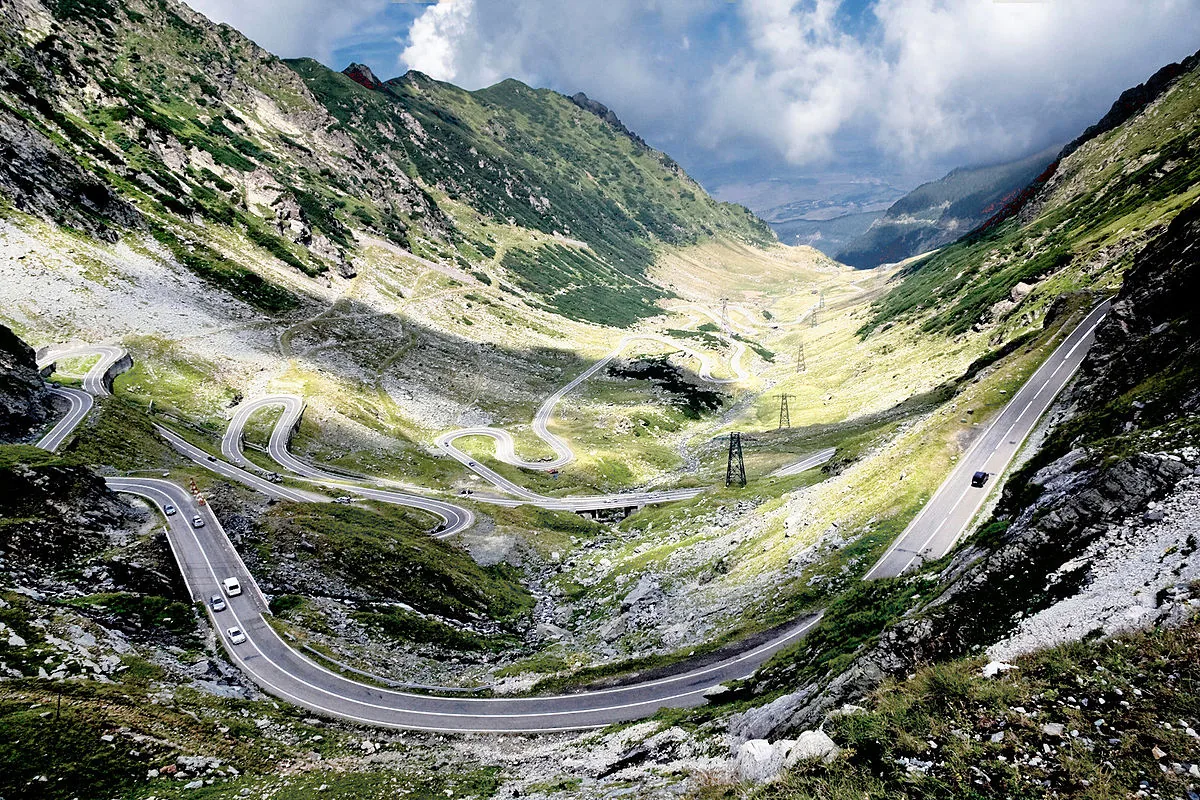
Transfăgărășan, Romania
of the road, 1970
Nicolae Ceaușescu ordered the construction of the road in 1970, fearing a Soviet invasion similar to the one in Czechoslovakia. He wanted a strategic military route that could move troops across the mountains quickly, regardless of the terrain's difficulty. The human cost was immense; officially, 40 soldiers died during the four years of construction, though unofficial estimates suggest hundreds perished due to the liberal use of over six million kilograms of dynamite. The road was carved out of solid rock by young recruits who faced freezing temperatures and constant rockslides. When it opened in 1974, it was hailed as a socialist triumph, though its military utility was soon overshadowed by its reputation as one of the most spectacular driving routes in the world.
The road is typically accessed
The road is typically accessed from the north via Sibiu or from the south via Pitești. It is vital to remember that the high-altitude section between Bâlea Cascadă and Piscu Negru is strictly closed from late October to late June due to heavy snow. During the winter months, the summit can only be reached by a cable car from the northern side. Renting a car with reliable brakes and responsive steering is non-negotiable, as the descent can be punishing on a standard vehicle's braking system. Traffic can become heavy on summer weekends, turning the high-speed dream into a slow-moving queue of sightseers.
Visiting Transfăgărășan
Driving the northern ascent from Cârțișoara involves a relentless dance with the steering wheel. The road serpentines through dense pine forests before the tree line abruptly ends, revealing the massive glacial bowl of Bâlea Lake. The temperature drop with every thousand feet of gain, and the pressure in your ears pops approaching the Capra Tunnel. At the summit, the smell of woodsmoke drifts from stalls selling smoked cheese and cured meats. The descent toward the south is longer and more varied, passing the towering Vidraru Dam and the ruins of Poenari Castle. Beginning with the way the light plays off the reservoir, a deep turquoise mirror framed by steep, verdant cliffs. The final stretch involves a claustrophobic crawl through rock-walled galleries that feel like the ribs of the mountain itself.
The Experience
The silence at the top of the pass is frequently broken by the screech of tires and the low rumble of waterfalls. Something like a strange mix of adrenaline and serenity as you pull over into one of the small gravel turnouts to look back at the zig-zagging path you just climbed. The wind is relentless, carrying the scent of wild thyme and cold stone. You might spot a brown bear near the roadside on the southern descent, a common but startling encounter that reminds you how wild this territory remains. In the evening, the valley fills with blue shadows, and the tail lights of cars below look like slow-moving embers tracing the mountain's edge. It is a sensory overload of mechanical effort and natural grandeur.
Why It Matters
Beyond its status as a tourist attraction, the road is a reflection of the sheer will of the Romanian people who built it under duress. It serves as a vital ecological corridor and a route into the Făgăraș Mountains, the highest and most rugged range in the country. It bridges the cultural divide between the Austro-Hungarian aesthetics of Transylvania and the Byzantine influences of Wallachia.
Why Visit
You visit for the physical thrill of the drive and the humbling scale of the peaks. This is one of the few places on earth where the engineering feels as epic as the landscape it traverses. It offers a cinematic perspective of Romania that you cannot find in the medieval towns or the flat plains of the Danube.
Insider Tips
- 1
Pack a heavy jacket regardless of the forecast; temperatures at Bâlea Lake are often 15 degrees lower than in Sibiu.
- 2
Keep your eyes peeled for brown bears on the southern side near Vidraru Dam, but stay inside your vehicle at all times.
- 3
Check the official Romanian road authority website (CNAIR) before departing to ensure no temporary closures are in effect.
- 4
Stop at the 'Capra' waterfall on the southern slope for a quick, icy misting that will wake you up for the long drive down.