The secret recipe for the deep sapphire pigment covering these walls has been lost for five hundred years, yet the color remains as vivid today as when the brush first touched the stone.
About Voroneț Monastery
Stephen the Great was a prolific builder, commissioning a church for every battle he won against the Ottoman Empire. Voroneț was his favorite, built on the site of a small wooden church where Daniel the Hermit lived. The 16th-century addition of the closed porch and the exterior paintings represented a shift in Moldavian art, incorporating Renaissance perspective with Byzantine iconography. The 'Voroneț Blue' was created by grinding lapis lazuli into a fine powder and mixing it with a mysterious binder that has allowed it to resist fading. During the Austrian occupation of Bucovina in the late 18th century, the monastic life was suppressed, and it was only in 1991 that the monastery was re-established as a convent.
Deep in the rolling hills of Bucovina , a small church glows with an intensity of blue that has puzzled chemists for five centuries. Voroneț Monastery, often called the 'Sistine Chapel of the East,' is the most famous of Romania's painted churches. Every square inch of its exterior walls is covered in vibrant frescoes that have survived five hundred years of snow, wind, and rain. The dominant color is 'Voroneț Blue,' a lapis-lazuli based pigment whose exact recipe remains a lost secret of the medieval workshops. The air is fragrant with the scent of beeswax and old incense, and the surrounding gardens are kept in a state of meticulous, monastic order. Here the spiritual and the artistic are inseparable, where a humble country church was transformed into a theological masterpiece intended to educate a largely illiterate peasantry.
“Deep in the rolling hills of Bucovina , a small church glows with an intensity of blue that has puzzled chemists for five centuries.”
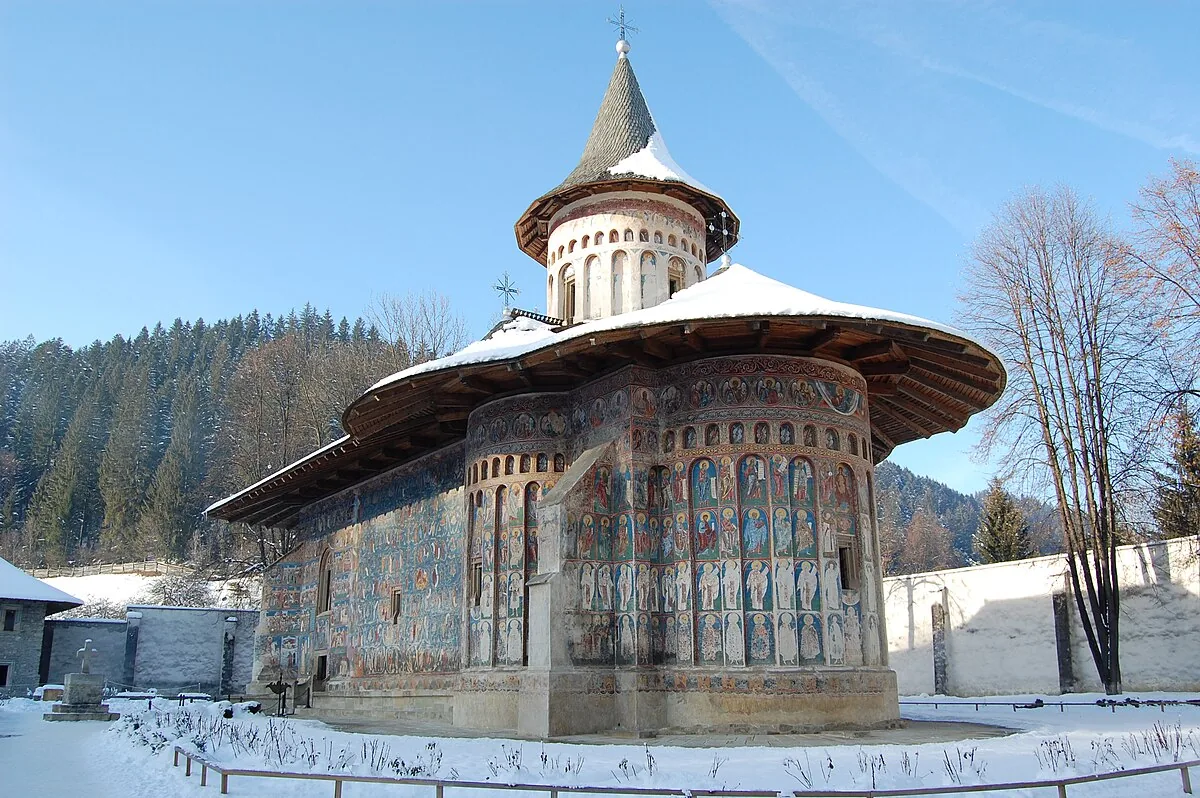
Voroneț Monastery, Romania
Founded the monastery, 1488
Stephen the Great, the legendary Prince of Moldavia, founded the monastery in 1488 to fulfill a promise made to his spiritual advisor, Daniel the Hermit, after a victory against the Turks. Remarkably, the main structure was built in just three months and three weeks. The famous frescoes, however, were added in 1547 during the reign of Petru Rareș. The artists didn't just paint for beauty; they created a 'Biblia Pauperum', a Bible for the poor, using dramatic imagery to convey the stories of the saints and the terrors of the afterlife. The masterpiece of the collection is the Last Judgment, which covers the entire west wall. Over the centuries, the monastery was a center for calligraphy and religious education, surviving the secularization of the 19th century to remain a vibrant home for a community of nuns today.
Standing before the West Wall,
Standing before the West Wall, The overwhelming scale of the Last Judgment fresco, a sea of 'Voroneț Blue' that seems to vibrate in the morning sun. The area is cool and still, punctuated by the soft, rhythmic tapping of the 'toaca', a wooden beam struck by a nun to call for prayer. What registers is the incredibly vivid details of the paintings: the scales of justice, the flowing river of fire, and the figures of the saints dressed in traditional Romanian peasant clothing. First you see the way the blue pigment changes its hue depending on the humidity in the air, shifting from a deep sapphire to a bright turquoise. Inside the church, the sudden darkness and the heavy scent of centuries of candle smoke. The tomb of Saint Daniel the Hermit, where the air feels particularly thick with devotion. What registers is the silver-covered icons that catch the flickering light of the beeswax tapers. Most people take a few photos and leave, but you should notice the intricate stone carvings on the window frames, which show a distinct Gothic influence. Opening with the small garden where the nuns grow medicinal herbs, a quiet, aromatic corner that offers a view of the surrounding pine-clad mountains. The taste of the sweet, holy bread, 'prescura', offered to visitors provides a final, communal touch to the experience.
The monastery is located near
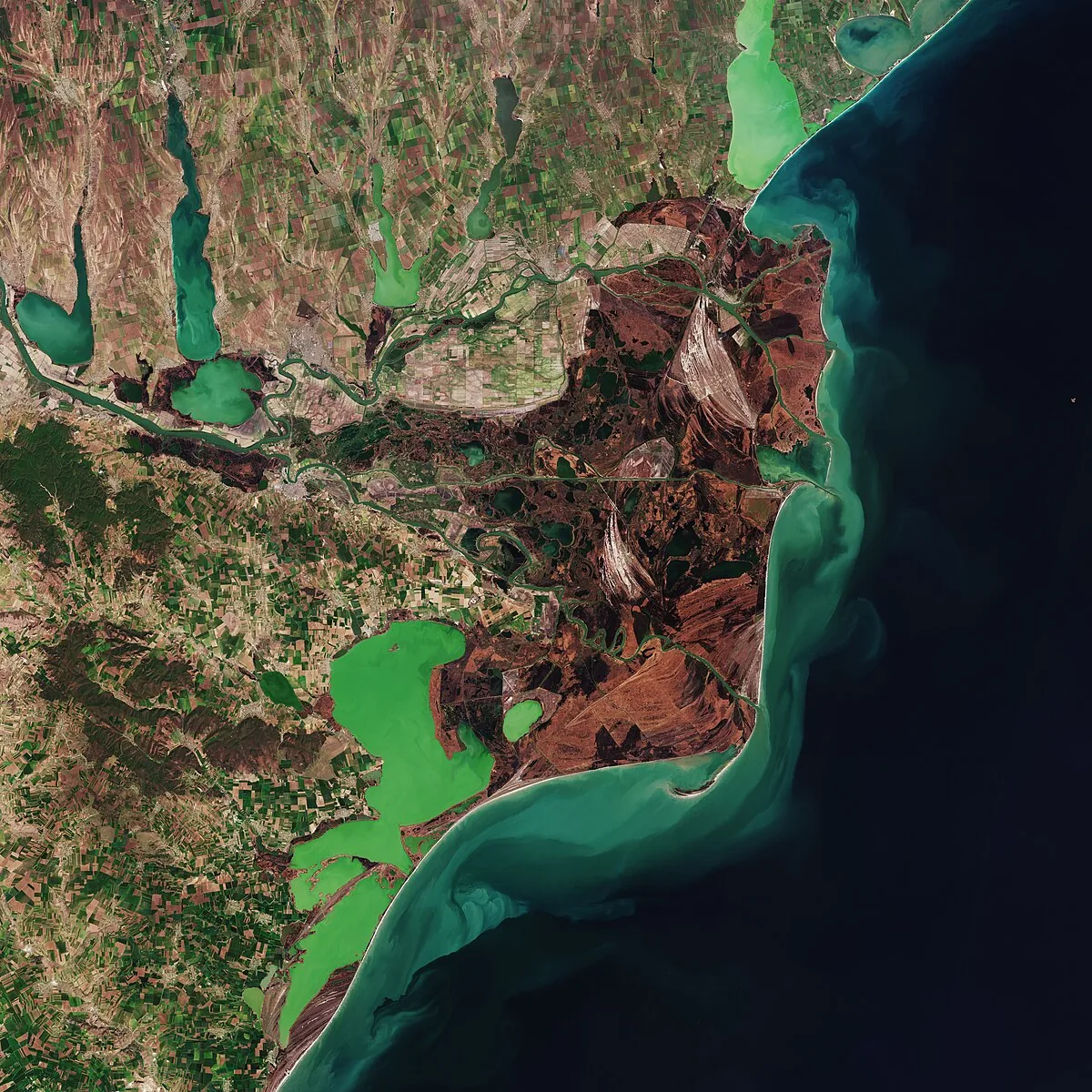
The monastery is located near the town of Gura Humorului, about 450 kilometers north of Bucharest. Travelers usually arrive by train to Gura Humorului and then take a short taxi or bus ride to the village of Voroneț. Most people stay in the local guesthouses, which are famous for their traditional Moldavian hospitality and food.
“The monastery is located near the town of Gura Humorului, about 450 kilometers north of Bucharest.”
The Experience
The soft murmur of the nuns' chanting filters through the heavy oak doors, creating a soundtrack of ancient, unwavering faith. What hits is the way the light strikes the 'Tree of Jesse' on the southern wall, making the genealogical vine of Christ appear to grow out of the stone itself. Something like a sense of peace in the courtyard, where the only movement is the swaying of the flowers and the occasional nun passing by in black robes. The standout is the humorous details in the frescoes, like the devils trying to trick the angels at the scales of judgment. The piece that stays with you is looking back at the blue church as you leave, seeing it glow like a fallen piece of the sky against the deep green of the Moldavian hills.
Why It Matters
Voroneț is the supreme expression of the 'Moldavian Style,' a unique architectural blend of Byzantine, Gothic, and local folk elements. It is a UNESCO World Heritage site that preserves not just a building, but a complete system of medieval theological communication through art. Culturally, it is the spiritual heart of Bucovina and a symbol of Romanian national identity.
Why Visit
Visit Voroneț to see colors that shouldn't exist after five centuries of exposure. It is a rare opportunity to see 'the Sistine Chapel of the East' in its original landscape, surrounded by the same mountains and forests that inspired its creators. It offers a profound sense of how art can serve as a bridge between the earthly and the divine.
Insider Tips
- 1
Purchase a small guide book at the entrance; the symbolism in the frescoes is so complex that you will miss ninety percent of the story without an explanation.
- 2
Women must have their shoulders and knees covered, and men should wear long trousers; the nuns provide wrap-around skirts at the gate if you aren't prepared.
- 3
The 'Last Judgment' wall is best viewed in the late morning when the sun hits it directly, revealing the depth of the lapis lazuli blue.
- 4
Photography is strictly forbidden inside the church but encouraged outside; respect this rule to avoid being asked to leave by the vigilant nuns.
- 5
Try the local 'păstrăv în cetină' (trout smoked in pine branches) at a nearby guesthouse; it is the regional specialty and tastes of the forest.