“Houses built of coral stone rise like jagged toothpicks above the narrow alleys of Jeddah, held together by five centuries of history and the salt of the Red Sea.”
About Al-Balad
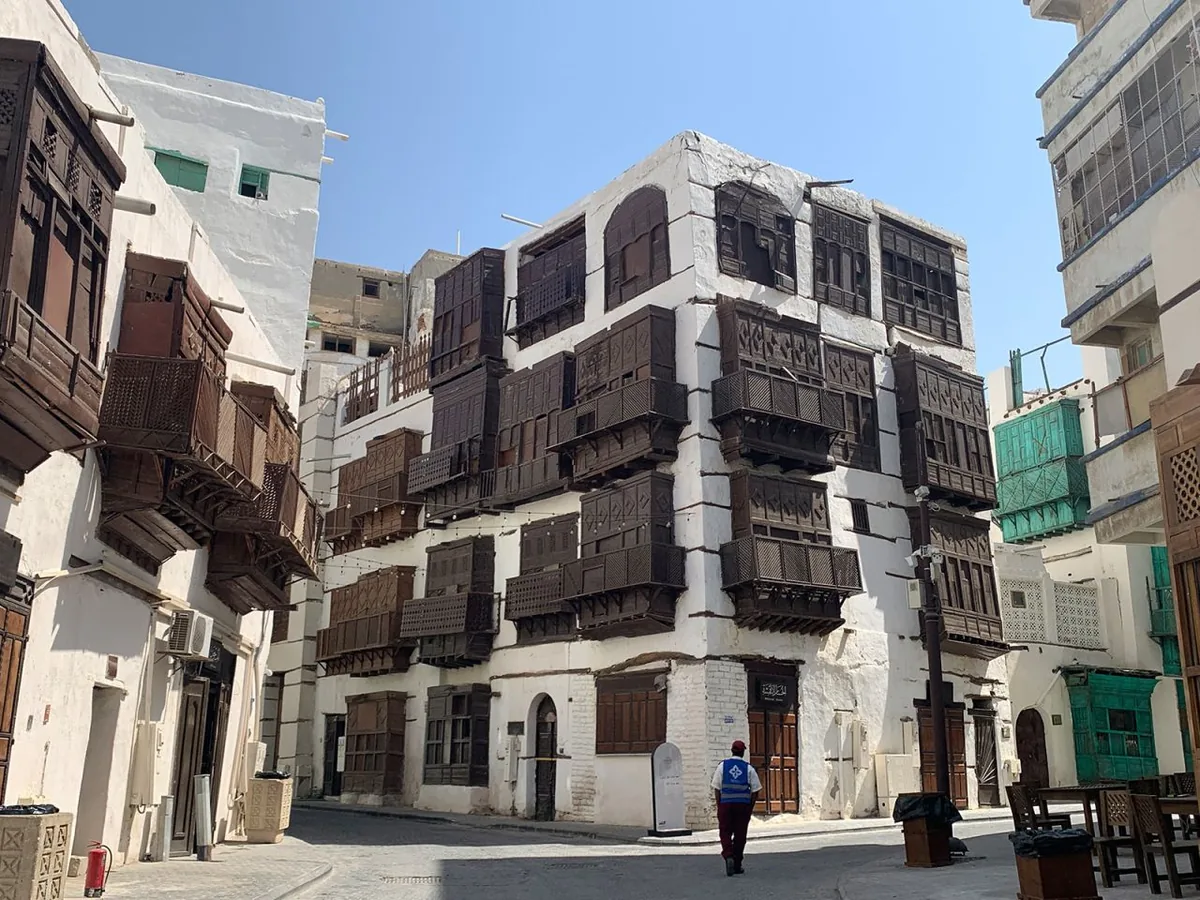
The architecture of Al-Balad is a direct result of its geographical position. The coral stone, known as 'kashur,' was a breathable material that survived the intense humidity of the coast. The Nasseef House, built in 1881, is the most famous example; it famously hosted King Abdulaziz after his conquest of the city in 1925. The house was designed with wide ramps instead of stairs so that camels could carry supplies directly to the upper floors. Throughout the 20th century, many residents moved to modern villas, leaving the old town to fall into disrepair. Today, the district is the center of a cultural renaissance, with many of the ancient homes being painstakingly reconstructed by master craftsmen.
Al-Balad in Saudi Arabia
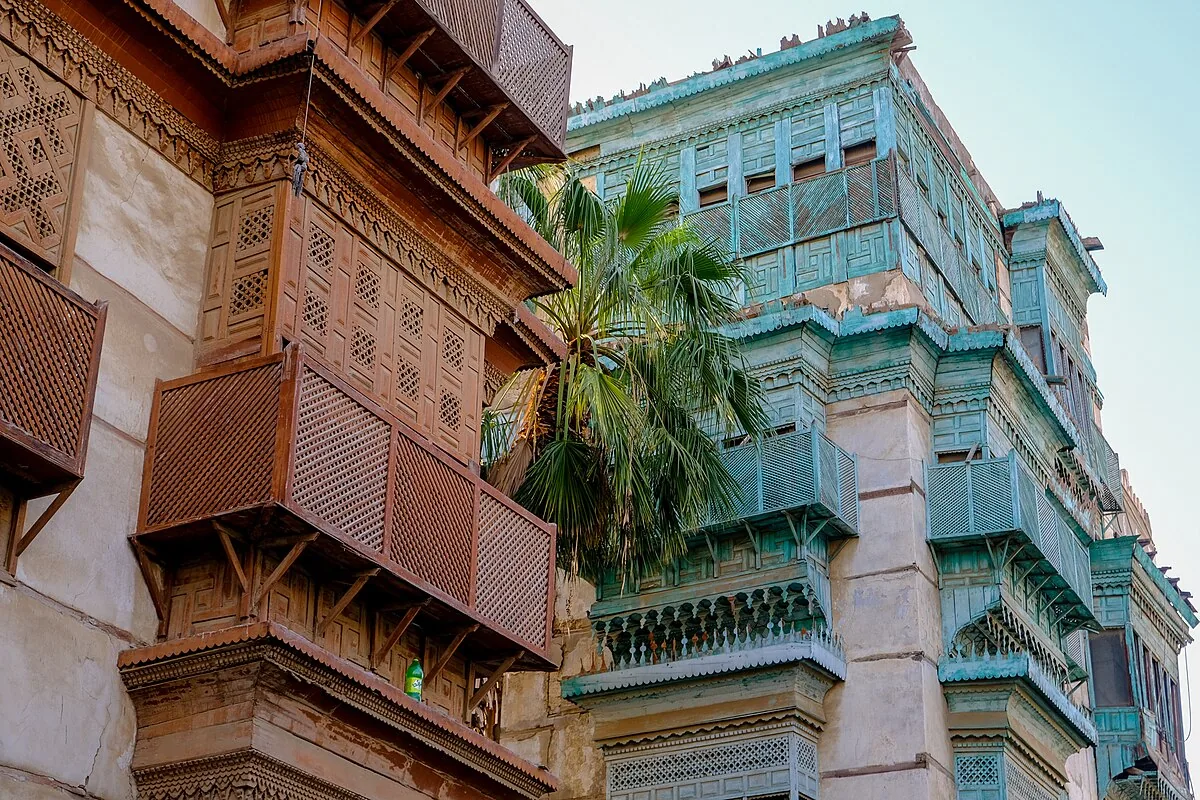
Jeddah’s historic heart, Al-Balad, is a dizzying vertical maze of coral stone and intricate woodwork. Unlike the flat, mud-brick architecture of the desert interior, Al-Balad rises five or six stories high, its buildings adorned with the famous Rawashin, enclosed wooden balconies that allowed the sea breeze to cool the rooms while preserving the privacy of those within. Here the salt of the Red Sea has weathered the facades for five centuries, creating a patina of age that feels both fragile and indestructible. The district is a sensory overload of spice markets, hidden bakeries, and the rhythmic sound of carpenters still working in traditional workshops.
Jeddah’s historic heart, Al-Balad, is a dizzying vertical maze of coral stone and intricate woodwork.
Origins
Al-Balad was founded in the 7th century as a major port for Indian Ocean trade routes and the primary gateway for pilgrims traveling to Mecca. This dual role shaped its character, making it one of the most cosmopolitan places in the Middle East. The buildings were constructed using coral blocks harvested from the nearby reefs, reinforced with wood from the Far East and East Africa. By the late 19th century, wealthy merchant families built the palatial homes that still stand today. After decades of neglect as the city expanded northward, Al-Balad was designated a UNESCO World Heritage site in 2014, sparking a massive wave of restoration that has turned crumbling ruins into art galleries and boutique hotels.
Navigating Al-Balad is an exercise in losing your way in the best possible way. Here, the air smells of roasted coffee, cardamom, and the slightly damp smell of ancient stone. Immediately, the vibrant colors of the Rawashin, teals, greens, and browns, which stand out against the white-washed walls. The acoustic layer is a mix of the Adhan from centuries-old mosques and the chatter of vendors selling everything from Yemeni honey to silk scarves. In the evening, the district comes alive as locals gather to eat street food and play board games in the small squares. You come across a humidity of the Red Sea clinging to the air, making the shade of the narrow alleys a welcome relief.
Location and access
Al-Balad is located in the southern part of modern Jeddah, easily accessible by taxi or ride-sharing apps from any part of the city. The area is best explored on foot, and while some of the main streets are open to small electric carts, the true magic lies in the pedestrian-only alleys that are too narrow for vehicles. Most people start their journey at the Bab Makkah (Mecca Gate) or the Nasseef House, working their way through the souqs toward the sea. The district is just a twenty-minute drive from the Jeddah Corniche, allowing for a perfect transition from the modern waterfront to the ancient town.
Al-Balad is located in the southern part of modern Jeddah, easily accessible by taxi or ride-sharing apps from any part of the city.
The Experience
What you catch first is the temperature drop as you step from the modern sun-lit street into the deep shadows of the Al-Balad alleys. The wood of the balconies feels warm and dry to the touch, its intricate latticework casting lace-like shadows on the ground. Something like a sense of history that is living rather than stagnant; these aren't just museum pieces, but homes and shops where people still live and work. The call to prayer in Al-Balad has a haunting, echoing quality that you won't find in the carpeted modern mosques. The most rewarding moment is finding a hidden rooftop cafe just as the sun sets, watching the light disappear behind the uneven, tilting skyline of coral towers.
Why It Matters
Al-Balad is the most important historic port on the Red Sea. It represents a unique architectural style, the Hijazi style, that exists nowhere else. Its significance lies in its role as a cultural melting pot, where African, Indian, and Arab influences merged over a millennium to create a distinct coastal identity that remains the soul of Jeddah.
Why Visit
You visit Al-Balad for the grit and the glory. While much of Saudi Arabia is characterized by sleek newness, Al-Balad is a place of texture, history, and raw human energy. It is the only place where you can touch the living heart of the old Hijaz and see how a merchant empire was built from the sea.
✦ Insider Tips
- 1
The district is open to all visitors, regardless of religion.
- 2
Visit the Nasseef House early in the day to see the magnificent tree in the courtyard, famously the only tree in Jeddah for many years.
- 3
Look for local bakeries to try fresh bread; they often use traditional wood-fired ovens in use for generations.
- 4
Wear sturdy shoes; the ground is often uneven coral and basalt, and there is a lot of ongoing construction.
- 5
Hire a local guide for an hour; the history of the families who built these homes is far more interesting than the architecture alone.