“Clouds drift through juniper forests at 3,000 meters above sea level, in a corner of Arabia where the temperature rarely hits thirty and the monkeys outnumber the people.”
About Asir National Park
Asir National Park was a pioneering project in Middle Eastern conservation. It was designed with the help of international experts to balance tourism with the protection of fragile mountain ecosystems. The park’s history is tied to the ancient incense routes; traders once passed through these mountains to avoid the coastal heat. In the modern era, it has become the center of the 'Abha Summer' festival, which draws millions of domestic tourists. Recent efforts have focused on reintroducing native species and preserving the ancient 'hanging villages', settlements built into the sheer cliff faces that were accessible only by rope until the mid-20th century.
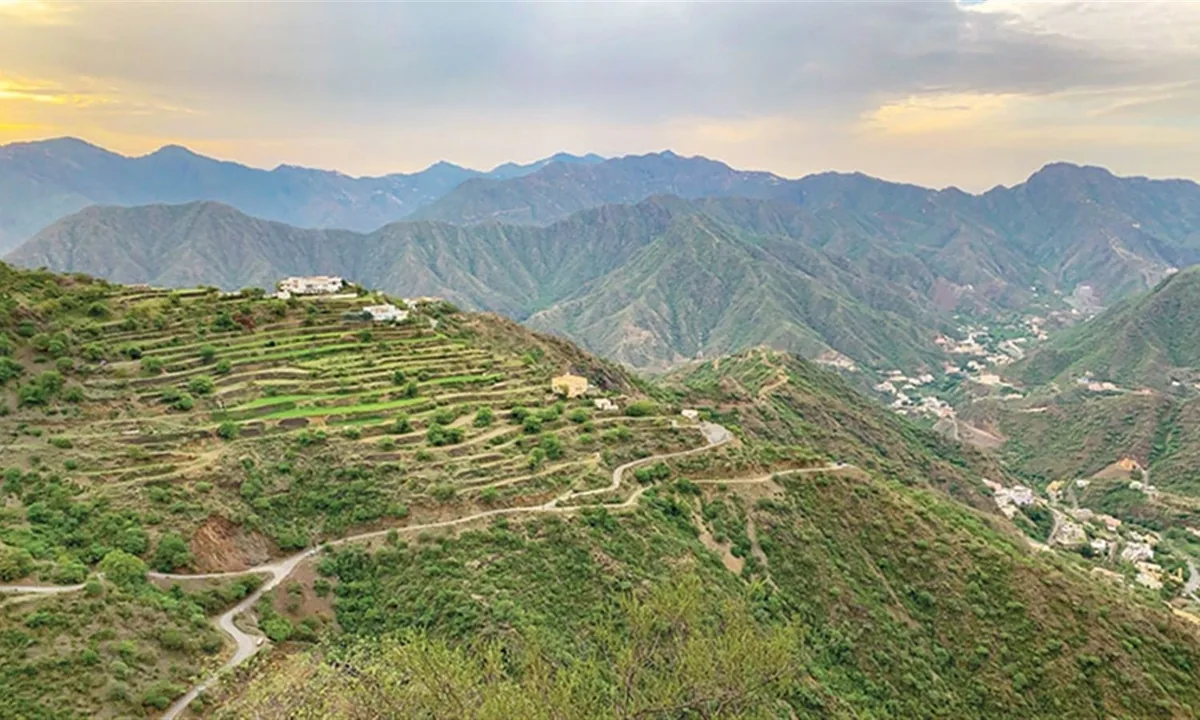
High above the Red Sea coast, Saudi Arabia
High above the Red Sea coast, Saudi Arabia abruptly transforms from desert to a lush, juniper-clad wilderness. Asir National Park, the country’s first national park, covers 4,500 square kilometers of the Sarawat Mountains. This is a land of vertical extremes, where Jabal Sawda, the Kingdom’s highest peak, rises into the clouds at over 3,000 meters. The park is a sanctuary for the rare Arabian leopard and the hamadryas baboon, defined by its steep granite cliffs, deep valleys, and mist-covered forests. It offers a climate that feels more like the Mediterranean than the Middle East, providing a cool, green refuge for travelers looking to escape the heat of the plains.
High above the Red Sea coast, Saudi Arabia abruptly transforms from desert to a lush, juniper-clad wilderness.
Established, 1980
Established in 1980, the park was created to protect the unique biodiversity of the southwestern highlands. Across centuries, this region was isolated by its rugged terrain, allowing for the development of a distinct mountain culture, including the 'Flower Men' and the vibrant Al-Qatt Al-Asiri art. The geography was shaped by volcanic activity and tectonic shifts that pushed these mountains upward, creating a rain-shadow effect that captures the moisture from the Red Sea. Unlike the rest of Saudi Arabia, Asir receives regular rainfall, especially during the summer monsoon season. The park includes several 'Hima', traditional communal protected areas, that have been managed by local tribes for over a thousand years to ensure sustainable grazing and forest use.
Standing on the edge of the cliffs at Al Souda, you look down at the clouds rolling through the valley below. First, the sharp, pine-like scent of the juniper trees and the cool, damp air that makes you reach for a sweater. Overhead, the space is dominated by the calls of endemic birds and the occasional bark of baboons that congregate near the roadside. The mist on your skin, a sensation that feels entirely out of place in the Arabian Peninsula. Walking the nature trails, The bright splashes of wildflowers and the intricate lichen growing on the rocks. The cable cars provide a dizzying perspective of the terrain, sweeping over vertical drops that reveal hidden stone villages clinging to the mountainsides.
The park surrounds the city
The park surrounds the city of Abha, which has an international airport and is well-connected by road to Jeddah and Riyadh. Those who come base themselves in Abha or the Al Souda resort area. Renting a car is essential for exploring the various sectors of the park, as the landmarks are spread across a wide mountainous area. The 'Fog Walkway' in Abha offers a gentle introduction to the scenery, while the more adventurous can drive deep into the park toward the Al Habala 'hanging village.' Be prepared for steep, winding roads and frequent fog that can reduce visibility to almost zero within minutes.
The park surrounds the city of Abha, which has an international airport and is well-connected by road to Jeddah and Riyadh.
The Experience
The beginning is the baboons are surprisingly bold, often waiting for tourists near the lookout points, keep your windows rolled up. The light in the park is soft and often filtered by the 'Abha mist,' giving the landscape a melancholic, poetic quality. The mass of the drop in pressure as you ascend the mountain roads, your ears popping as the desert gives way to the forest. The most memorable moment is often the silence found on the more remote trails, where the only sound is the wind whistling through the granite peaks. What you catch first is the 'Flower Men' selling their colorful, aromatic crowns at the entrance to the park, a sensory reminder of the unique human culture that has co-evolved with this landscape.
Why It Matters
Asir National Park is the most important ecological site in Saudi Arabia. It contains the largest remaining juniper forests in the peninsula and is a vital corridor for migratory birds. Culturally, it preserves the heritage of the Asiri tribes and provides a unique example of how a high-altitude mountain ecosystem can be managed in an arid region.
Why Visit
The shock of the green. It is the most beautiful mountain scenery in the country and offers a climate that is perfect for outdoor activities when the rest of the region is sweltering. It’s a place for hikers, birdwatchers, and anyone who wants to see a wild, temperate side of Saudi Arabia that most people never imagine.
✦ Insider Tips
- 1
The park is open to all visitors of all faiths.
- 2
Bring a jacket even in the middle of summer; temperatures at Jabal Sawda can drop to 12°C in the evening.
- 3
Do not feed the baboons; they can become aggressive and are well-known for stealing bags and food from unsuspecting hikers.
- 4
Check the fog forecast before driving the mountain passes, especially the descent to Rijal Almaa or Al Habala.
- 5
Visit the 'Hanging Village' at Al Habala to see the ancient pulley systems used by villagers to move goods up the cliff face.