A structure made of nearly ten thousand mirrors stands in the middle of the AlUla desert, yet on a clear day, it is almost impossible to see.
About Maraya
The Ashar Valley was historically a passage for caravans, but it was transformed into a cultural hub with the arrival of Maraya. The building's design was inspired by 'Land Art,' a movement that seeks to create works inextricably linked to their environment. It took just six months to construct, a frantic pace that mirrored the rapid changes occurring across the Saudi cultural landscape. The mirrors are technically advanced panels designed to resist the degradation that typically occurs in high-UV environments. By reflecting the heritage sites around it, Maraya acts as a bridge between the Nabataean past and the digital future.
Mirages are common in the desert, but Maraya
Mirages are common in the desert, but Maraya is a deliberate, architectural illusion. Located in the Ashar Valley of AlUla, this concert hall holds the Guinness World Record for the largest mirrored building on earth. Its name translates to 'mirrors' in Arabic, a fitting title for a structure that essentially disappears into its surroundings. The 9,740 square meters of mirrored panels reflect the rust-colored sandstone cliffs and the shifting sands, creating a dialogue between man-made precision and the raw, ancient geology of Saudi Arabia. It is a cube of modern glass that is a canvas for the landscape, making the desert the true star of the show.
“Mirages are common in the desert, but Maraya is a deliberate, architectural illusion.”
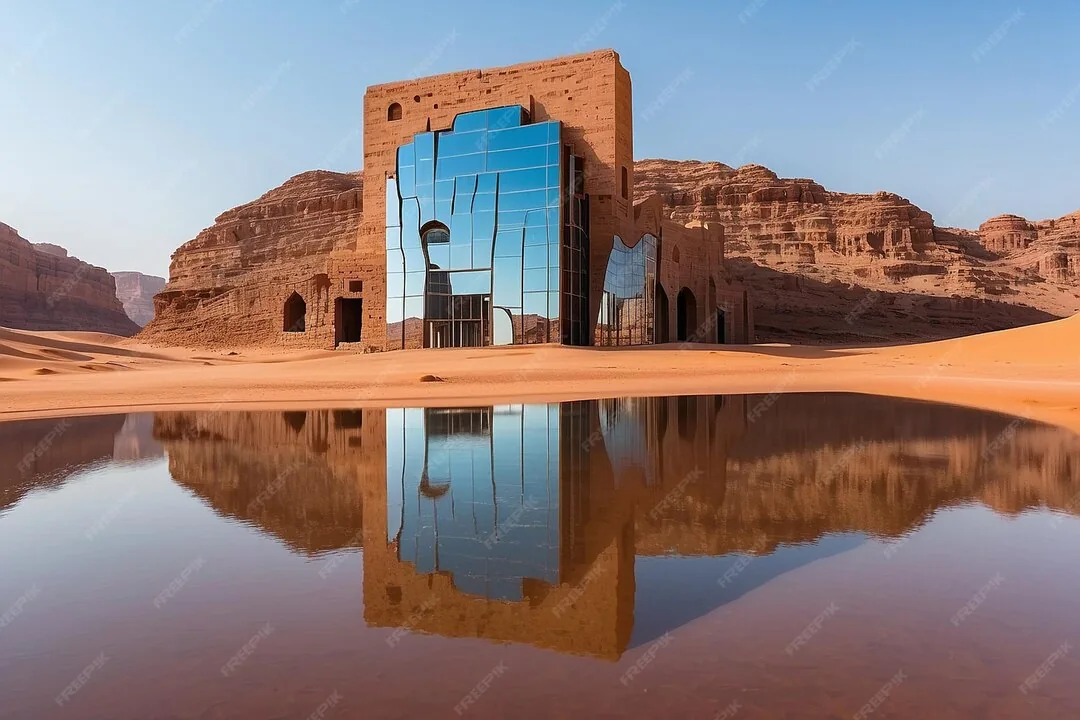
Maraya, Saudi Arabia
The legacy
Maraya was conceived as part of the Vision 2030 initiative to transform AlUla into a global cultural destination. Designed by the Italian firm Giò Forma, the building was completed in late 2019. The architects wanted to create a landmark that didn't compete with the nearby UNESCO-listed Hegra, but rather celebrated it through reflection. The construction required specialized glass that could withstand the extreme desert temperatures and the abrasive nature of sandstorms while maintaining a perfect, distortion-free reflection. Since its opening, it has hosted international icons, becoming a symbol of the Kingdom's new cultural openness.
Approaching Maraya is a disorienting experience. From a distance, seeing only the desert, until a glint of light reveals the sharp edge of the building. First, the way the sunset is doubled; once in the sky and once on the facade, enveloping you in a 360-degree theater of light. The exterior is perfectly silent, but inside, the acoustics are world-class. The main auditorium features a massive retractable window behind the stage that can open to reveal the actual mountains during a performance. The interior is cool and smells of high-end perfume and roasted coffee. Maraya is located within the Ashar Valley, a restricted area of AlUla. People generally reach the site by booking a table at the restaurant or attending a scheduled performance. Shuttle services from the AlUla visitor centers or the nearby luxury resorts are the standard mode of transport. The drive through the valley is cinematic, with winding roads that weave between towering rock formations. While you can view the building from the road, entering the grounds generally requires a pre-booked ticket or reservation, ensuring the experience remains exclusive.
The Experience
You see how your own reflection seems tiny against the massive scale of the desert landscape captured in the glass. The heat of the sand feels distant as you step into the air-conditioned, minimalist lobby. A remnant of the vibration of the music in the auditorium, which is designed to feel like the inside of a precious jewel box. The most memorable moment occurs when the sun hits the building at a specific angle, turning the entire structure into a beacon. On the rooftop, the view is a dizzying blend of reality and reflection, where the red rocks seem to float in the air. It is a place that challenges your depth perception.
Why It Matters
Maraya is a global icon of contemporary architecture and a statement of intent for the Saudi tourist industry. It proves that modern development can be environmentally sensitive by honoring the natural beauty of the site. Culturally, it has put AlUla on the map for high-profile international events, blending the ancient with the avant-garde.
Why Visit
You visit for the ultimate photo, but you stay for the architectural brilliance. It is a rare opportunity to see a building that manages to be both gargantuan and humble at the same time. Standing in front of Maraya is a lesson in how humans can mark the landscape without marring it.
Insider Tips
- 1
Book a reservation at the restaurant well in advance to gain access to the grounds.
- 2
Wear light-colored clothing to avoid absorbing too much heat while taking photos near the mirrored walls.
- 3
Arrive an hour before sunset to watch the colors of the cliffs change in real-time on the building's surface.
- 4
Check the concert schedule months ahead as tickets sell out extremely fast.
- 5
The site is open to all visitors with a valid booking, regardless of religion.