Nearly two hundred years of spice-trading history were almost erased by fire in 2001, only to be rebuilt by hand using the same mud and palm wood that first raised its walls in 1822.
About Qasariah Souq
The souq has historically been the primary outlet for the products of the Al Ahsa oasis, especially the high-end textiles and the world-renowned Khalasah dates. It served as a vital link in the trade network that brought goods from India and Persia into the heart of Arabia. The reconstruction after the 2001 fire was a landmark in Saudi heritage preservation, as it insisted on historical accuracy rather than modern convenience. Every one of the 422 shops was rebuilt to its original specifications, preserving the unique ventilation system that allows the building to 'breathe' without modern air conditioning. It remains one of the few places where the traditional merchant culture of the Gulf is still practiced in its original setting.
What Qasariah Souq actually is
In the centre of the Al Ahsa oasis, the Qasariah Souq remains a maze of clay and wood that has breathed the scents of the East for nearly two centuries. This is one of the oldest and most atmospheric markets in Saudi Arabia, a place where the shadows are long and the air is thick with the aroma of aged oud, imported spices, and the sweetness of the region’s famous dates. The architecture is a study in desert ingenuity, featuring high ceilings and thick mud-brick walls that keep the interior cool even when the sun is punishing. It is a living museum of trade, where the rhythmic chatter of bargaining is the soundtrack and the light filters through wooden slats to create an array of golden stripes on the dusty floor.
“In the centre of the Al Ahsa oasis, the Qasariah Souq remains a maze of clay and wood that has breathed the scents of the East for nearly two centuries.”
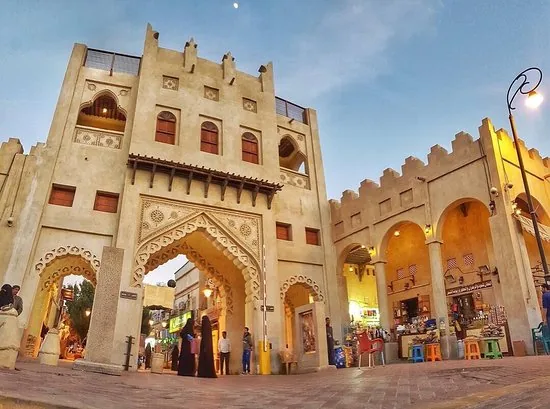
Qasariah Souq, Saudi Arabia
Built in 1822, the souq
Built in 1822, the souq was designed to be the commercial hub of the Eastern Province, serving the caravans that traveled between the coast and the interior. Its name, Qasariah, is believed to be derived from the Roman 'Caesarea,' a term used for significant market buildings. The structure was nearly lost to a devastating fire in 2001, which destroyed much of the traditional woodwork. However, the Saudi government and local community undertook a meticulous restoration, using original building techniques and materials, including sun-dried mud, palm trunks, and local stones, to bring the souq back to its 19th-century glory. It reopened in 2013, reclaiming its place as the soul of Al-Hofuf.
Entering the souq, you are immediately enveloped in the smell of cardamom, cloves, and the heavy musk of traditional perfumes. The opening note is the architectural detail of the 'shops', each is a small, elevated room with a wooden shutter that opens to become a counter. The interior is surprisingly still and cool, providing a respite from the humid heat of the oasis. There is a history in the uneven stone floors and the rough texture of the plastered walls. Overhead, the space is a mix of the clinking of brass coffee pots and the low voices of men in traditional thobes discussing the quality of a piece of incense. It is an intimate, human-scale experience that feels entirely authentic and unhurried.
The Qasariah Souq is located in the Al-Koot district of Al-Hofuf, the main city of the Al Ahsa oasis. It is a short drive from the Al-Hofuf railway station, which connects to Riyadh and Dammam. The bulk of visitors walk to the souq from the nearby Ibrahim Palace. The area is best explored on foot, as the alleys are narrow and often crowded with people. A large public parking area nearby, and the souq is a central landmark that any taxi or ride-share driver will know. It is particularly vibrant in the late afternoon and evening, when the stalls are fully open and the local community gathers to shop and socialize.
“The Qasariah Souq is located in the Al-Koot district of Al-Hofuf, the main city of the Al Ahsa oasis.”
The Experience
Notice how the merchants take pride in their displays, with mountains of colorful spices and rows of intricate gold jewelry. The light in the souq is theatrical; the sun spears through the small ceiling vents, illuminating the dust motes and the steam rising from a cup of Arabic coffee. You discover a sense of slow-motion time here; no one is in a rush to finish a deal. The smell of the 'Mishlah', the traditional men’s cloak, is everywhere, as the souq is famous for its high-quality tailoring. The most memorable moment is often the first sip of coffee offered by a shopkeeper, a gesture of hospitality that has been the preamble to trade in this building for generations. What grabs you is the intricate carvings on the heavy wooden doors, each one a unique mark of a family business.
Why It Matters
Qasariah Souq is the definitive example of an urban Arabian market. It represents the economic history of the Eastern Province and the resilience of traditional heritage in the face of modern change. Its preservation is a central part of Al Ahsa’s UNESCO World Heritage status, acting as the commercial anchor for the entire cultural landscape of the oasis.
Why Visit
The sensory immersion. While modern malls are everywhere in Saudi Arabia, Qasariah is one of the few places where you can experience the authentic atmosphere of an ancient trade hub. It is the best place to buy genuine local products, from dates to bespoke perfumes, while walking through a masterpiece of traditional desert architecture.
Insider Tips
- 1
The souq is open to all visitors of all faiths.
- 2
Bargaining is expected but should be done with a smile and a sense of respect; it is a social ritual, not a conflict.
- 3
Look for the shops selling 'Al-Ahsa dates', they are significantly fresher and cheaper here than at the airport or in Riyadh.
- 4
Visit the nearby Ibrahim Palace on the same trip; it is only a five-minute walk from the souq entrance.
- 5
Try to visit on a Thursday morning when the market is at its busiest and the traditional 'Friday market' energy begins to build.