“Beneath the ornate gables of this 1812 manor, the original yellowwood floors still carry the echoes of the French Huguenots who traded European persecution for the wild soil of the Cape.”
About Boschendal Manor House
Boschendal’s story is inextricably linked to the arrival of the French Huguenots in the late 17th century. These refugees were given land in the Franschhoek (French Corner) valley to bolster the Dutch East India Company’s food supplies. The de Villiers brothers, who took over Boschendal in 1715, were instrumental in establishing the quality of the wine produced here. The Manor House itself was a late addition, built during the 'Golden Age' of the Cape in the early 1800s. It survived the collapse of the wine industry in the 1890s thanks to the intervention of the Rhodes Fruit Farms, which shifted the focus to deciduous fruit until the vineyards could be restored.
What Boschendal Manor House actually is
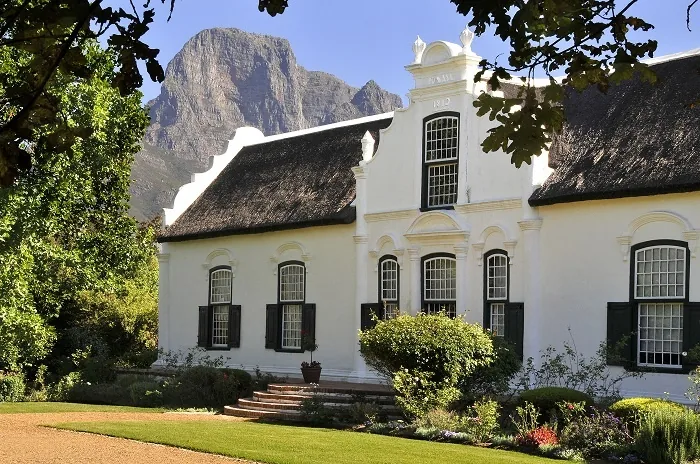
Deep at the core of the Franschhoek Valley, at the base of the Groot Drakenstein Mountains, stands one of the most exquisite examples of Cape Dutch architecture in existence. Boschendal, whose name means 'wood and dale,' was founded in 1685, making it one of the oldest wine estates in South Africa. The Manor House, with its iconic H-shaped floor plan and ornate baroque gables, is the centerpiece of a farm that has evolved from a simple frontier outpost into a world-class destination for viticulture and heritage. Surrounded by ancient oak trees and manicured rose gardens, the house is a masterclass in 18th-century aesthetics, featuring thick whitewashed walls, dark yellowwood floors, and original batavian tiles. It represents a specific moment in history when European design met African materials and light, creating a style that is found nowhere else on earth.
Deep at the core of the Franschhoek Valley, at the base of the Groot Drakenstein Mountains, stands one of the most exquisite examples of Cape Dutch architecture in existence.
magnificent Manor House, 1812
The estate was originally granted to Jean le Long, one of the French Huguenots fleeing religious persecution in Europe, but it was the de Villiers family who built the magnificent Manor House in 1812. These families brought with them the knowledge of viticulture that would eventually make the region world-famous. The house was designed to be both a statement of wealth and a functional farm headquarters, with high ceilings and wide doors to allow for ventilation in the sweltering Cape summers. In the late 19th century, the estate was purchased by Cecil John Rhodes, who used his resources to preserve the failing Cape Dutch heritage after the devastating phylloxera plague wiped out the vineyards. Over the last century, Boschendal has transitioned through several owners, but the Manor House has remained meticulously preserved, eventually becoming a museum that showcases the furniture and lifestyle of the early Cape settlers.
The air around the manor is perfumed with the scent of lavender, damp earth, and the faint, sweet tang of fermenting grapes from the nearby cellars. From somewhere comes the soft crunch of acorns underfoot on the gravel paths and the rhythmic cooing of Cape turtle doves in the oaks. Moving through the cool, dim rooms of the house, the smooth, waxy texture of the yellowwood furniture and the solid chill of the thick walls. Straight away, the intricate patterns of the blue-and-white porcelain and the way the sunlight creates sharp, geometric patterns on the floor as it passes through the small-paned windows. The light at tea time is particularly beautiful, filtering through the massive oak canopy to create a dappled green world. From the front 'stoep', the view of the jagged mountains framing the vineyards makes The deep, agricultural heartbeat of the valley.
Boschendal is located on the R45
Boschendal is located on the R45 highway between Stellenbosch and Franschhoek, roughly an hour’s drive from Cape Town. It is a popular stop for those exploring the Cape Winelands, whether by private car or as part of a guided tour. The estate is vast, so it is best to park in the main visitor area and explore the manor house and surrounding gardens on foot. Access to the Manor House museum is generally included in a small entrance fee or as part of a cellar tour. For a more involved experience, many visitors choose to stay in the converted farm cottages located elsewhere on the 1,800-hectare estate.
Boschendal is located on the R45 highway between Stellenbosch and Franschhoek, roughly an hour’s drive from Cape Town.
The Experience
You feel an immediate, quiet elegance as you step off the sun-drenched lawn into the shadowed interior of the manor. The clatter of your own voice seems to soften in the presence of the tall sash windows and heavy timber ceilings. The original 'beidje', a traditional built-in cupboard, which remains a rare and beautiful feature of the house. The bulk of visitors hurry toward the wine tasting, but the real joy is sitting in the garden and watching the light play on the whitewashed gables. The moment you realize the house has stood through three centuries of South African history, the wine in your glass feels like a very small part of a much bigger story.
Why It Matters
Boschendal Manor House is a premier example of the Cape Dutch vernacular. It is a vital link to the history of the wine industry in the Southern Hemisphere and the story of European settlement in Africa. Historically, it reflects the architectural and social structures of the 19th-century Cape, serving as a museum of both high art and everyday life.
Why Visit
Visit Boschendal because it is the most complete and evocative historical farm experience in the country. It offers a sense of continuity that is rare in the fast-changing Western Cape. You go for the world-class wine and food, but you stay for the haunting beauty of a house that has seen empires come and go.
✦ Insider Tips
- 1
Book a 'werf' picnic on the lawns in front of the manor house; it is a quintessential Cape experience that allows you to enjoy the architecture at leisure.
- 2
Look for the original slave bell located near the outbuildings, a sobering reminder of the labor that built the estate’s early wealth.
- 3
Ask the museum curator about the 'brandsolder', a layer of clay above the ceiling designed to protect the house from fire, a common threat in the 1800s.
- 4
Visit the vegetable garden (the Werf Garden) adjacent to the house, which provides much of the produce for the estate’s restaurants.
- 5
Take time to walk through the rose garden, which features many heritage varieties that are rare in modern landscapes.