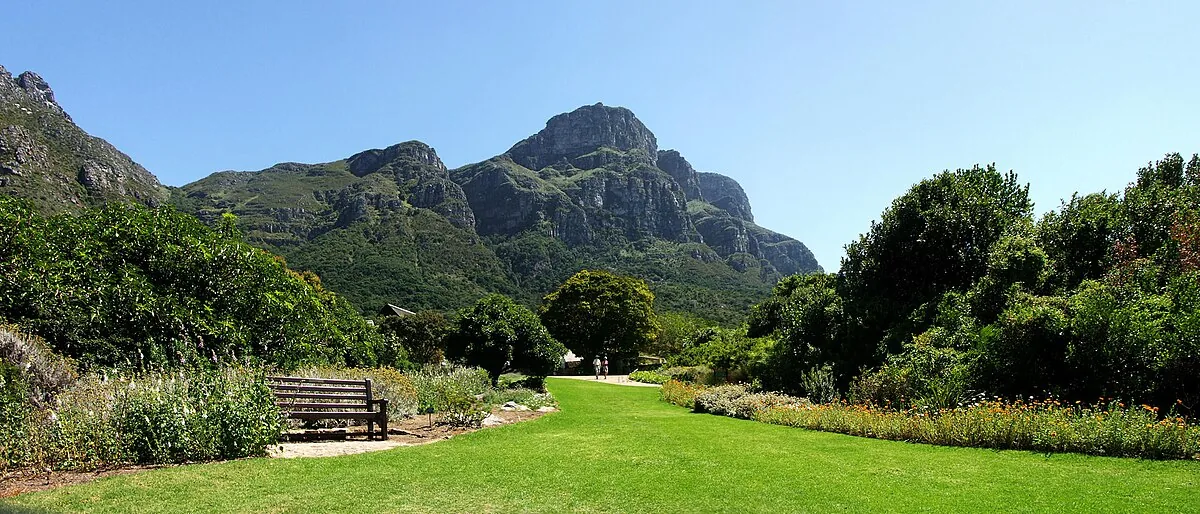
This three-hundred-million-year-old plateau is so biologically crowded that a single acre of its rocky slopes contains more plant species than some entire tropical rainforests.
About Table Mountain
The mountain’s history is a record of resilience, formed during the era of the supercontinent Gondwana. For the Khoisan people, it was a sacred site of water and spirits. European history here began in 1503 when Antonio de Saldanha became the first recorded climber to reach the top. In the 18th and 19th centuries, it became a strategic lookout for the Dutch and British empires. Today, it is the centerpiece of a National Park that serves as a global model for urban conservation, protecting a floral kingdom found nowhere else on the planet.
What Table Mountain actually is
A sandstone monolith rising three thousand feet above the Atlantic, this level plateau dictates the very rhythm of Cape Town. Table Mountain acts as a colossal weather vane for the city, often draped in a thick orographic cloud known locally as the tablecloth. While the iconic flat top stretches nearly two miles across, the mountain is far from a uniform slab. It is a labyrinth of steep ravines, hidden water catchment basins, and jagged peaks like Lion’s Head and Devil’s Peak that frame the central massif. The rock itself is primarily Table Mountain Sandstone, a hard, erosion-resistant quartz that has withstood hundreds of millions of years of Southern Ocean battering. Over 1,500 species of plants cling to these cliffs, making this single mountain more botanically diverse than the entire United Kingdom.
“A sandstone monolith rising three thousand feet above the Atlantic, this level plateau dictates the very rhythm of Cape Town.”
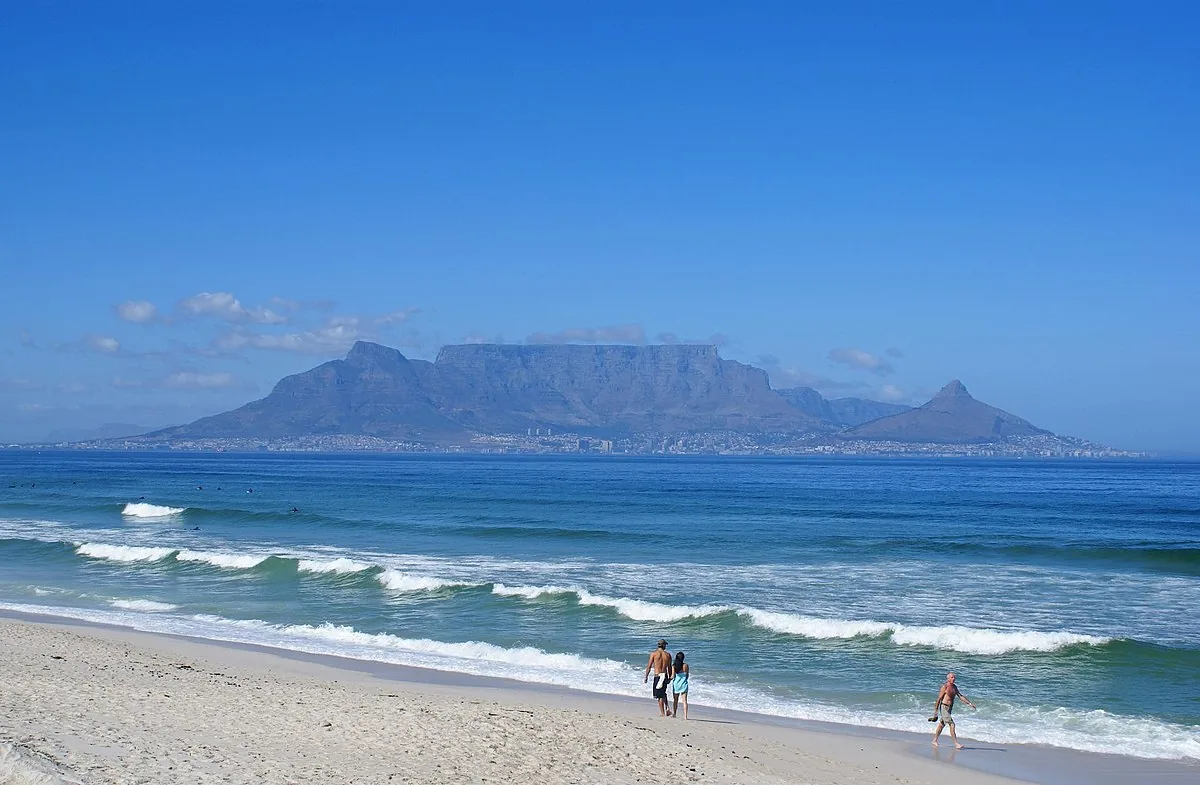
Table Mountain, South Africa
Indigenous Khoi people called this massif
Indigenous Khoi people called this massif Camissa, the Place of Sweet Waters, recognizing the life-giving streams that flowed from its heights long before European sails appeared on the horizon. Geologically, the mountain is a survivor; its horizontal layers were laid down under a shallow sea nearly 450 million years ago and later hoisted skyward by tectonic forces. Unlike the younger, jagged Alps or Himalayas, this plateau is one of the oldest geological formations on earth, a stubborn remnant of a much larger mountain range that has been ground down by time. In 1929, the first cableway opened, forever changing the relationship between the city and its summit. It has was a beacon for sailors, a fortress for soldiers, and a sanctuary for political fugitives, always standing as the immovable anchor of the Cape.
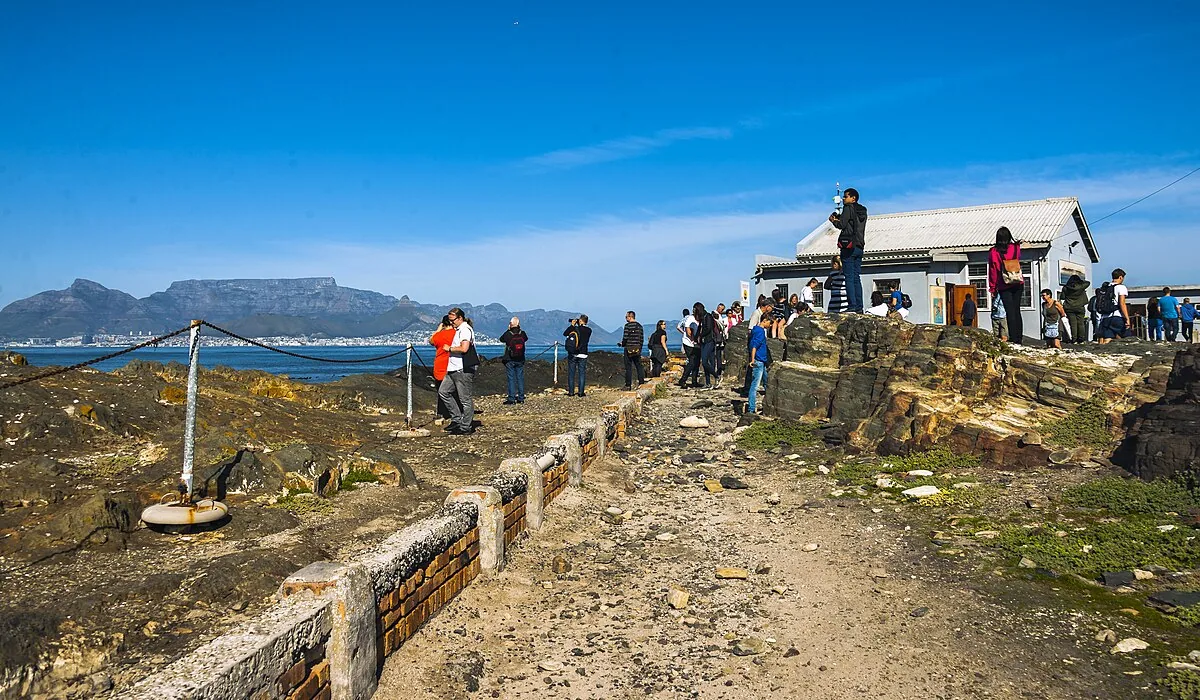
The air at the summit is surprisingly sharp , smelling of damp earth and the honey-sweet fragrance of blooming fynbos. From somewhere comes the rhythmic hum of the cable car’s machinery and the sudden, explosive silence that follows when the wind drops. Along the rocky paths, The gritty texture of the ancient sandstone beneath your boots and the occasional cool kiss of a passing cloud. Immediately, the rock hyraxes, or dassies, sunning themselves on the ledges, seemingly oblivious to the dizzying drop into the city below. The light in the late afternoon turns the granite cliffs of the Twelve Apostles into a glowing wall of amber. From the edge of the northern face, the sight of the city bowl spreading out like a map toward the curve of Robben Island makes both incredibly small and strangely powerful. Most travelers opt for the rotating cableway, which departs from the Lower Cable Station on Tafelberg Road. For those with strong legs, the Platteklip Gorge trail offers a direct, albeit grueling, stone staircase to the summit. Weather is the ultimate gatekeeper here; the cableway shuts down instantly when the south-easterly wind picks up. Checking the live mountain webcam before leaving your hotel is a local necessity to avoid a wasted trip to the base station.
The Experience
Something strange, electric anticipation as the cable car begins its 360-degree rotation, revealing the sprawling Atlantic Seaboard in a slow, dizzying panoramic sweep. Audibly, the of the wind whistling through the protea bushes is the only thing that breaks the stillness once you move away from the viewing decks. What registers is how the clouds can roll over the edge like a slow-motion waterfall, swallowing the paths in seconds. The majority stick to the gift shop area, but the real magic is walking toward Maclear’s Beacon, the highest point. The moment the fog clears to reveal the deep blue of False Bay is when the mountain’s true scale hits you.
Why It Matters
Table Mountain is one of the New Seven Wonders of Nature and the primary reason Cape Town exists where it does. It is the heart of the Cape Floral Region, a UNESCO World Heritage site of outstanding biodiversity. Historically, it remains the ultimate symbol of home for all South Africans, regardless of background.
Why Visit
Visit Table Mountain because it is one of the few places where you can stand on a prehistoric seabed while looking down at a 21-century metropolis. It offers a perspective on deep time that few other landmarks can match. You go for the view, but you stay for the ancient, grounding energy of the rock itself.
Insider Tips
- 1
Buy your cableway tickets online in advance to skip the first queue, but always check the website's 'Live Status' before you head up Tafelberg Road.
- 2
Bring a warm jacket even if it is 30°C in the city; the temperature at the summit is consistently 5 to 10 degrees lower and the wind chill is significant.
- 3
Look for the 'Ghost Frog' in the streams of Disa Gorge; it is an endangered species that lives only on this one mountain and nowhere else on earth.
- 4
Hike up via India Venster if you want a challenging scramble with the best views, but only if you have a moderate level of fitness and no fear of heights.
- 5
Time your descent for the golden hour to watch the sun sink into the Atlantic from the cable car's rotating platform.