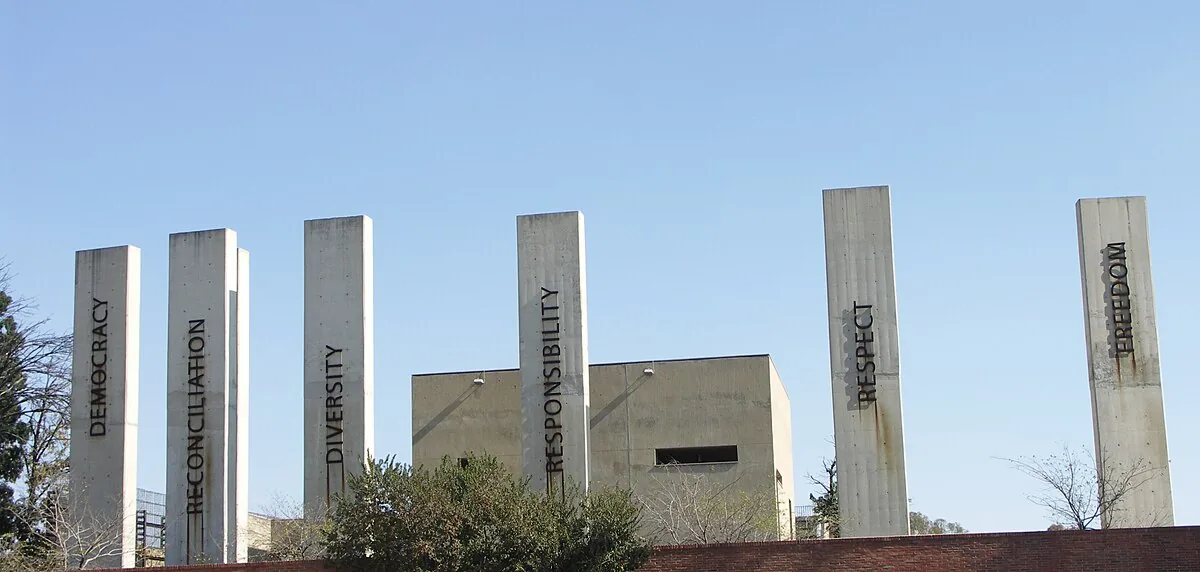
At this exact coordinate, your compass needle points true north without deviation, and the warm Indian Ocean officially surrenders to the cold Atlantic.
About Cape Agulhas Lighthouse
Construction of the lighthouse was a desperate response to the mounting toll of shipwrecks that threatened the vital trade route to the East. Master builder William Beer oversaw the project, using local stone and a lantern fueled by sheep-tail fat before it was converted to oil and eventually electricity. The lighthouse nearly fell into ruin in the 1960s when the foundation began to crack, but a passionate local campaign led to its restoration. It remains a critical landmark for modern mariners navigating the 'Needle's Point,' where waves can reach heights of 30 meters during winter storms.
A red-and-white striped tower stands at the ragged tip of Africa, looking out over the invisible line where the Indian and Atlantic Oceans collide. The Cape Agulhas Lighthouse is more than just a navigational aid; it is a sentinel guarding one of the most treacherous shipping routes on the planet. Modeled after the ancient Pharos of Alexandria, this limestone structure is the second-oldest working lighthouse in South Africa. The landscape surrounding it is desolate and windswept, a plain of fynbos and jagged rocks that look like the teeth of a giant submerged beast. While Cape Point often gets the fame, this is the true geographic southernmost point of the continent. This space feels charged with the energy of two massive water systems meeting, creating a wild, salt-sprayed atmosphere like the very edge of the world.
“A red-and-white striped tower stands at the ragged tip of Africa, looking out over the invisible line where the Indian and Atlantic Oceans collide.”
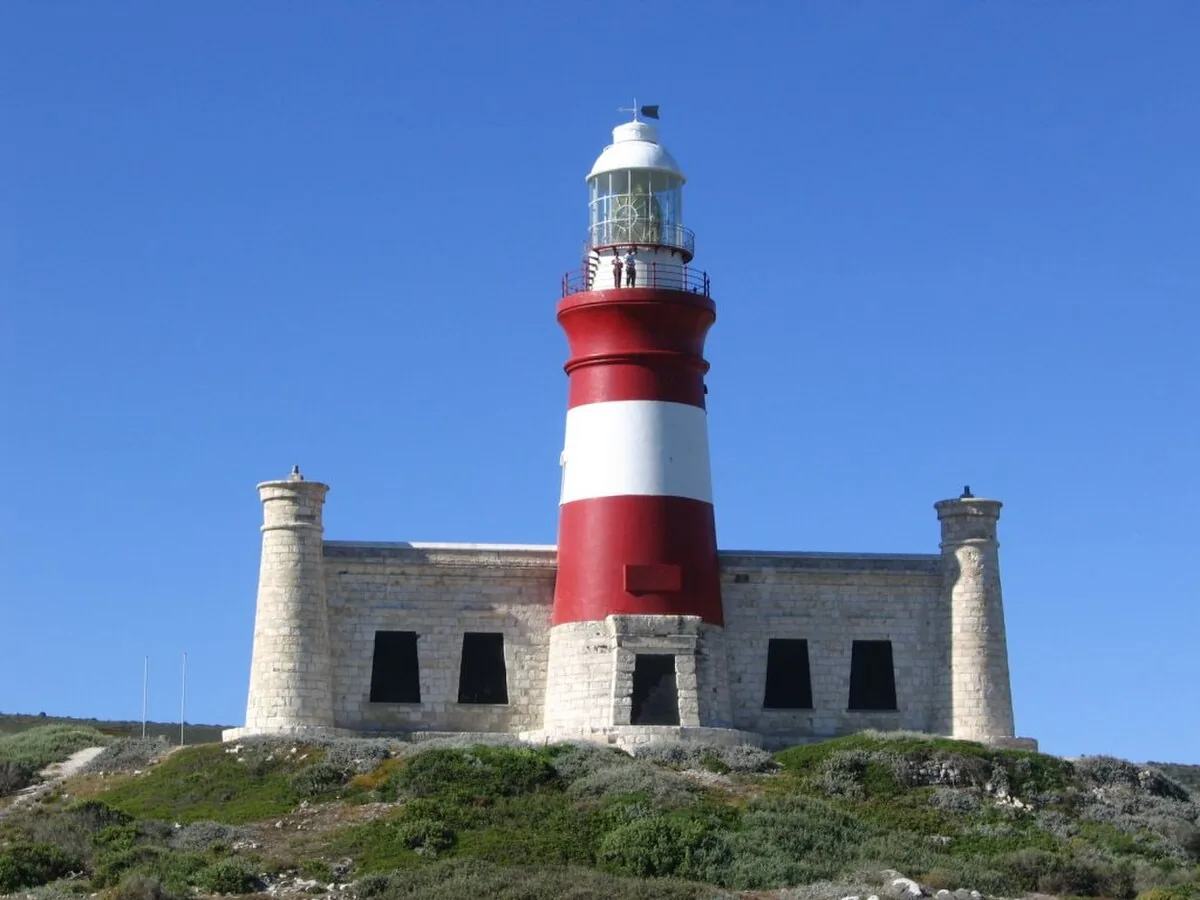
Cape Agulhas Lighthouse, South Africa
magnetic deviation here, 1500
For centuries, Portuguese explorers called this place Cabo das Agulhas, or the 'Cape of Needles,' because their compasses showed no magnetic deviation here in 1500. The coastline became a graveyard for hundreds of ships, including the Arniston and the Birkenhead, which were smashed against the reefs by the ferocious Agulhas current and gale-force winds. The lighthouse was finally completed in 1848, built from local limestone to provide a 19-mile warning beam to passing vessels. By the early 20th century, the original structure was crumbling due to the harsh conditions, leading to a major restoration project in the 1960s that saved it from being demolished. It was declared a National Monument in 1973, and today it houses a unique museum dedicated to the history of lighthouses along the South African coast.
The air is cold and carries a heavy , wet salt spray that coats your skin and glasses within minutes. The relentless, booming crash of the surf against the rocks and the mournful cry of the foghorn on misty days. The climb up the steep, narrow wooden ladders to the top of the tower, The vibration of the wind shaking the lantern room. What catches you is the incredible detail of the Fresnel lens, a massive glass jewel that focuses the light into a powerful beam. The light at the Cape is often dramatic, with dark, brooding storm clouds frequently split by shafts of brilliant sunlight. On the balcony, looking south toward Antarctica, the realization that there is no more land between you and the ice is a dizzying, lonely sensation.
Cape Agulhas is located about
Cape Agulhas is located about a three-hour drive from Cape Town, passing through the rolling wheat fields of the Overberg and the town of Bredasdorp. The final stretch to the village of L'Agulhas is a scenic, well-paved road that ends at the lighthouse gates. Most visitors arrive by car, and there is ample parking near the base of the tower. After visiting the lighthouse, a short boardwalk leads to the official monument marking the meeting of the two oceans. The area is much quieter and less commercialized than Cape Point, offering a more tranquil and authentic coastal experience for those willing to make the journey.
“Cape Agulhas is located about a three-hour drive from Cape Town, passing through the rolling wheat fields of the Overberg and the town of Bredasdorp.”
The Experience
You feel the power of the wind trying to push you back as you walk the boardwalk toward the sea. Audibly, the of the ocean here is different, it’s a deep, subsonic roar that you feel in your chest. The shipwrecks visible at low tide, rusted ribs of iron protruding from the surf like skeletal remains. The majority just take a selfie at the monument and leave, but the real experience is climbing the 71 steps of the lighthouse to see the curvature of the earth. The moment you look out at the grey, churning water where the currents meet, the true scale of the African continent becomes suddenly clear.
Why It Matters
Cape Agulhas is the true geographic southern tip of Africa. The lighthouse is an architectural gem that represents the pinnacle of 19th-century maritime engineering. Historically, it is the most important landmark for the 'Graveyard of Ships,' serving as a symbol of safety on one of the world's most dangerous coasts.
Why Visit
Visit Cape Agulhas because it is the actual end of the road. It lacks the tourist polish of Cape Town, offering a raw and honest encounter with the ocean. You go to stand at the tip of the continent, but you stay for the haunting beauty of the limestone tower and the wild, unpeopled coast.
Insider Tips
- 1
Climb the lighthouse before walking to the ocean monument; the view from the top helps you understand the layout of the reefs that caused so many shipwrecks.
- 2
Check out the Lighthouse Museum on the ground floor; it has a fascinating collection of old lenses and equipment that you won't see anywhere else.
- 3
Drive five minutes further to the Meisho Maru 38 shipwreck, which is still remarkably intact and easily visible from the shore.
- 4
Bring a windproof jacket even in mid-summer; the wind at the point is relentless and significantly colder than in the nearby towns.
- 5
Visit the local fish and chips shops in L'Agulhas village for the freshest catch of the day, often brought in by small boats that morning.