“The bricks used to build South Africa's highest court were reclaimed from the very prison walls that once held the country’s most celebrated freedom fighters in solitary confinement.”
About Constitution Hill
Established originally as a defense against the British, the Old Fort became a prison after the South African War. It saw the incarceration of Mahatma Gandhi in 1908, who used his time there to refine his philosophy of non-violent resistance. Decades later, during the Treason Trial of 1956, Nelson Mandela and Joe Slovo were held here. The prison finally closed its doors in 1983, sitting derelict for years before being reimagined as the site of the Constitutional Court in 2004. It now houses the 'We the People' exhibition, a permanent record of the making of the South African constitution.
What Constitution Hill actually is
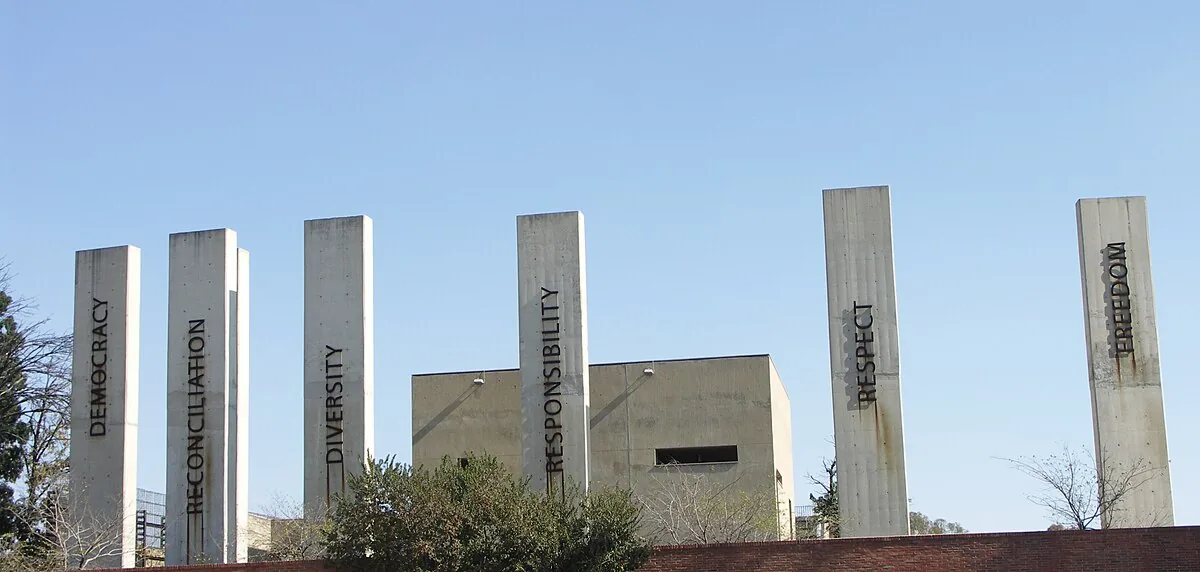
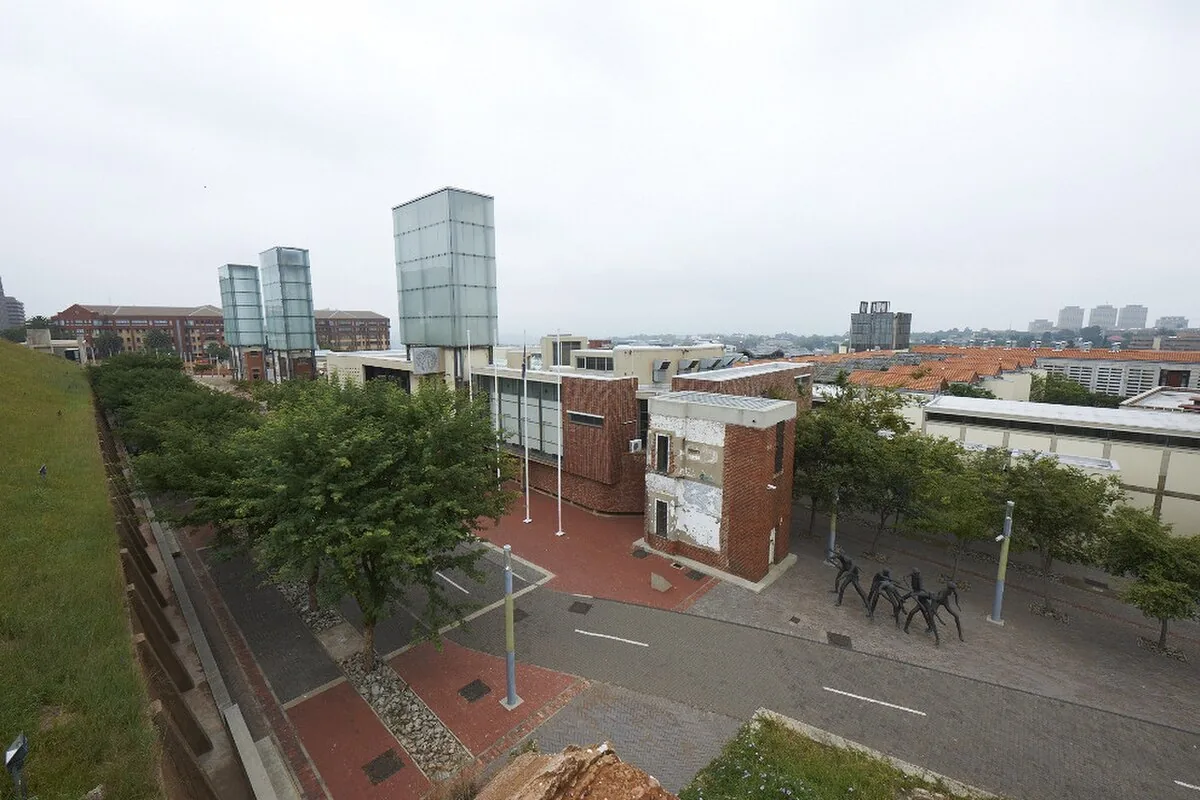
A sprawling complex of former prisons stands on the ridge between the Johannesburg city center and the neighborhood of Braamfontein, now housing the highest court in the land. Constitution Hill is a place of jarring contradictions, where the brutal architecture of the Old Fort and Number Four prison sits alongside the glass and light of the Constitutional Court. This site was once the most feared address in the city, holding everyone from Mahatma Gandhi and Nelson Mandela to common criminals and political activists. Today, the prison cells serve as museums, while the court building remains a marker of the country’s commitment to human rights. The brickwork of the new court was built using salvaged materials from the old prison walls, a deliberate choice to show that a new justice can grow from the ruins of the old.
A sprawling complex of former prisons stands on the ridge between the Johannesburg city center and the neighborhood of Braamfontein, now housing the highest court in the land.
The site began as a fort built
The site began as a fort built by the South African Republic in the 1890s to protect the city from British invasion, but it quickly evolved into a prison complex. For over a century, it was the only place in the country where both men and women, black and white, were incarcerated in the same facility, though they were strictly segregated by race and gender. Number Four was the notorious section for black male prisoners, known for its horrific overcrowding and dehumanizing conditions. In the mid-1990s, the newly democratic government chose this site for the Constitutional Court precisely because of its history of injustice. By placing the protectors of the constitution on the site of its greatest violations, South Africa created a living monument to the principle that no one is above the law.
The air inside the Old Fort is cool and smells of damp stone and old iron, a sharp contrast to the noisy, exhaust-filled air of Johannesburg just outside the gates. The echo of your own footsteps on the concrete floors and the heavy, dull thud of thick wooden doors closing. Moving through the narrow corridors of the Women’s Gaol, There is a sense of confinement that is both physical and emotional. Straight away, the vibrant, light-filled interior of the Constitutional Court, where the ceiling is designed to look like light filtering through a tree, symbolizing justice under the canopy. The light in the 'Flame of Democracy' courtyard is bright and flickering, even in the midday sun. Inside the middle of the court, the sound of the city’s traffic is a constant reminder that the law here is meant to serve the people living just beyond the walls.
Constitution Hill is centrally located
Constitution Hill is centrally located in Johannesburg and is easily accessible via the Rea Vaya bus system or the hop-on-hop-off tourist bus. Many visitors choose to arrive by car, and there is secure underground parking available beneath the court. The complex is best explored with a guide, as the history is dense and layered across multiple buildings, including the Old Fort, Number Four, and the Women’s Gaol. Tours run hourly and provide a comprehensive look at both the prison history and the modern workings of the court.
Constitution Hill is centrally located in Johannesburg and is easily accessible via the Rea Vaya bus system or the hop-on-hop-off tourist bus.
The Experience
You feel an immediate, heavy tension as you enter the courtyard of Number Four, where the history of the 'tausa' dance, a humiliating search ritual, is explained. Audibly, the of the city is oddly muffled inside the thick prison walls, creating a pocket of silence in the centre of Johannesburg. What you catch first is the graffiti scratched into the cell walls, tiny acts of defiance from people whose names have been lost to time. Those who come are struck by the contrast between the dark cells and the incredible art collection in the court building. The moment you see the Constitutional Court judges in session, the transition from a site of pain to a site of power becomes real.
Why It Matters
Constitution Hill is the most significant site for understanding South Africa's legal and social evolution. It is a world-class example of 'heritage of pain' being used to educate and inspire. Historically, it is the birthplace of the most progressive constitution in the world, one that explicitly protects the rights of all people regardless of race, gender, or orientation.
Why Visit
Visit Constitution Hill because it is a raw, unvarnished look at the machinery of oppression and the beauty of its dismantling. It is more than a museum; it is a working heart of democracy. You go to see a prison, but you leave with a profound respect for the resilience of the human spirit and the importance of the law.
✦ Insider Tips
- 1
Attend a public hearing of the Constitutional Court if one is in session; it is free to the public and offers a fascinating look at the law in action.
- 2
Look for the 'Great African Steps' which run between the Old Fort and the new court building; they represent the transition from the past to the future.
- 3
Spend extra time in the Women’s Gaol; the stories of the female political prisoners are often less known but equally powerful.
- 4
Check out the permanent art collection inside the court building, which features works by famous South African artists like William Kentridge.
- 5
Take a guided tour rather than walking alone; the personal stories shared by the guides bring the cold stone walls to life.