“Eight hundred years ago, a king sat atop this red sandstone hill drinking wine from China and weighing gold that would eventually find its way to the markets of Arabia.”
About Mapungubwe Cultural Landscape
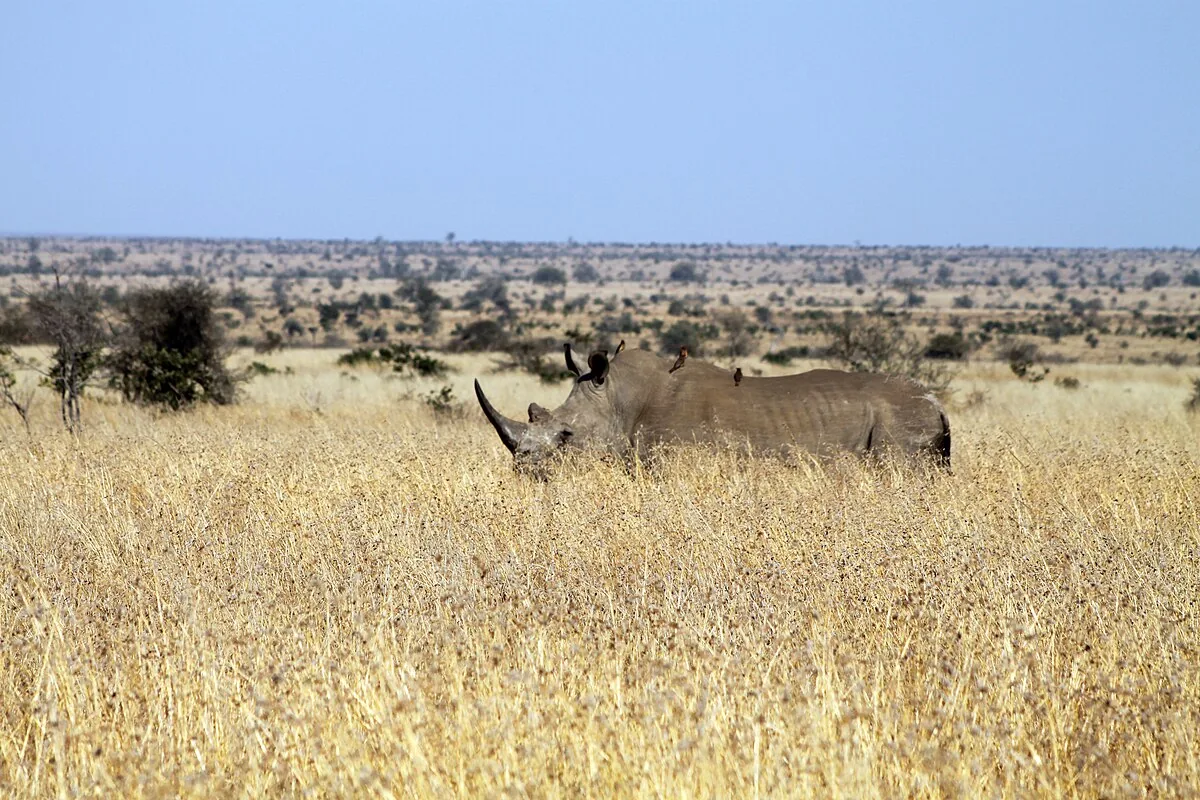
Mapungubwe's rise was fueled by its control over the ivory trade along the Limpopo River, which connected the African interior to the Indian Ocean ports. The kings established a complex bureaucracy and a specialized artisan class that worked in gold, iron, and clay. When the site was rediscovered in the 1930s, the findings were so contradictory to the colonial narrative of a 'primitive' Africa that the government kept much of the discovery quiet for decades. It wasn't until the democratic transition in 1994 that Mapungubwe was given its rightful place as a core element of South African heritage. The golden rhino found in the royal graves has since become a national icon, appearing on the Order of Mapungubwe, the country's highest honor.
Overview
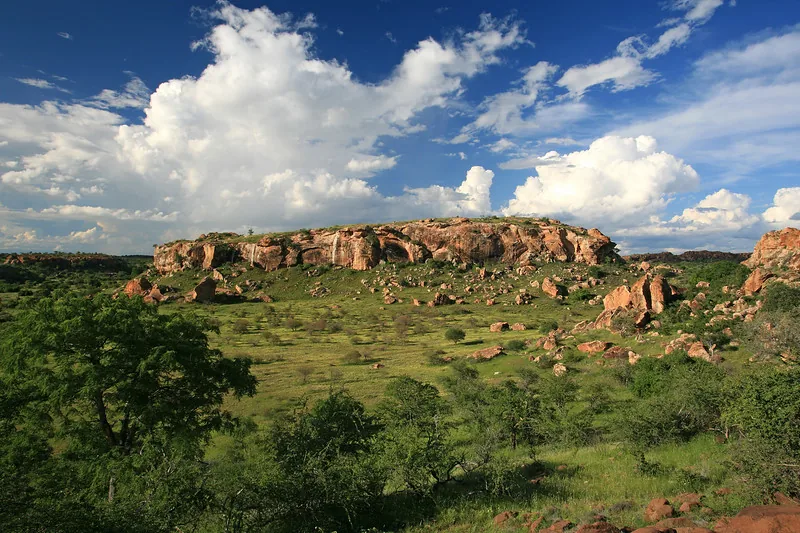
Where the Limpopo and Shashe rivers meet, a flat-topped sandstone hill rises above a kingdom of baobabs and ancient riverbeds. Mapungubwe was the site of Southern Africa's first great kingdom, a sophisticated state that traded gold and ivory with China and India long before the arrival of Europeans. The landscape is a hauntingly beautiful web of red cliffs, grey-green mopane bush, and massive trees that look like they were planted upside down. Today, the site is a UNESCO World Heritage area, preserved within a national park that straddles the borders of South Africa, Zimbabwe, and Botswana. The visitor center is a masterpiece of modern architecture, built using traditional dry-stone techniques and mud bricks to house the famous golden rhinoceros. This is a place of profound silence, where the only movement is the slow drift of elephants across the floodplains.
Where the Limpopo and Shashe rivers meet, a flat-topped sandstone hill rises above a kingdom of baobabs and ancient riverbeds.
The kingdom of Mapungubwe flourished between
The kingdom of Mapungubwe flourished between 1075 and 1220 AD, centered on the 'Hill of the Jackal.' The royal family lived atop the hill, separated from the commoners on the plains below, marking the first instance of a class-based social structure in the region. Archaeologists from the University of Pretoria 'discovered' the site in 1932 after a local informant led them to the secret hill. Excavations revealed royal graves filled with gold jewelry, glass beads from the East, and Chinese celadon pottery, proving the kingdom was part of a vast international trade network. The site was abandoned in the late 13th century, possibly due to climate change and a shift in trade routes toward Great Zimbabwe. Century after century, the local people kept the location secret, believing the hill to be a sacred and dangerous place haunted by the spirits of kings.
The air is dry and carries the scent of wild sage and sun-baked earth. From somewhere comes the low, resonant call of a ground hornbill and the dry rustle of mopane leaves in the breeze. Walking up the narrow, steep stairs to the top of the hill, The rough texture of the sandstone and the increasing intensity of the sun. The deep grooves worn into the rock by ancient inhabitants grinding grain and the small, circular depressions where their huts once stood. The light at sunset is legendary, turning the red cliffs into glowing embers while the baobabs cast long, distorted shadows. At the 'Confluence' viewpoint, looking out over three countries at once, the sheer scale of the African interior feels immense and timeless. Mapungubwe is located in the far north of the Limpopo province, about a five-hour drive from Pretoria. The nearest town is Musina, from which a well-maintained road leads to the park entrance. A high-clearance vehicle is recommended for exploring some of the more remote tracks, though the main roads to the visitor center and the confluence are accessible by sedan. Because the site is sacred, the Hill of the Jackal can only be visited via an official guided tour. These tours depart from the main reception area and provide essential historical context that you simply cannot get by wandering alone.
The Experience
A strange, prickly energy as you climb the wooden walkways toward the summit, where commoners were once forbidden to look. Audibly, the of the wind through the baobab branches feels like a whisper from the past. First, the shards of ancient pottery still embedded in the footpaths, a reminder that you are walking through an active archaeological site. A large share of visitors focus on the gold in the museum, but the real magic is standing on the plateau and realizing how perfectly the kings could see every approach for miles. The moment you see an elephant herd crossing the dry riverbed below, the connection between the landscape and the ancient kingdom feels unbroken.
A strange, prickly energy as you climb the wooden walkways toward the summit, where commoners were once forbidden to look.
Why It Matters
Mapungubwe is the most important Iron Age site in Southern Africa. It represents the origins of complex statehood and social hierarchy in the region. Culturally, it is a site of immense spiritual importance to the local Venda and Shona people, serving as a physical link to their ancestral legacy.
Why Visit
Visit Mapungubwe to see a side of African history that is rarely taught in textbooks. It is a landscape of mythic beauty that combines world-class archaeology with incredible wildlife viewing. You go for the golden rhino, but you stay for the baobabs and the haunting silence of a vanished civilization.
✦ Insider Tips
- 1
Visit the museum before going to the hill; the architecture itself won a World Building of the Year award and explains the site's complexity perfectly.
- 2
Bring binoculars not just for the animals, but to see the ancient rock art hidden in the sandstone overhangs around the park.
- 3
Stay in the Leokwe Camp if possible; the chalets are tucked into the red rocks and offer the most atmospheric stay in the park.
- 4
Check the weather before heading to the confluence; the boardwalk can be closed during the brief but intense summer floods.
- 5
Book your hill tour at least a day in advance, as group sizes are strictly limited to protect the archaeological remains.