In 1882, a group of silent monks arrived in the Zulu Kingdom to build a Bavarian-style village using nothing but the clay beneath their feet.
About Mariannhill Monastery
The land was originally a farm named 'Zeekoegat,' which Abbot Pfanner transformed into a thriving mission in just a few years. Under his leadership, the monastery became one of the largest in the world, at one point housing nearly 300 monks. The architecture reflects a distinctive mix of Romanesque and Gothic styles, adapted for the South African environment. Throughout the mid-20th century, Mariannhill stood as a signal of education, providing high-quality schooling to black South Africans when state resources were deliberately withheld. It remains a powerful symbol of the intersection between European monastic tradition and African social history.
What Mariannhill Monastery actually is
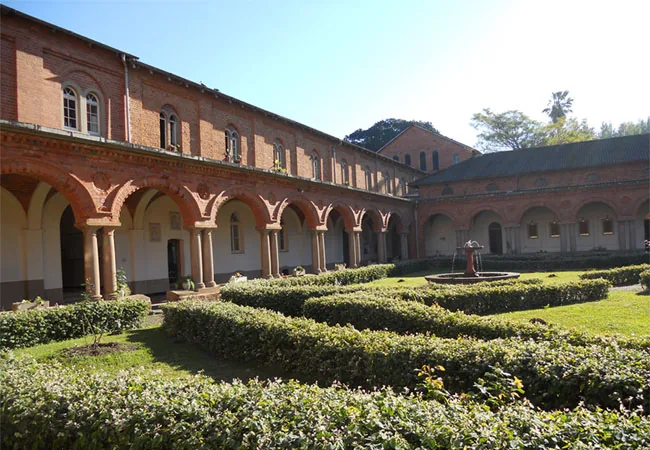
Red brick spires rise above the rolling hills of KwaZulu-Natal, marking a site where Trappist silence once ruled the landscape. Mariannhill Monastery is a sprawling complex of European-style architecture like a piece of Bavaria transplanted into the African bush. Established in 1882, the monastery was designed to be entirely self-sufficient, featuring its own workshops, farm, and cathedral. The St. Joseph’s Cathedral is the centerpiece, boasting intricate frescoes and stained glass that filter the intense Durban sun into a varied display of soft light. Today, it remains an active religious community and a center for craft, education, and healing. The grounds are lush with subtropical gardens, providing a tranquil sanctuary from the industrial bustle of nearby Pinetown.
“Red brick spires rise above the rolling hills of KwaZulu-Natal, marking a site where Trappist silence once ruled the landscape.”
Mariannhill Monastery, South Africa
Abbot Francis Pfanner arrived in South
Africa with 31 monks, determined to establish a mission that followed the strict rule of 'Ora et Labora', pray and work. The monks initially struggled with the climate and the language, but their dedication to craftsmanship quickly made the monastery a hub of local industry. By 1885, they had built a blacksmith shop, a tannery, and a printing press that produced works in multiple languages. Pfanner’s vision eventually clashed with the rigid Trappist order, leading to the monastery being separated into its own missionary congregation in 1909. This shift allowed the monks to engage more deeply with the local Zulu community, establishing schools and clinics that continue to operate today. The red bricks used to build the entire complex were fired in kilns on-site, using clay from the very earth they farmed.
Mariannhill is located about 20 kilometers
Mariannhill is located about 20 kilometers west of Durban, easily accessible via the N3 highway. The turn-off to the monastery is well-marked, leading through the outskirts of Pinetown into a greener, quieter valley. While the monastery is an active religious site, visitors are welcome to explore the public areas, the cathedral, and the various craft shops. A private vehicle is the most convenient way to visit, though local taxis from Durban also run to the Mariannhill area. It is best to visit during the day when the workshops and tea garden are open, as the complex becomes more private after the evening vespers.
Visiting Mariannhill Monastery
The air is filled with the sweet, heavy scent of frangipani and the earthy aroma of the nearby tea garden. From somewhere comes the rhythmic tolling of the monastery bells and the low hum of bees in the meticulously kept flower beds. Inside the cloister, The coolness of the thick masonry walls and the smooth, worn texture of the brickwork under your fingertips. The opening note is the vibrant frescoes on the cathedral ceiling, painted with a detail that suggests years of quiet devotion. The light in the early morning is particularly beautiful, catching the dew on the palms and illuminating the high arches of the church. The moment you step into the tea garden for a slice of their famous homemade cake, the outside world feels remarkably distant.
The Experience
The sense of order and peace as soon as you pass through the main gates. Audibly, the of the monks' chanting during mid-day prayers carries a weight that seems to anchor the entire valley. First, the small cemetery where the early brothers are buried, their simple headstones born from a life of labor. Most people come for the cathedral, but the real charm lies in the quiet corners of the gardens where you can sit and watch the sun move across the red brickwork. The moment you enter the monastery shop and smell the fresh bread and leather goods, you realize that the 'work' part of their motto is still very much alive.
Why It Matters
Mariannhill Monastery is a product of the missionary history of South Africa and the architectural legacy of the Trappists. It represents a unique cultural fusion where European religious practices were adapted to serve an African context. Historically, it is significant for its early printing press and its role in providing education and healthcare to the surrounding Zulu communities.
Why Visit
Visit Mariannhill to find a pocket of profound stillness just minutes from the city. It is a place where history, architecture, and spirituality converge in a way that feels utterly authentic. You go for the stunning cathedral, but you stay for the peaceful atmosphere and the handmade goods that reflect a century of tradition.
Insider Tips
- 1
Check the times for the church services; hearing the choir in the cathedral is an acoustic experience you won't forget.
- 2
Visit the monastery shop early in the day to buy their famous honey and freshly baked bread before they sell out.
- 3
Dress modestly when entering the cathedral and religious buildings out of respect for the resident monks and sisters.
- 4
Look for the smaller chapel dedicated to the Sacred Heart, which features some of the most intimate and beautiful artwork on the property.
- 5
Allow time for a slow lunch in the tea garden, which is run by the sisters and offers some of the best value meals in the region.