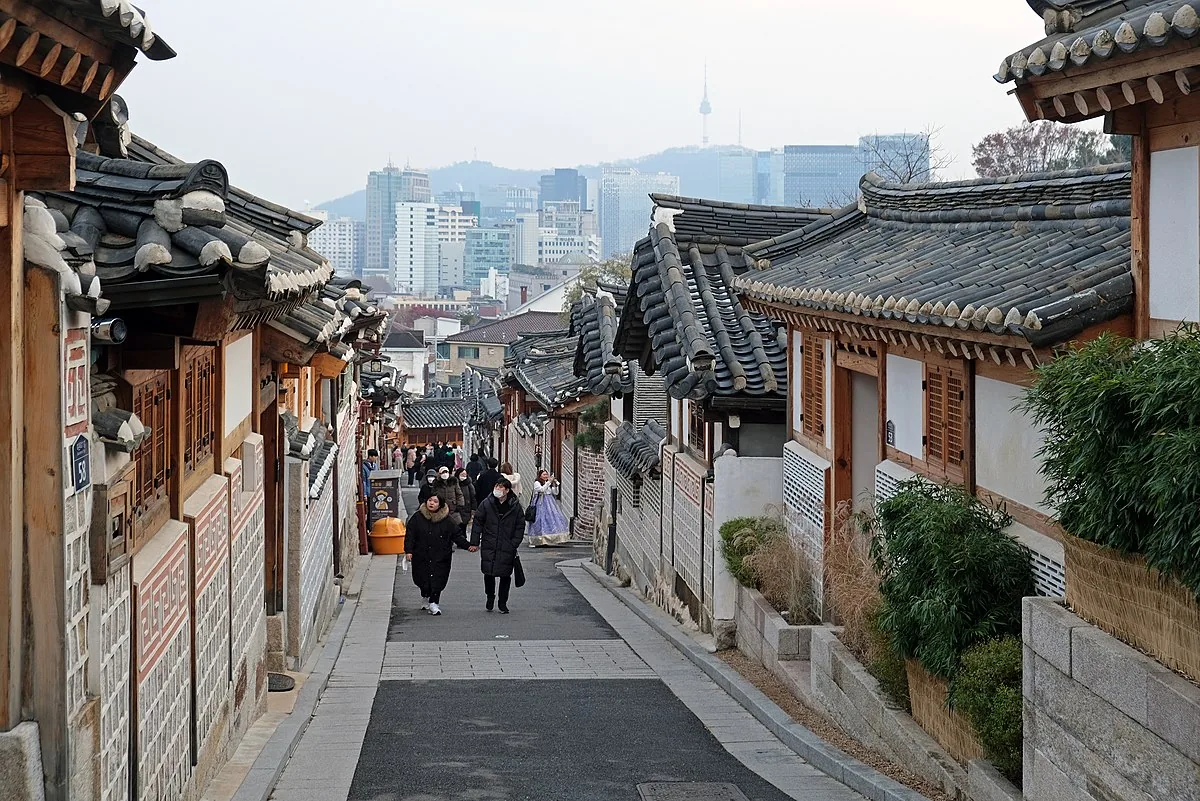
Six hundred years of aristocratic history are etched into the wood-and-paper walls of this neighborhood, where the traditional rooflines create a jagged silhouette against Seoul’s hyper-modern skyscrapers.
About Bukchon Hanok Village
Established during the founding of Seoul in the 1300s, Bukchon was designed to house the elite who served the Joseon kings. The architecture adheres to the principles of 'Baesanimsu,' meaning the mountain is at the back and the river is at the front, a layout believed to bring prosperity. Throughout the 1920s, a housing crisis led to the construction of more efficient, 'urban' hanoks which combined traditional materials with modern glass and tile techniques. After nearly being demolished for apartment blocks in the 1980s, the village was saved by residents and the city government, leading to its current status as a protected heritage zone where every renovation must follow strict historical guidelines.
What Bukchon Hanok Village actually is
Wedged between the grand palaces of Gyeongbokgung and Changdeokgung, Bukchon Hanok Village is a labyrinth of steep alleys and gray-tiled roofs that has served as Seoul’s aristocratic heart for six centuries. While the rest of the city surged upward in a forest of glass and steel, this neighborhood remained stubbornly horizontal. The name Bukchon translates to 'Northern Village,' a reference to its location uphill from the administrative centers of the Joseon Dynasty. Here, the architecture is a conversation between wood and paper, where curved eaves reach toward the sky like the wings of a crane. It is a living neighborhood, not a museum, where the sound of a heavy wooden gate swinging shut still echoes through the narrow lanes.
During the Joseon Dynasty, Bukchon
During the Joseon Dynasty, Bukchon was the exclusive domain of high-ranking government officials and members of the royal family. The proximity to the king was a marker of status, and the houses reflected this wealth through intricate timber frames and expansive courtyards. Along the turbulence of the early 20th century, many of the larger estates were subdivided into the smaller, more densely packed hanoks seen today. These homes were designed with 'Ondol,' an ingenious underfloor heating system that uses smoke from a kitchen fire to warm the stones beneath the living quarters. In recent decades, a fierce preservation movement rescued the area from redevelopment, transforming it from a declining residential zone into the city’s most sought-after cultural quarter.
Walking up the main spine of Gahoe-dong
Walking up the main spine of Gahoe-dong, the world suddenly slows down. The surface of the neighborhood is defined by 'clay and lime' walls and the dark, weathered grain of pine pillars. The history in the uneven stones of the pavement. At certain high points, you can turn around to see the tiled roofs of the hanoks cascading down toward the modern skyline, a visual collision of two different Koreas. Small tea houses hide behind unassuming doors, where It smells of roasted ginger and dried persimmon. What registers is the absence of overhead wires and the presence of silence, broken only by the occasional chatter of visitors or the distant hum of the city below. The light at sunset turns the gray tiles into a warm charcoal, softening the sharp edges of the traditional fences.
The most direct approach is through
The most direct approach is through Anguk Station on Subway Line 3. Walking north from Exit 2 leads you into the lower reaches of the village. Navigating the maze is best done on foot, as the alleys are too narrow for cars. It is helpful to start at the Bukchon Traditional Culture Center to pick up a map, but the real pleasure lies in getting lost in the side streets where the larger crowds rarely venture. Be mindful that people still live behind these paper windows; local volunteers often carry signs reminding visitors to maintain a respectful volume as they explore the hills.
The Experience
You feel the cooling effect of the stone walls even on a humid summer day, shaped by the natural climate control of hanok design. The climb is surprisingly steep, making your calves burn slightly, but the reward is a vantage point where the dark, wave-like patterns of the roof tiles stretch out toward the N Seoul Tower. The muffled sound of footsteps on wooden floors behind the walls. Many visitors flock to the famous 'Photo Spot,' but the real magic is found in the quiet corners where laundry hangs over a wooden balcony and a cat naps on a sun-warmed stone step. The scent of pine wood is pervasive, especially after a light rain.
Why It Matters
Bukchon is the soul of Seoul, a physical bridge between the dynastic past and the digital present. It serves as a vital reminder that urban progress does not have to come at the expense of heritage. For Koreans, it represents the resilience of their traditional way of life; for the world, it is a masterclass in organic urban design that prioritizes human scale over architectural ego.
Why Visit
Go to Bukchon for the contrast. Nowhere else can you experience the visceral thrill of standing in a 14th-century alleyway while watching the futuristic lights of a 21st-century metropolis flicker in the background. It is a place to slow your pace, drink tea in a courtyard that has seen generations pass, and appreciate the tactile beauty of natural materials in a range of plastic.
✦ Photo Gallery
Best Season
🌤 Late March and early April are ideal, as the cherry blossoms frame the gray tiled roofs and the weather is cool enough for the significant amount of uphill walking required.
Quick Facts
Best time to visit
Late March and early April are ideal, as the cherry blossoms frame the gray tiled roofs and the weather is cool enough for the significant amount of uphill walking required.
Getting there
In Seoul, South Korea; reach Seoul first, then continue to the site.
What's nearby
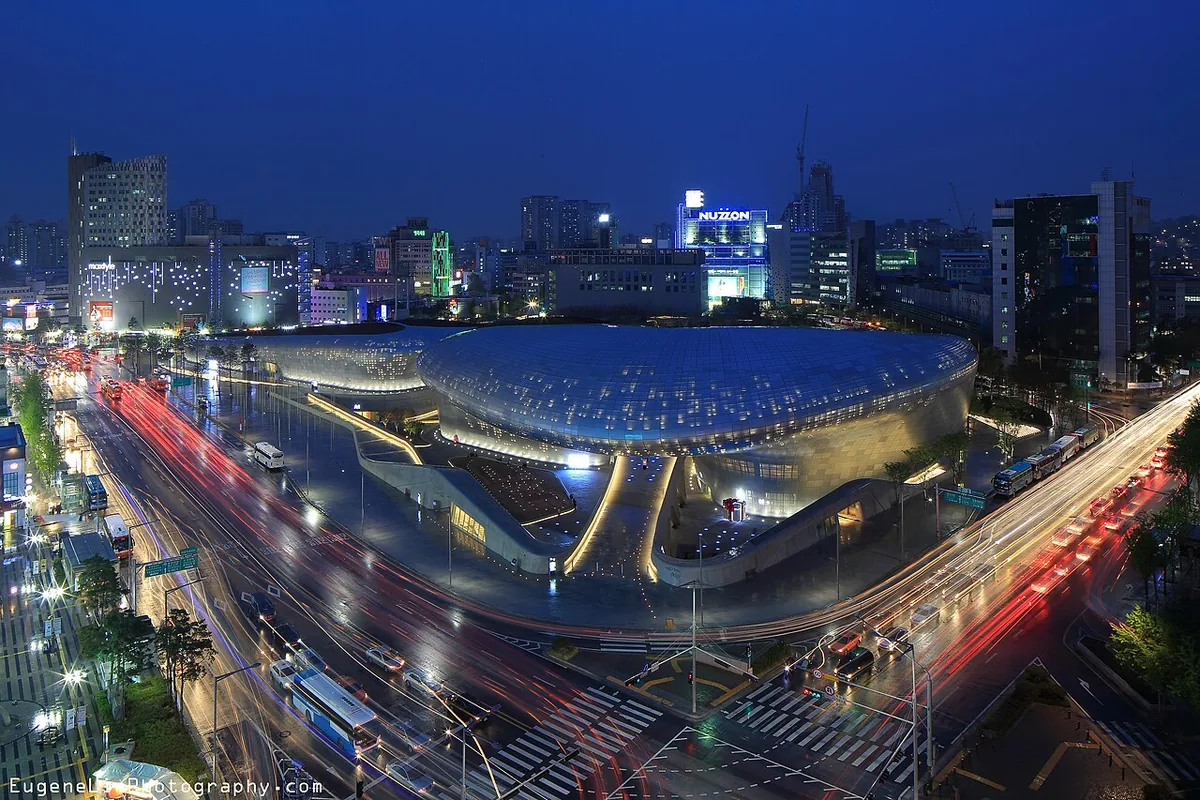
Dongdaemun Design Plaza, National Museum of Korea and Lotte World Tower are also in the area.
Location
Seoul, South Korea
Type
attraction
Coordinates
37.5831°, 126.9836°
Insider Tips
- 1
Seek out the 'Baek In-je House,' a grand estate open to the public that offers a rare look at the interior gardens and elevated lofts of a wealthy family.
- 2
Wear thick socks; if you visit a tea house or a local craft workshop, you will be expected to remove your shoes and walk on polished wooden floors.
- 3
The village is a residential zone; avoid visiting before 10:00 AM or after 5:00 PM to respect the privacy of the people living there.
- 4
Explore the smaller alleys branching off Gahoe-dong 11-gil to find artisanal workshops specializing in traditional knots, embroidery, and kite making.
- 5
Stop at a 'Hanok Cafe' for a bowl of 'Omija' (five-flavor berry) tea, which is as visually vibrant as it is refreshing after the climb.