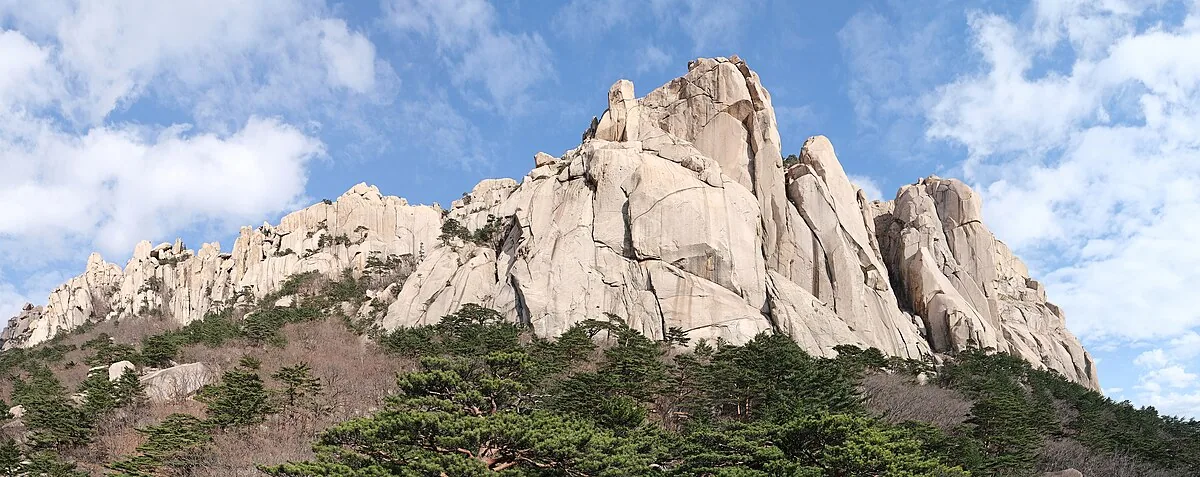
Five thousand years ago, a massive explosion in the sea created this hollowed-out volcanic crown that now is the nation's most iconic stage for the arrival of the morning sun.
About Seongsan Ilchulbong
Seongsan Ilchulbong was connected to the main island by a narrow strip of sand and gravel, though modern roads have made the transition seamless. It was designated a UNESCO World Natural Heritage site in 2007, recognized for its exceptional scientific value in understanding 'Surtseyan' volcanic eruptions. During the Mongol occupation of Jeju in the 13th century, the peak was used as a strategic military base. The crater itself is about 600 meters in diameter and 90 meters deep, lined with 99 sharp rocks along its rim that resemble a giant crown. Despite its popularity, the internal crater remains off-limits to visitors, preserved as a sanctuary for rare plant species that thrive in the nutrient-rich volcanic soil.
Seongsan Ilchulbong
A massive tuff cone rises like a jagged fortress from the shallow waters of Jeju Island’s eastern tip, its crown a perfect, grass-lined crater. Seongsan Ilchulbong, or Sunrise Peak, is a geological anomaly born from a hydro-volcanic eruption five thousand years ago. Here, The air is sharp with salt and the earthy, sulfurous scent of volcanic rock. You climb a series of steep wooden stairs that cling to the side of the cliff. Notice how the emerald sea crashes against the black basalt pillars below. The sound is a constant, powerful dialogue between the wind whipping across the crater rim and the rhythmic roar of the Pacific tide. It is a place that feels primitive, a raw monument to the island’s violent volcanic birth.
“A massive tuff cone rises like a jagged fortress from the shallow waters of Jeju Island’s eastern tip, its crown a perfect, grass-lined crater.”
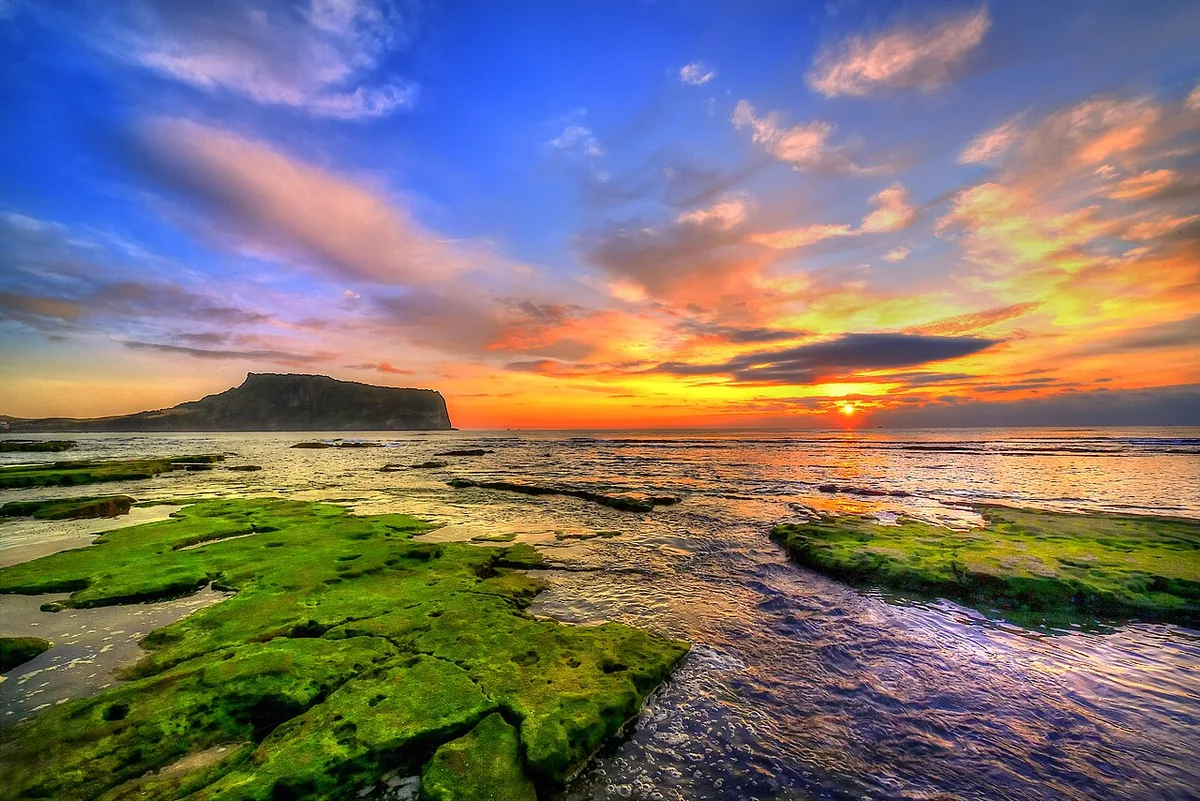
Seongsan Ilchulbong, South Korea
Jeju is a land of 360
Jeju is a land of 360 volcanic cones, but Seongsan Ilchulbong is unique because it formed in the water, a process that created its characteristic steep walls and bowl-shaped top. Over the centuries, the peak was a natural lookout for the islanders, protecting the nearby village from pirates. Legend says that the mountain is the home of a local deity who guards the sunrise, a belief that draws thousands of pilgrims every New Year’s Day to witness the first light of the year. The surrounding waters are also the traditional territory of the Haenyeo, the legendary female divers who harvest abalone and conch without oxygen tanks, a culture that has thrived in the shadow of the peak for generations.
Climbing the 182-meter peak in the pre-dawn darkness , The humidity of the sea air cooling on your skin. What registers is the way the stairs groan under the weight of the climbing crowd, though the sheer scale of the cliff makes the people seem like tiny ants. The audio element is a mix of heavy breathing and the distant, haunting whistle of the Haenyeo as they resurface in the bay below. You get a wind pick up as you reach the summit, where the view opens into a vast, green meadow inside the crater, looking like a stadium for the gods. The lights of the fishing boats in the distance, slowly fading as a sliver of orange begins to bleed into the horizon. The most visceral moment is the first flash of the sun over the water, which turns the entire volcanic rock into a glowing, copper monument.
The peak is located
The peak is located on the eastern end of Jeju Island, accessible by the 110 or 210 express buses from Jeju City. Visitors generally stay in the nearby town of Seongsan to make the early morning climb easier. The ascent takes about twenty to thirty minutes depending on your pace, and the trail is entirely paved with stairs. After coming down, walk to the cove on the left side of the peak at 1:30 PM or 3:00 PM to see the Haenyeo diving performance. The area around the base is filled with shops selling Hallabong oranges, the local specialty that offers a perfect, sweet recovery after the climb.
“The peak is located on the eastern end of Jeju Island, accessible by the 110 or 210 express buses from Jeju City.”
The Experience
The feel of the summit is one of shared, quiet anticipation. What hits is the smell of the sea, briny and cold, as it mixes with the morning dew on the crater grass. The vibration of the ocean through the rock, an echo of the power that built this place. The clatter of the wind through the crater's jagged teeth is a low, eerie whistle that changes pitch as the sun rises. The tiny patchwork of fields in the village below, looking like a green quilt spread out at the mountain's feet. The most evocative moment is the descent, when the light reveals the vertical layers of volcanic ash and basalt you climbed through in the dark. It is a place that demands respect for the immense time scales of the earth.
Why It Matters
Seongsan Ilchulbong is a global geological treasure and the most visited natural site on Jeju Island. it represents the symbiotic relationship between Jeju’s volcanic landscape and its unique maritime culture. Culturally, it is the spiritual focal point for the island, a place that embodies the resilience of the people who live between the fire of the mountains and the fury of the sea.
Why Visit
The value here is that this is the most dramatic sunrise in Asia. You come here to stand on the edge of a volcano that rose from the ocean, feeling the raw energy of the Pacific. It is the only place where you can watch the sun rise over a crater while listening to the songs of the world's last sea women. It is a geological masterpiece that looks better in person than on any postcard.
Insider Tips
- 1
Take the 'down' path to the seaside cliff on your way back; it offers a view of the columnar basalt formations that most people miss by rushing to the exit.
- 2
If the main stairs are too crowded, look for the 'free' walking trail that skirts the base; it doesn't go to the summit but offers a great perspective of the cliff face.
- 3
Eat a bowl of 'Jeonbok-juk' (abalone porridge) in the village after your climb; it's the traditional fuel for the divers and the best breakfast on the island.
- 4
The wind at the top is significantly colder than at the base; even in summer, a light windbreaker is essential for waiting at the summit.