Two stone pagodas stand in the main courtyard, one as plain as a monk’s robe and the other as intricate as a royal crown, yet they have balanced each other for twelve centuries.
About Bulguksa Temple
Prime Minister Kim Dae-seong initiated the temple's construction in 751 during the golden age of the Unified Silla Dynasty. He sought to create a terrestrial representation of the Buddhist utopia, using engineering techniques that allowed heavy granite to be fitted together without mortar. While the wooden structures were razed during the Imjin War in the late 1500s, the stone bridges and pagodas remained untouched. Modern restoration efforts in the 1970s painstakingly rebuilt the timber halls according to historical records, ensuring the site regained its status as the spiritual heart of the Gyeongju region.
What Bulguksa Temple actually is
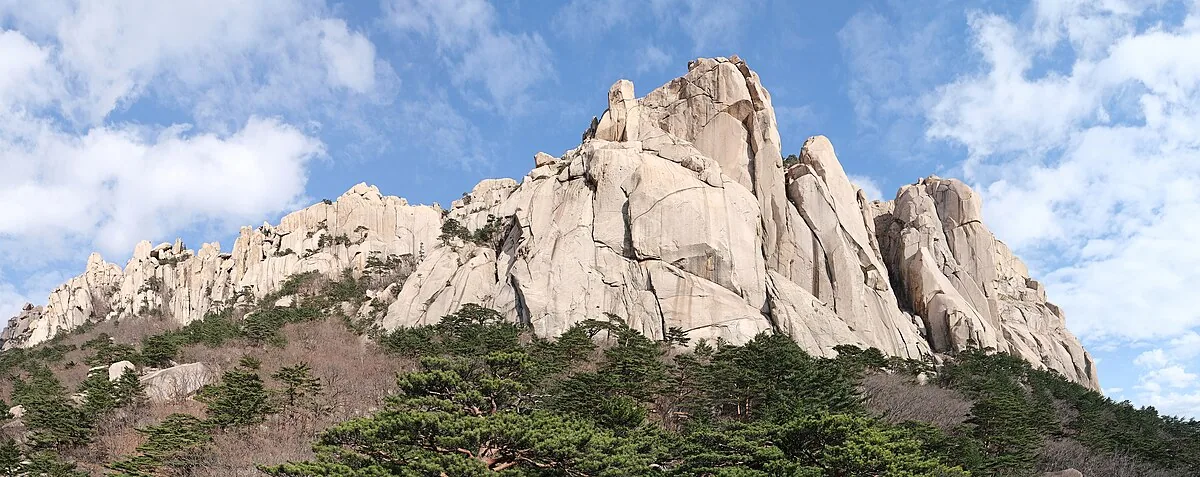
High on the wooded slopes of Mount Tohamsan, the granite and timber of Bulguksa materialize through the morning mist like a physical manifestation of a spiritual ideal. This complex represents the pinnacle of Silla architecture, a civilization that flourished over a millennium ago and left behind a legacy of sophisticated stonework that still defies modern replication. While many temples across the peninsula feel like quiet retreats, Bulguksa possesses the weight of an empire.
“High on the wooded slopes of Mount Tohamsan, the granite and timber of Bulguksa materialize through the morning mist like a physical manifestation of a spiritual ideal.”
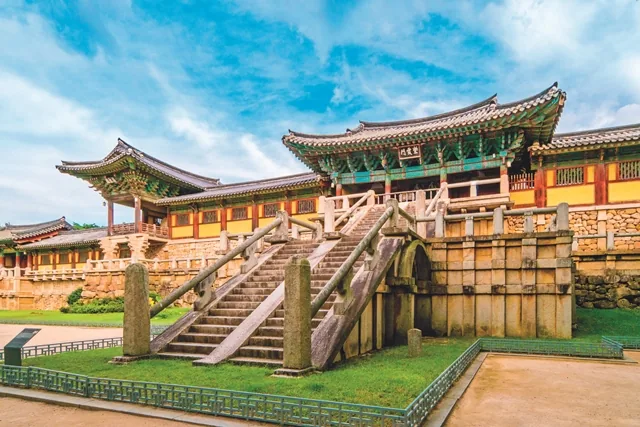
Bulguksa Temple, South Korea
The past
King Gyeongdeok oversaw the grand reconstruction of this site in 751, though its spiritual roots stretch back much further. Legend credits Kim Dae-seong, a high-ranking official, with the temple's vision. He purportedly built Seokguram Grotto for his parents from a past life and Bulguksa for his parents in the current one. This duality of devotion created a bridge between the earthly and the divine. Despite enduring devastating fires during the 16th-century Japanese invasions, the stone foundations remained anchored. The stairways you climb today, the Bridges of Blue and White Clouds, have survived since the 8th century, bearing the literal footprints of Silla royalty and commoners alike.
Walking toward the main prayer hall, your eyes
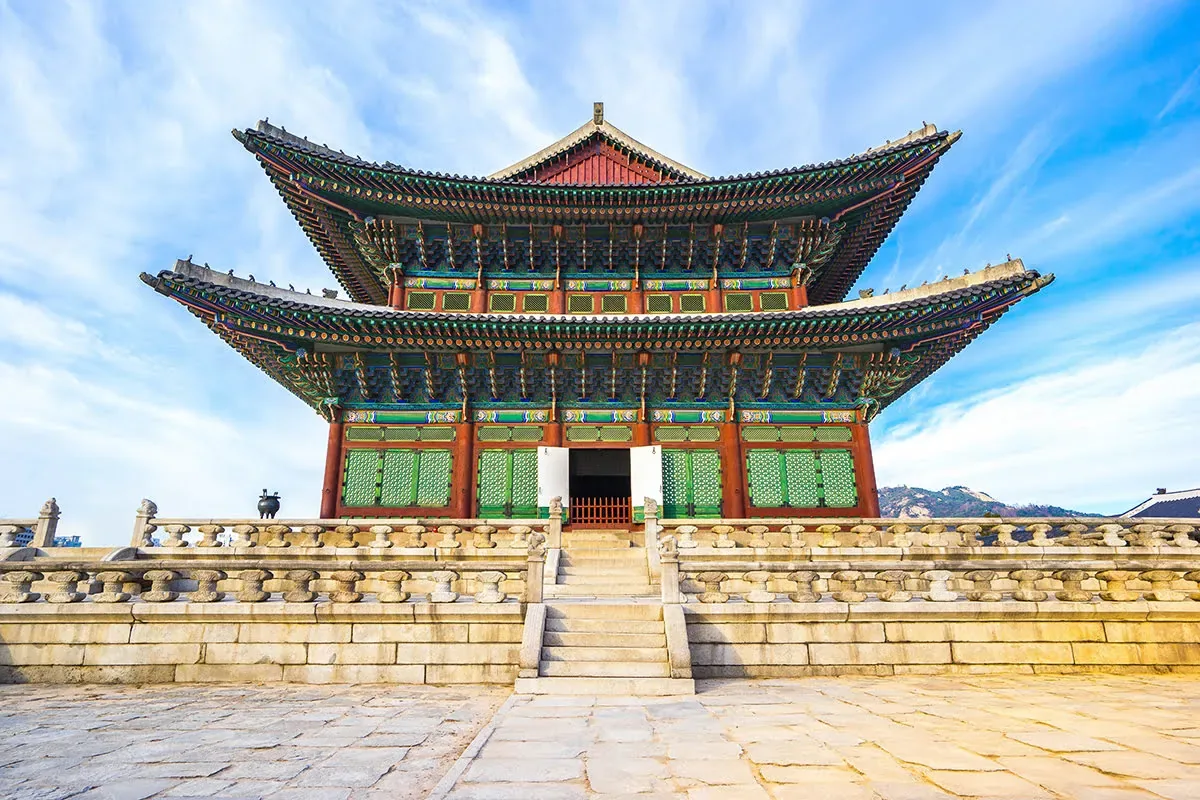
Walking toward the main prayer hall, your eyes inevitably fixate on the Dabotap and Seokgatap pagodas. They stand as visual opposites. Seokgatap is austere and stoic, its three tiers representing a rhythmic simplicity, while Dabotap erupts in ornate stone flourishes and lions that seem ready to spring to life. On a rainy afternoon, the water drips from the heavy ceramic roof tiles with a percussive regularity that softens the voices of visiting pilgrims. The woodwork is painted in Dancheong, a traditional palette of celadon green, cinnabar red, and earthy ochre, which glows with a muted fire when the low sun hits the wooden rafters. You might find yourself standing perfectly still just to hear the wind chime's metallic ring against the silence of the valley.
Reaching this sanctuary requires a journey
Reaching this sanctuary requires a journey to Gyeongju, the ancient capital. From the central station, bus 10 or 11 winds through the city’s green burial mounds before climbing the mountain road. The ascent provides flashes of the East Sea on clear days, a reminder that this temple was built to protect the nation from maritime threats. Most travelers arrive by mid-morning, but staying in a nearby hanok and arriving at the gates for the first bell ensures a moment of solitude before the school groups and tour coaches crest the hill.
“Reaching this sanctuary requires a journey to Gyeongju, the ancient capital.”
The Experience
Your fingers might brush the cool, lichen-spotted granite of the bridges, feeling the texture of stone carved before the Middle Ages began in Europe. Nearby, the moktak, a wooden percussion instrument, drifts from the Daeungjeon Hall, creating a steady heartbeat for the site. Visitors often congregate around Dabotap, but the real magic happens in the shaded corridors between the halls, where the shadows play across the colorful Dancheong patterns. It becomes clear how the temple doesn't sit on the mountain but seems to emerge from it, following the natural contours of the slope.
Why It Matters
Bulguksa serves as the definitive masterpiece of Buddhist art in the Far East, showcasing a level of stone masonry that was centuries ahead of its time. It symbolizes the unification of the Korean Peninsula under Silla and remains a living site of worship rather than a static museum. The architectural harmony between the artificial stone structures and the natural landscape reflects a deep-rooted Korean philosophy of environmental balance.
Why Visit
Forget the crowded city temples of Seoul; Bulguksa offers a profound sense of historical continuity that only an ancient capital can provide. You come here to see how a civilization expressed its highest aspirations in granite. The juxtaposition of the two central pagodas provides a visual lesson in balance that stays with you long after you leave the mountain.
Insider Tips
- 1
Arrive at 7:00 AM to witness the morning ritual when the monks chant and the mountain air is at its crispest.
- 2
Look for the hidden stone pig carved under the eaves of the Geuknakjeon Hall; rubbing it is local tradition for good fortune.
- 3
Take the separate shuttle bus from the parking lot up to Seokguram Grotto first, then hike down the trail back to Bulguksa.
- 4
Visit the temple museum near the entrance to see the world's oldest woodblock print found inside the Seokgatap pagoda.
- 5
Wear socks without holes, as you will be frequently removing your shoes to step onto the wooden floors of the prayer halls.