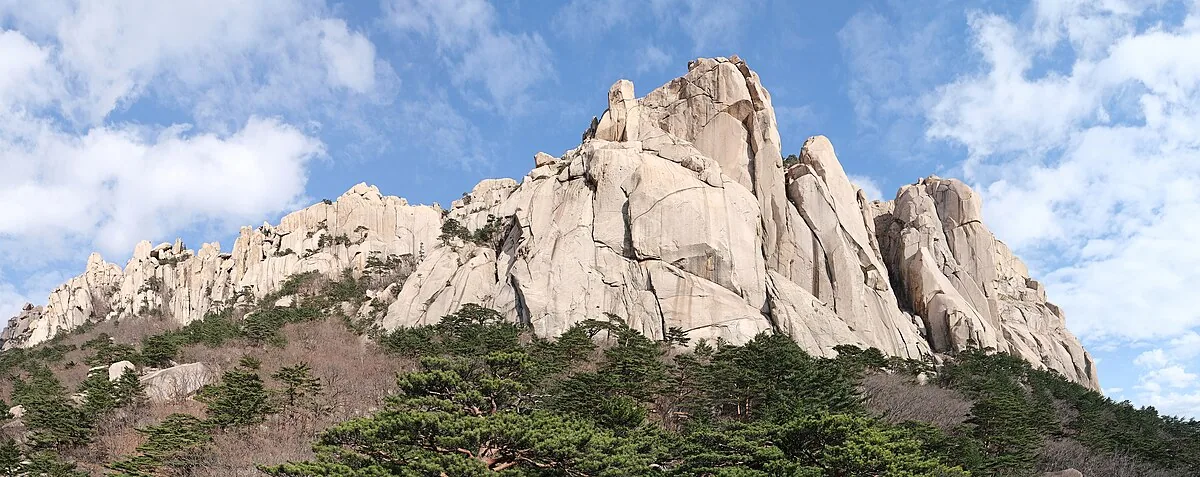
“While thousands of modern office workers eat lunch just outside its gates, this palace remains a silent fortress where 27 generations of kings once governed according to the stars.”
About Gyeongbokgung Palace
The site was chosen specifically for its superior 'pungsu', the Korean version of feng shui, flanked by mountains and facing the Han River. When the palace was rebuilt in the 19th century, it was designed to be a city within a city, housing over 500 individual buildings. The brutal assassination of Empress Myeongseong occurred within these walls in 1895, a turning point that effectively ended the Joseon era. In the 1920s, the Japanese built a massive Government-General Building directly in front of the throne hall to physically and symbolically block the palace from public view. The demolition of that building in 1995 was a cathartic moment for the nation, finally allowing Gyeongbokgung to breathe again as the undisputed center of Korean heritage.
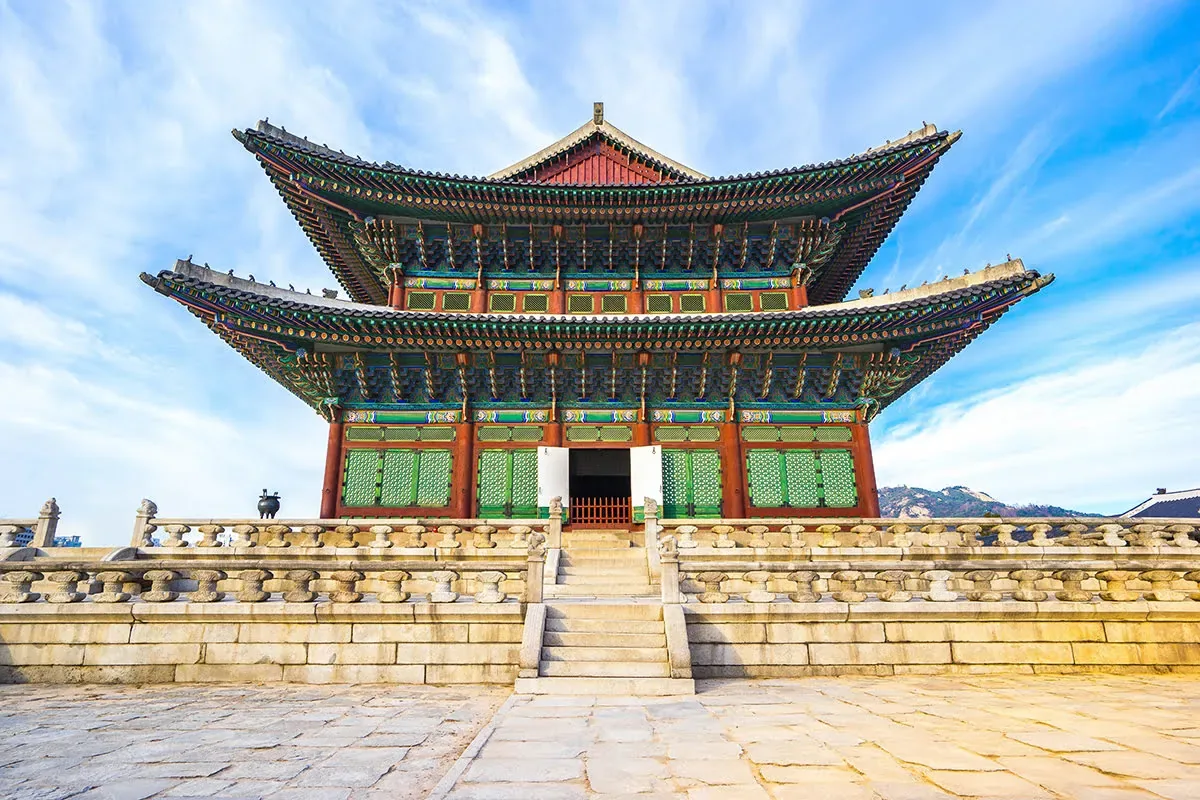
Gyeongbokgung Palace in South Korea
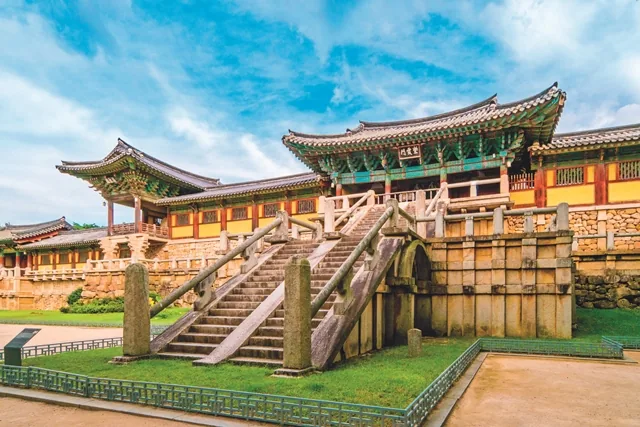
Mount Bugak looms over the northern horizon, providing a jagged granite backdrop to the primary seat of power for the Joseon Dynasty. Gyeongbokgung represents the physical heart of Seoul, a sprawling geometry of stone courtyards and intricate wooden pavilions that have survived fire and colonial erasure. Nearby, the within the gates carries the faint, dry scent of aged pine and the rhythmic metallic clacking of the Changing of the Guard ceremony. The walk across the raised stone pathways of Geunjeongjeon. Notice how the architecture aligns perfectly with the mountain peaks to harness the auspicious energy of the land. In your ears transitions from the roar of modern Seoul outside the Gwanghwamun Gate to a soft, wind-swept stillness moving deeper toward the private residential quarters.
Mount Bugak looms over the northern horizon, providing a jagged granite backdrop to the primary seat of power for the Joseon Dynasty.
Blessed by Heaven, 1395
King Taejo established the Palace of Greatly Blessed by Heaven in 1395, marking the birth of Hanyang as the national capital. The original structures followed a strict Confucian design, emphasizing a balance between the king's public duties and his private life. Tragedy struck during the Imjin War in 1592 when the palace was burned to the ground, leaving it in ruins for nearly three centuries until the Prince Regent Heungseon Daewongun began an ambitious reconstruction in 1867. This era of revival was short-lived, as the Japanese colonial government systematically dismantled most of the buildings in the early 20th century to make way for their own administrative headquarters. Since 1990, a massive restoration project has been meticulously rebuilding the palace, piece by piece, to return it to its pre-colonial grandeur.
Visiting Gyeongbokgung Palace
Standing in the center of the main courtyard, the heat radiating from the pale granite pavers under a midday sun. The first thing you register is the colorful 'dancheong' patterns on the eaves, vibrant swirls of crimson, jade, and sky blue that seem to vibrate against the grey stone. The sound of thousands of silk 'hanbok' dresses rustling as visitors move through the corridors adds a liquid, historical texture to the atmosphere. You get a cool air coming off the pond at Gyeonghoeru Pavilion, where the king once hosted foreign envoys under the shade of massive stone pillars. Instantly, the small, stone animal guardians perched on the roof hips, watching for evil spirits with frozen, toothy grins. The most striking moment is looking back toward the south; you see the medieval eaves of the palace perfectly framing the glass skyscrapers of the financial district.
The most direct approach is via
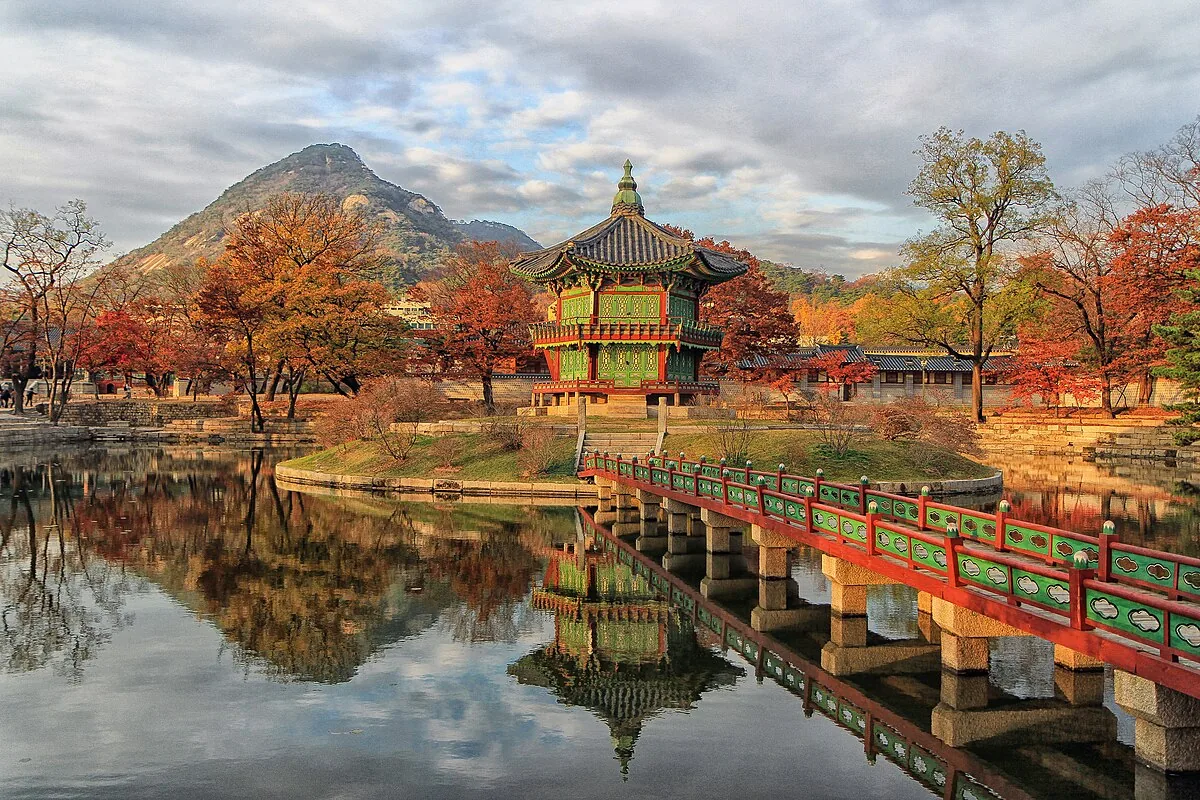
The most direct approach is via Seoul Subway Line 3 to Gyeongbokgung Station, where Exit 5 leads directly into the palace grounds. Alternatively, a short walk from Gwanghwamun Station on Line 5 brings you to the main front gate. Arriving just before 10:00 AM or 2:00 PM allows you to witness the colorful Changing of the Guard ceremony without missing the entry window. To find a quieter side of the grounds, head to the far northern edge near Hyangwonjeong Pavilion, where the hexagonal structure sits in the middle of a lotus pond, often bypassed by the larger groups centered around the throne hall.
The most direct approach is via Seoul Subway Line 3 to Gyeongbokgung Station, where Exit 5 leads directly into the palace grounds.
The Experience
The character of Gyeongbokgung shifts with the light. The first thing you register is the deep shadows in the rafters of the throne hall, where the scent of incense seems to linger in the cold, still air. The transition from the hard, sun-baked public courtyards to the soft, mossy gardens of the queen's quarters. The hum of the wind through the surrounding pine trees provides a low, percussive hum that drowns out the city traffic. Straight off, the intricate lattice work on the paper-covered doors, which filter the sunlight into a warm, milky glow. The most intimate moment is finding the 'Chimnyeonsun' heating vents behind the buildings, an echo of the ingenious 'ondol' floor heating that kept the royals warm during the brutal Seoul winters. It is a place that feels simultaneously massive and deeply personal.
Why It Matters
Gyeongbokgung is the largest and most significant of the Five Grand Palaces, serving as the primary residence of the Joseon kings. It is the definitive example of Korean court architecture and a symbol of national resilience against centuries of foreign intervention. Historically, it is the birthplace of the Korean alphabet, Hangul, which was commissioned by King Sejong the Great within these very walls.
Why Visit
What makes it worth the trip: you need to understand the scale of Korean ambition. While the neighboring palaces are beautiful, only Gyeongbokgung has the architectural gravity to make the surrounding modern city feel like a temporary intrusion. You come here for the throne hall, but you will stay for the quiet ponds and the realization that every stone was laid to reflect a celestial order.
✦ Insider Tips
- 1
Wearing a traditional hanbok grants you free entry to the palace, and there are dozens of rental shops in the surrounding alleys.
- 2
The National Folk Museum is located on the eastern side of the grounds and is included in your ticket price; don't skip the outdoor recreation of a 1970s Korean street.
- 3
Walk to the very back of the palace to see Blue House (Cheong Wa Dae), the former presidential residence, which is now open to the public.
- 4
Avoid the main throne hall during the first hour if you want photos; most people stop there immediately, but the rest of the palace remains empty for a while.