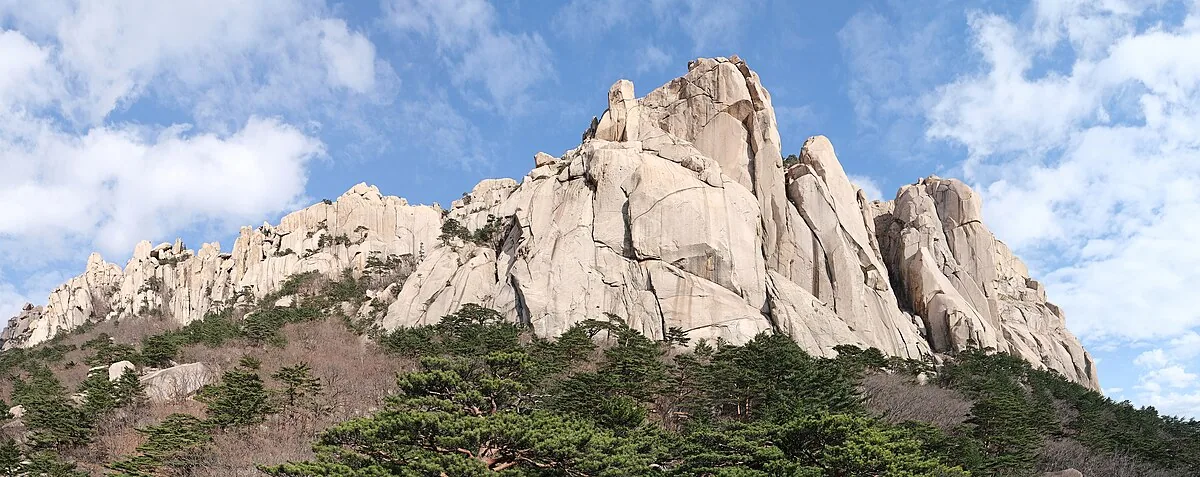
Iron staircases bolted directly into sheer granite cliffs lead hikers to summits where the wind howls through ancient pines and the East Sea glimmers on the horizon.
About Seoraksan National Park
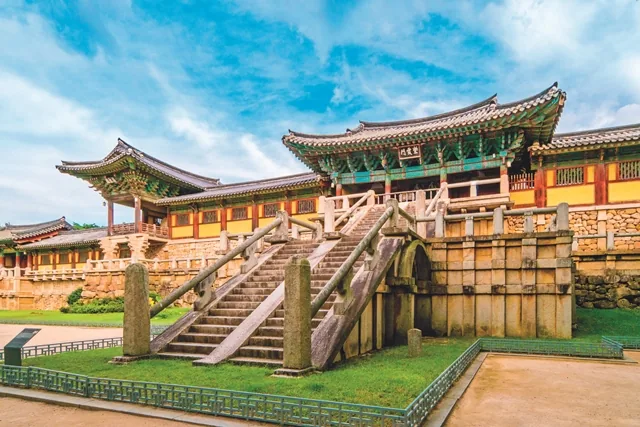
The mountains formed millions of years ago through volcanic activity and subsequent erosion, creating the distinctive white granite blocks that define the park today. During the Korean War, the rugged terrain served as a strategic battleground, and today, the park still reflects to peace and conservation. In 1982, UNESCO designated the area a Biosphere Protection Site to safeguard its unique ecosystem, which includes over 1,000 species of plants and hundreds of animal species. The Sinheungsa Temple, located near the main entrance, dates back to the 7th century, though it has been rebuilt several times following fires and wartime destruction.
Seoraksan National Park in short
Jagged granite peaks pierce the clouds along South Korea's eastern spine, forming the rugged backbone of Seoraksan National Park. These mountains are not the rolling hills found elsewhere in the country; they are steep, defiant cliffs of pale stone that appear to have been chiseled by a divine hand. The name translates to 'Snowy Crags Mountain,' a nod to the frost that often clings to the summits well into the spring. Below the high ridges, the landscape softens into deep, verdant valleys where crystal-clear streams tumble over smooth boulders. It is a place of dramatic verticality, where the sound of rushing water is the constant soundtrack to every hike.
What it represents
Designated as a national park in 1970 and later recognized as a UNESCO Biosphere Reserve, Seoraksan has long been a sanctuary for rare flora and fauna, including the endangered long-tailed goral. The park is anchored by the Great Unification Buddha, a massive bronze statue weighing over 100 tons, which stands near the entrance as a symbol of the hope for a reunited Korea. Scattered throughout the peaks are ancient hermitages like Bongjeongam, located at 1,244 meters, which has was a pilgrimage site for over a thousand years. The trails follow paths forged by monks and mountain foragers, weaving together a history of survival and spiritual seeking in one of the peninsula's most unforgiving terrains.
A ride on the Gwongeumseong Cable
A ride on the Gwongeumseong Cable Car offers a sudden, sweeping perspective of the park’s scale, whisking you from the valley floor to the ruins of an ancient stone fortress in minutes. Once at the top, the wind picks up, carrying the sharp scent of juniper and cold stone. If you choose the more arduous path to Ulsanbawi Rock, the climb involves a dizzying steel staircase that hugs the cliffside. At the summit rewards you with a panoramic view of the East Sea on one side and the undulating peaks of the Taebaek range on the other. In the quiet pockets of the forest, you might spot the flash of a chipmunk or the bright plumage of a Korean woodpecker against the bark of an ancient oak.
The starting point for the park
The starting point for the park is the coastal city of Sokcho, reachable by an express bus from Seoul in roughly two and a half hours. From Sokcho, city bus 7 or 7-1 deposits travelers at the park entrance within thirty minutes. Most visitors arrive for day trips, but the true character of the mountains is revealed to those who stay in the park's shelters or nearby pensions. Starting a hike at dawn allows you to experience the famous 'sea of clouds' that often settles in the valleys, isolating the peaks like islands in a white, churning ocean.
The Experience
The air at Seoraksan is noticeably thinner and colder, hitting your lungs with a refreshing sharpness. From somewhere comes the rhythmic 'clack-clack' of hiking poles against stone, a sound synonymous with Korean mountain culture. Standing beneath the Great Unification Buddha, the sheer scale of the bronze work is humbling, but the real awe comes from the silence of the high ridges. The detail that registers is the way the light catches the mica in the granite, making the entire mountain seem to sparkle after a morning rain. The scent of pine resin and wet earth follows you from the valley to the highest peak.
Why It Matters
Seoraksan is more than a park; it is the physical embodiment of the Korean spirit, resilient, rugged, and deeply connected to the natural world. It serves as a vital ecological corridor and a cultural touchstone for a nation that finds its identity in its mountainous landscape. Its preservation represents South Korea's commitment to balancing rapid modernization with the protection of its most sacred natural spaces.
Why Visit
Seoraksan offers a physical challenge and a visual payoff that no city park can match. It is the best place in the country to experience the raw, unpolished beauty of the Korean wilderness. For those who are a hardcore climber or a casual stroller, the park provides a sense of scale and ancient stillness that provides a necessary antidote to the frantic pace of Seoul.
✦ Photo Gallery
Best Season
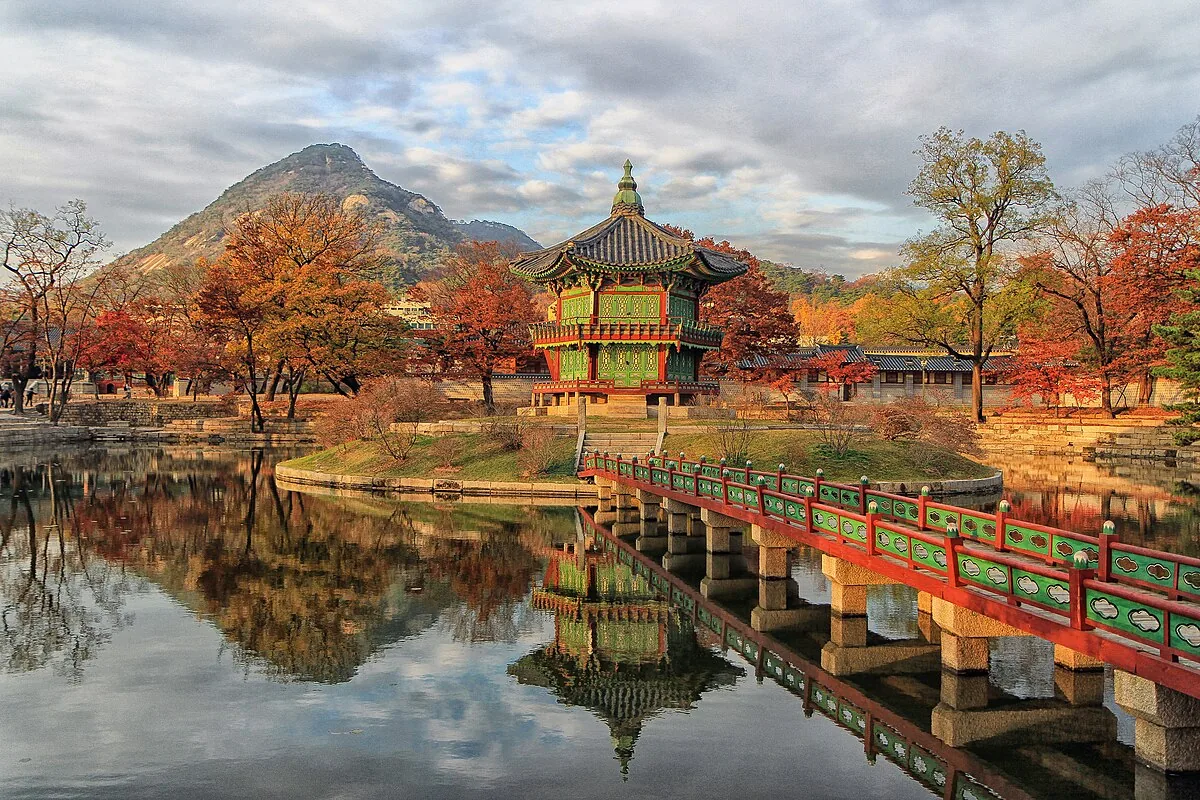
🌤 Mid-October is the legendary peak, when the mountainsides explode into a shifting mix of neon oranges, deep yellows, and fiery reds that are famous across Asia.
Quick Facts
Best time to visit
Mid-October is the legendary peak, when the mountainsides explode into a shifting mix of neon oranges, deep yellows, and fiery reds that are famous across Asia.
Getting there
In Sokcho, South Korea; reach Sokcho first, then continue to the site.
Location
Sokcho, South Korea
Type
attraction
Insider Tips
- 1
Buy your cable car tickets the moment you arrive at the park, as they often sell out several hours in advance during peak seasons.
- 2
The hike to Ulsanbawi is steep; bring gloves to grip the cold metal handrails of the final staircase section.
- 3
Try the local 'Sanchae Bibimbap' (mountain vegetable rice bowl) at the small restaurants near the park entrance for a taste of authentic forest foraged greens.
- 4
Avoid visiting on weekends in October unless you are prepared to share the trails with thousands of other leaf-peepers.
- 5
Fill your water bottles at the natural springs near the temples; the water is filtered through the granite and is exceptionally pure.