While most Korean temples seek the silence of the high mountains, this one was built on a pile of black volcanic rock to listen to the roar of the Pacific Ocean.
About Haedong Yonggungsa Temple
Haedong Yonggungsa is unique because it honors the Sea God, a rarity in a culture where Buddhism usually merged with mountain spirit worship. The 108 steps leading down to the temple represent the 108 earthly desires that one must shed to reach enlightenment. The temple survived the rapid industrialization of Busan, standing as a spiritual bulwark against the nearby high-rise developments. In recent decades, it has become famous for its 'Scholar Statue' and 'Son-of-the-Sea' deity, where students and sailors come to seek good fortune. It represents a living synthesis of Goryeo-era spirituality and modern maritime life, maintaining its relevance in a city that is constantly looking toward the sea for its future.
What Haedong Yonggungsa Temple is
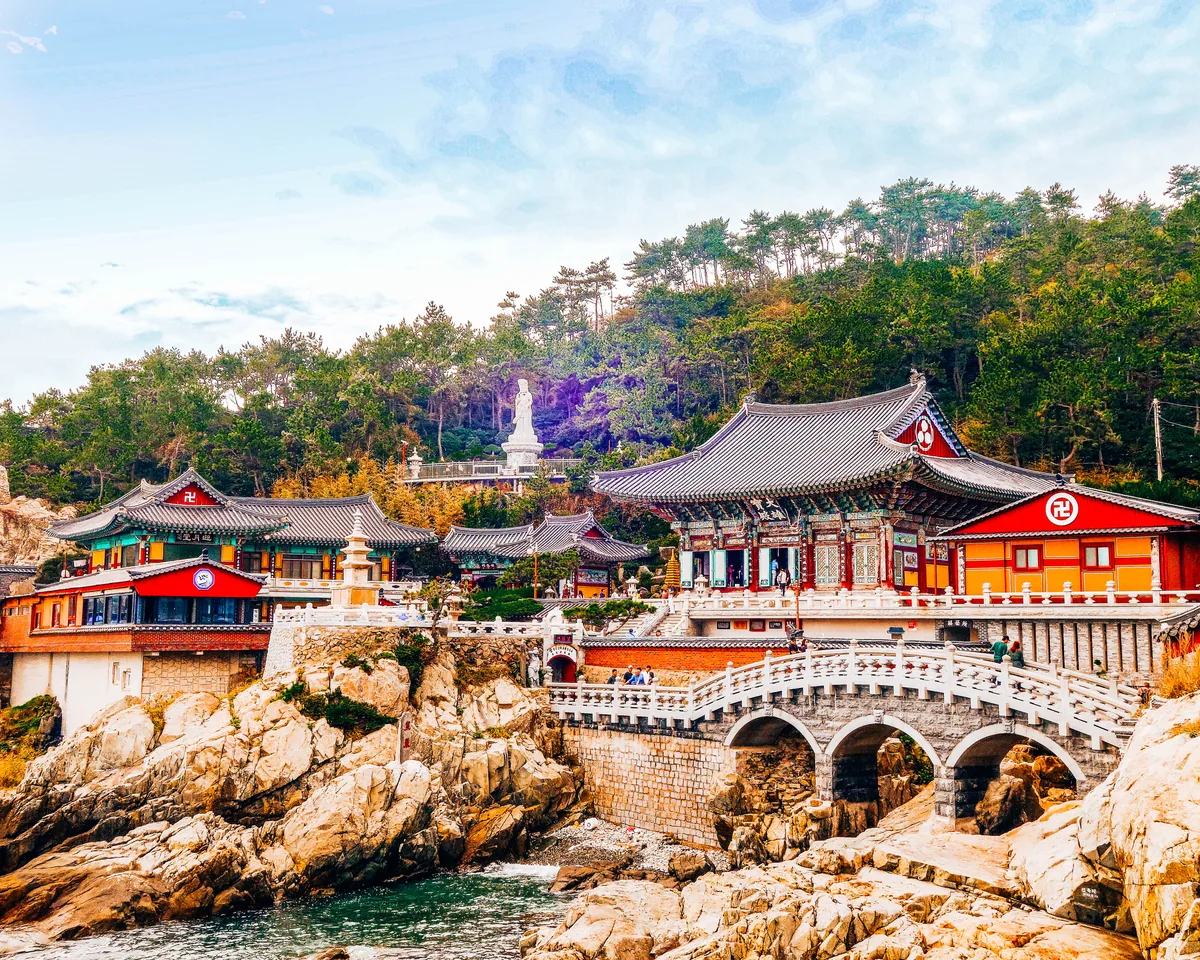
Gold-capped pagodas and crimson shrines sit precariously on the jagged black cliffs of Busan’s northeastern coast, directly defying the traditional Korean practice of building temples in the seclusion of the mountains. Haedong Yonggungsa, the 'Dragon Palace Temple,' is one of the rare coastal sanctuaries in the country, where the altar faces the rising sun over the East Sea. This space is thick with sea spray and the heavy, sweet scent of incense drifting from the main hall. The walk down 108 stone steps that descend toward the water. Notice how the salt air has weathered the statues of the zodiac guardians. The sound is a constant, powerful roar of waves crashing against the rocks, a percussive backdrop to the rhythmic wooden 'moktak' taps of the praying monks.
History
The temple was founded in 1376 by the great teacher Naong during the Goryeo Dynasty, who supposedly chose the site after the Sea God appeared to him in a dream. Like many historical sites in Korea, it was destroyed during the Japanese invasions in the 1590s and remained in ruins for centuries. The current vibrant structure was rebuilt in the early 1930s and expanded in the 1970s, with a particular focus on the Great Seawall and the statues of the Goddess of Mercy, Gwanseeum-bosal. The temple is built on the belief that at least one of your prayers will be answered here if you ask with a sincere heart, a reputation that has turned it into a site of both intense religious devotion and widespread popular appeal.
Descending the final set of stairs toward the sea, the immediate, bracing cold of the ocean wind. You catch the way the light catches the golden Buddha statue that sits high on the hill, overlooking the bay with a serene, unblinking gaze. Overhead, the space is a dizzying mix of the ocean's fury and the quiet murmurs of pilgrims tossing coins toward the stone lanterns in the water. There is a vibration of the waves through the stone path and notice the tiny, vibrant orange crabs that scuttle between the rocks at the water's edge. What you catch first is the red-lacquered bridge that crosses a small ravine, offering the best view of the temple complex as it clings to the edge of the world. The most evocative moment is standing at the 'Sunrise Platform' at dawn, where the orange light turns the spray-flecked statues into glowing, ethereal figures.
The temple is located a bit
The temple is located a bit further out from the center of Busan, accessible by taking the subway to Haeundae Station and then transferring to the 181 or 1001 bus. A taxi from Haeundae is a more direct and reasonably priced alternative. The walk from the bus stop to the temple entrance passes through a vibrant market street filled with seafood snacks and religious talismans. Arriving exactly at sunrise is the traditional way to experience the site, but visiting during the Buddha’s Birthday in late spring is equally spectacular, as thousands of colorful paper lanterns are hung across the cliffs, glowing like embers against the dark ocean at night.
The Experience
The sense of Haedong Yonggungsa is one of dramatic, vertical spirituality. What registers is the smell of the sea, briny, cold, and sharp, as it mingles with the warm, spicy aroma of burning sandalwood. A physical spray of the ocean on your face as you walk across the lower stone platforms. Audibly, the of the wind whistling through the dragon sculptures creates an eerie, musical accompaniment to the waves. The standout is the bright, almost neon colors of the temple eaves, which stand out sharply against the grey granite and blue water. The most striking detail is the collection of small, stone monks tucked into the crevices of the rocks, each one placed there by a visitor with a hidden wish. It is a place that feels simultaneously ancient and brilliantly alive.
Why It Matters
Haedong Yonggungsa is the most famous coastal temple in South Korea and a rare example of Goryeo-period religious placement. It represents the cultural importance of the sea in Korean Buddhism and serves as a vital site for the 'Sunrise' culture of the nation. Historically, it is a result of the enduring power of local legends and the ability of a site to maintain its sacredness through centuries of ruin and reconstruction.
Why Visit
Worth it because you need to see what happens when the mountain meets the sea. While mountain temples offer peace, Haedong Yonggungsa offers power. You come here to witness the sun rise over the Pacific from a Buddhist altar, and to experience the visceral sensation of praying while the waves break just a few meters below your feet. It is the only place in Busan where the architecture feels as wild as the weather.
✦ Photo Gallery
Best Season
🌤 Early May is the most visually stunning time, as the temple is draped in thousands of colorful lanterns for the Buddha’s Birthday, creating a surreal landscape of light against the ocean.
Quick Facts
Best time to visit
Early May is the most visually stunning time, as the temple is draped in thousands of colorful lanterns for the Buddha’s Birthday, creating a surreal landscape of light against the ocean.
Getting there
In Busan, South Korea; reach Busan first, then continue to the site.
Location
Busan, South Korea
Type
attraction
Insider Tips
- 1
The 'Sunrise Platform' is located to the left before you reach the main bridge; it offers the classic postcard view of the entire temple complex.
- 2
Try the 'hotteok' (sweet pancakes) at the market stalls near the entrance; the Busan version often includes sunflower seeds and is famous across the country.
- 3
If you want a quiet moment, head to the smaller shrine located at the very top of the hill behind the main hall; few tourists make the extra climb.
- 4
The temple is free to enter, but bringing a few coins to toss into the 'Lucky Pond' is a local tradition that supposedly ensures a safe journey.