“A lone woman’s leap into the Namgang River in 1593 transformed this stone fortress from a military defeat into an eternal symbol of Korean national spirit.”
About Jinju Fortress
While the fortress likely originated as an earthen wall during the Three Kingdoms period, it was reconstructed in stone during the Goryeo Dynasty to defend against coastal pirates. Its current form reflects the extensive fortifications added during the Joseon Dynasty. The site saw total destruction during the second Siege of Jinju in 1593, but it was rebuilt and remained a vital regional headquarters. In the 20th century, the fortress was designated a National Historic Site, and the Chokseokru Pavilion, which was destroyed during the Korean War, was rebuilt in 1960 using traditional methods to restore the city's most beloved landmark.
What Jinju Fortress is
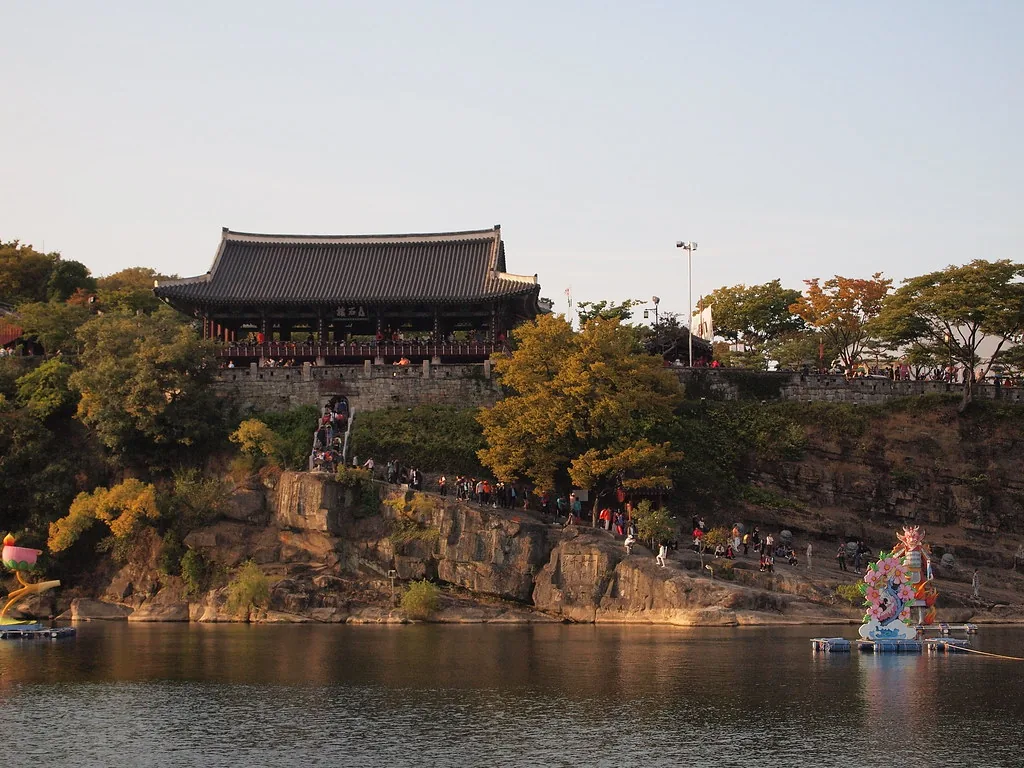
Jinju Fortress is a stoic sentinel on the banks of the Namgang River, its stone walls bearing the scars and stories of one of the most famous sieges in Korean history. This is not a quiet ruin; it is a sprawling historical park that is the heart of Jinju city. The fortress is defined by its massive gates and the Chokseokru Pavilion, which sits on a cliff overlooking the water. The atmosphere here is one of solemn pride, a place where the air feels heavy with the memory of sacrifice and the celebration of courage. It is a site where the beauty of the traditional architecture is inseparable from the drama of the events that took place within its perimeter.
Jinju Fortress is a stoic sentinel on the banks of the Namgang River, its stone walls bearing the scars and stories of one of the most famous sieges in Korean history.
The fortress gained its legendary status
The fortress gained its legendary status during the Imjin War in the late 16th century. In 1592, a small force of Korean soldiers and citizens successfully repelled a massive Japanese invasion force in the first Siege of Jinju, a victory that remains a point of national pride. However, a year later, the Japanese returned with an even larger army and the fortress eventually fell. It was during this tragic second siege that Nongae, a kisaeng (entertainer), famously lured a Japanese general to the edge of a rock in the river and jumped with him into the depths to her death. This act of patriotic suicide is commemorated at the Uiam (Righteous Rock) and the nearby shrine. The fortress has been meticulously restored to its Joseon-era glory, serving as a monument to the resilience of the local people.
Walking along the river-facing battlements, the sound
Walking along the river-facing battlements, the sound of the water below provides a steady, calming rhythm. The rough, cool texture of the granite blocks that make up the wall. The Chokseokru Pavilion is the architectural highlight, a massive wooden structure with heavy eaves that provide a shaded vantage point over the river. On a clear day, the light reflects off the water and illuminates the colorful paintings on the pavilion's ceiling. What grabs you is the 'Uiam' rock sitting in the river, a simple stone that carries an immense historical weight. The park inside the fortress is filled with ancient trees and smaller shrines, creating a peaceful environment for a slow afternoon stroll. During the evening, the walls are lit up, casting a golden glow on the Namgang.
Location and access
Jinju is located in the southern part of the peninsula and is well-connected by bus from Busan (1.5 hours) or Seoul (3.5 to 4 hours). The fortress is located right in the center of the city, easily accessible by local bus or on foot from the Jinju Bus Terminal. The main entrance is the Gongbukmun Gate, which faces the city. To fully appreciate the site’s scale, many visitors walk across the nearby bridge to see the fortress rising from the rocky cliffs above the river before entering. The site is relatively flat once you are inside, making it an easy walk for all ages.
The fortress is located right in the center of the city, easily accessible by local bus or on foot from the Jinju Bus Terminal.
The Experience
The air near the pavilion is filled with the scent of old wood and the fresh, slightly muddy smell of the Namgang. Audible: the occasional chime of a bell and the chatter of families who treat the fortress as their collective backyard. There is a sense of verticality as you look down from the 'Uiam' rock, where the water swirls in dark eddies. The 'Gyeongsang-do Provincial Office' site inside the walls, which gives the fortress a sense of being a city within a city. The most poignant moment is standing at the shrine dedicated to the 70,000 who died in the siege, where the silence is absolute and deeply felt.
Why It Matters
Jinju Fortress is the spiritual anchor of the Gyeongsangnam-do province. It represents the civilian and military cooperation that has defined Korean defense for centuries. The story of Nongae and the siege is taught to every schoolchild in the country, making the fortress a place of national pilgrimage that moves past its role as a mere historical site.
Why Visit
Visit Jinju for the sheer emotional resonance of the place. Unlike the sterile beauty of some royal palaces, Jinju Fortress feels lived-in and battle-tested. It is arguably the most romanticized fortress in Korea, offering a combination of dramatic riverside scenery and a story of courage that is as compelling as any epic film.
✦ Insider Tips
- 1
Go down the steep steps to the river's edge to see the 'Uiam' rock up close; it is much smaller than it looks from the top, which makes the legend even more impressive.
- 2
Visit the Jinju National Museum located inside the fortress walls; it specializes in the history of the Imjin War and is architecturally stunning.
- 3
The 'Jinju Bibimbap' is a local variation served with raw beef; try it at one of the traditional restaurants just outside the fortress gates.
- 4
Look for the small bamboo grove near the back of the fortress; it offers a quiet, shaded path that feels worlds away from the city.
- 5
Evening is the best time for photography, as the reflection of the Chokseokru Pavilion in the river is a classic Korean image.