“The wind moving through these thousands of hollow green tubes creates a natural symphony so distinct it has its own name in the Korean language.”
About Juknokwon Bamboo Forest
The history of Juknokwon is inseparable from the history of Damyang's bamboo industry, which once supplied the entire country with fans, mats, and baskets. In the late 20th century, the rise of plastic led to a decline in traditional bamboo crafts, threatening the survival of the groves. The decision to transform the forest into a cultural park saved the landscape from being converted into farmland or housing. It has since become a popular filming location for historical dramas and movies, further cementing its place in the national consciousness. Today, it is still a successful example of how traditional resource management can be successfully adapted for modern tourism.
What Juknokwon Bamboo Forest actually is
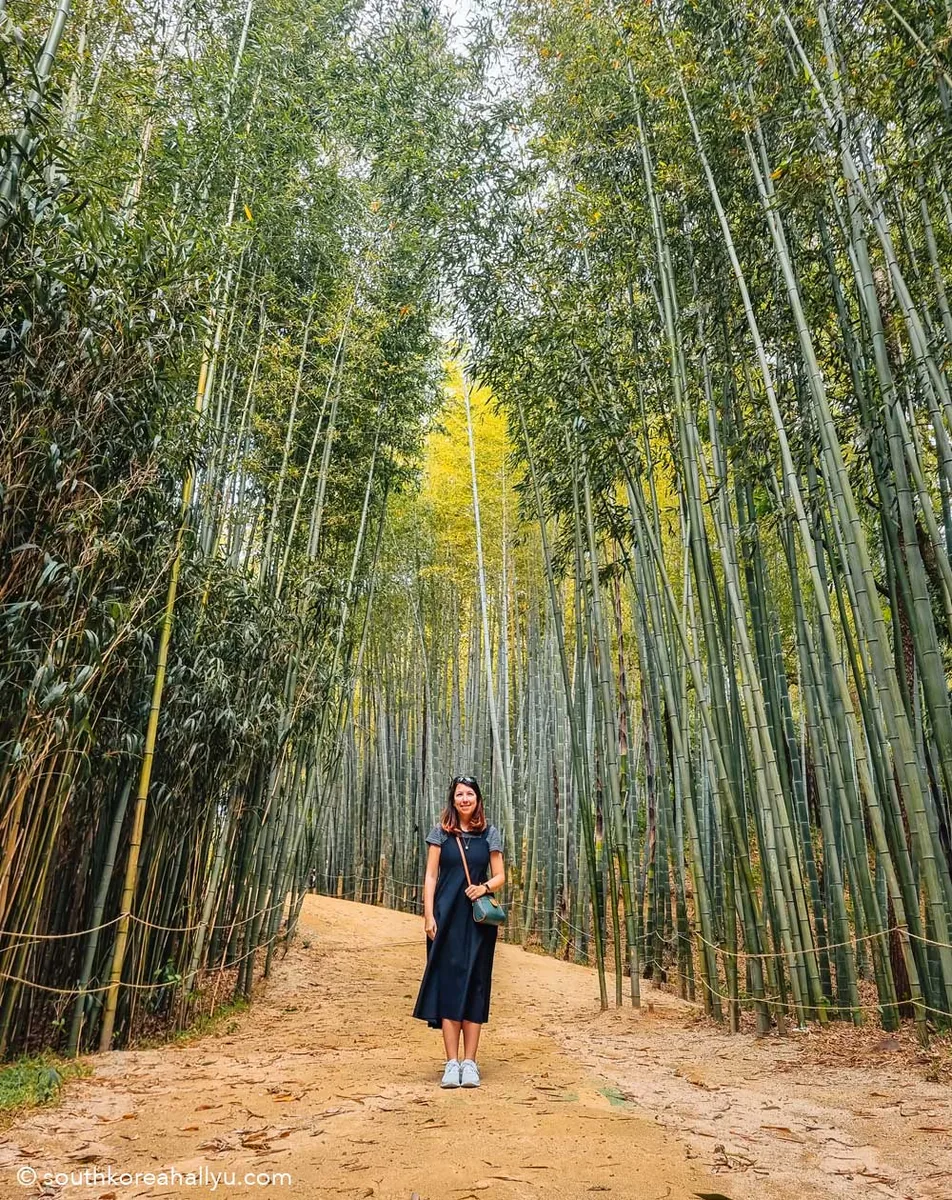
Eight winding paths weave through a dense canopy of green stalks that reach thirty meters toward the sky, creating a micro-climate that feels noticeably cooler than the surrounding Damyang countryside. Juknokwon is a living sanctuary where the sunlight is filtered into a soft, emerald glow. The room here is exceptionally rich in oxygen and carries the clean, woody scent of wet earth and bamboo leaves. The walk along groomed dirt trails where the only evidence of the modern world is the occasional wooden bench carved from the very trees you are admiring. The sound is the primary inhabitant of this forest: a hollow, rhythmic knocking of bamboo against bamboo that shifts in pitch with the strength of the mountain breeze.
Juknokwon is a living sanctuary where the sunlight is filtered into a soft, emerald glow.
Damyang has been the center of Korea's bamboo
Damyang has been the center of Korea's bamboo culture for centuries, with the local climate providing the perfect balance of humidity and warmth for the stalks to thrive. The forest was officially developed as a public park in 2003, but the groves themselves have been managed and harvested by local families for generations. Bamboo has long been a symbol of the 'Seonbi' or virtuous scholars of the Joseon Dynasty, who admired the plant for its ability to bend without breaking. This cultural reverence is reflected in the layout of the park, which includes a traditional pavilion where scholars once gathered to write poetry while listening to the wind through the leaves. The forest is a vital reminder of the deep connection between Korean philosophy and the natural world.
Stepping onto the 'Path of Scholar’s Spirit,' you
Stepping onto the 'Path of Scholar’s Spirit,' The immediate drop in temperature as the massive stalks close in around you. You register the way the light catches the silver sheen of the bamboo skin, creating a visual rhythm that feels almost hypnotic. The sound is dominated by the 'soughing' of the leaves, a sound that the locals believe clears the mind of worldly worries. The texture of the fallen bamboo sheaths underfoot, a dry and rustling carpet that softens the sound of your footsteps. Right away, the small, traditional waterfalls that provide a cool mist to the surrounding air. The most peaceful moment occurs in the middle of the 'Lover’s Lane,' where the density of the grove is so great that it feels like you are walking through a verdant, sun-dappled tunnel. Damyang is easily reached via a forty-minute bus ride from the Gwangju Bus Terminal. Once in Damyang, Juknokwon is a short walk across a scenic bridge from the town center. The park is best explored at a slow pace, as the eight different trails offer varying levels of steepness and scenery. Arriving at 9:00 AM allows you to enjoy the forest in the morning light when the dew is still on the leaves and the crowds are at their thinnest. After your walk, the adjacent Meta Provence village offers a variety of bamboo-themed snacks, including the local specialty: bamboo leaf ice cream.
The Experience
Walking into Juknokwon is one of deep, vertical tranquility. You catch the smell of the air, it is sharper and fresher than the air outside, infused with the subtle perfume of the forest floor. The stillness of the environment, which seems to absorb the sound of the nearby town. The light filters through the canopy in long, dusty shafts that highlight the floating pollen and the occasional dragonfly. The standout is the intricate patterns of the bamboo roots which sometimes break the surface of the path like wooden veins. The most memorable detail is the taste of the bamboo tea served in the pavilion, which tastes like the forest itself: green, mild, and enduringly calm. It is a place that encourages a slower heart rate.
Walking into Juknokwon is one of deep, vertical tranquility.
Why It Matters
Juknokwon is the most famous bamboo forest in South Korea and a pillar of the country's environmental tourism. It represents the preservation of a unique agricultural landscape that has shaped the cultural and economic life of the Jeollanam-do province for centuries. Historically, it is a site that honors the aesthetic values of the Joseon era's intellectual elite.
Why Visit
The reason to visit: you need to experience the physical weight of silence. While other forests can feel dark or claustrophobic, the bamboo at Juknokwon creates a space that feels airy and light-filled despite its density. You come here to escape the metallic pulse of Korean city life and to breathe air that has been filtered through a million leaves.
✦ Insider Tips
- 1
Try the bamboo leaf ice cream at the entrance; it has a subtle, nutty flavor that is surprisingly refreshing on a warm day.
- 2
Look for the traditional 'hanok' houses at the back of the forest where you can participate in a traditional tea ceremony.
- 3
Wear long pants if you are prone to insect bites, as the forest floor is a busy ecosystem for small forest flies.
- 4
The walk to the top of the hill provides a view of the Damyang Cheon stream that most visitors miss by staying in the lower groves.
- 5
If you have time, walk across the street to the Metasequoia Road, another famous tree-lined path that offers a different but equally stunning visual experience.