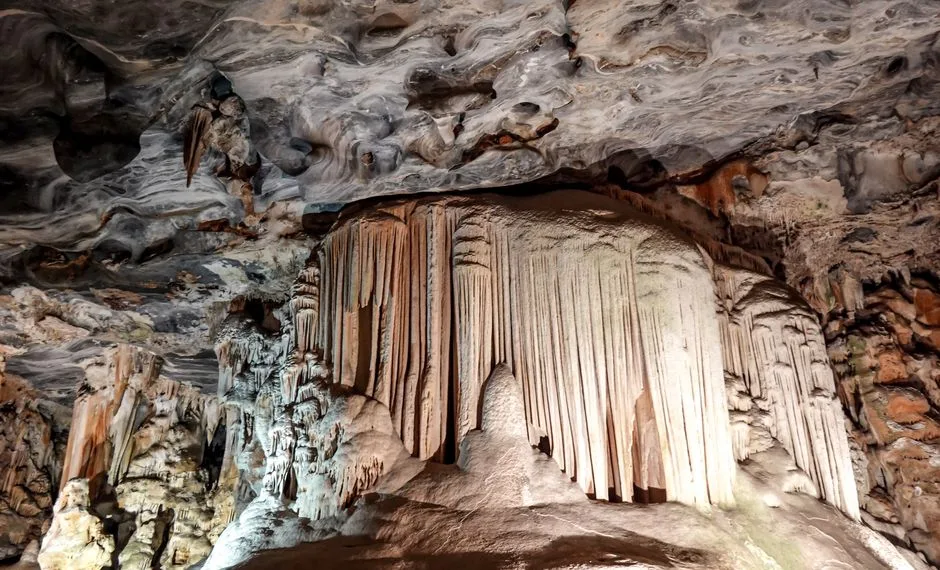
A pillar of solid stone, seven meters tall, stands at the end of a dark tunnel as proof of the moment a river of fire froze in mid-air.
About Manjanggul Cave
Geologists estimate the cave was carved out during a massive eruption of the Geomunoreum volcano. As the surface of the lava flow cooled and hardened against the air, the molten interior continued to pump through like a pipe, eventually draining out and leaving the hollow tube behind. The cave was used by locals as a refuge during the turbulent 1940s, but its scientific value was only codified after Bu Jong-hyu's expedition. Since then, researchers have discovered unique cave life, including the Jeju cave spider, and used the sediment layers on the walls to map the volcanic history of the North Pacific.
Deep beneath the volcanic soil of Jeju Island
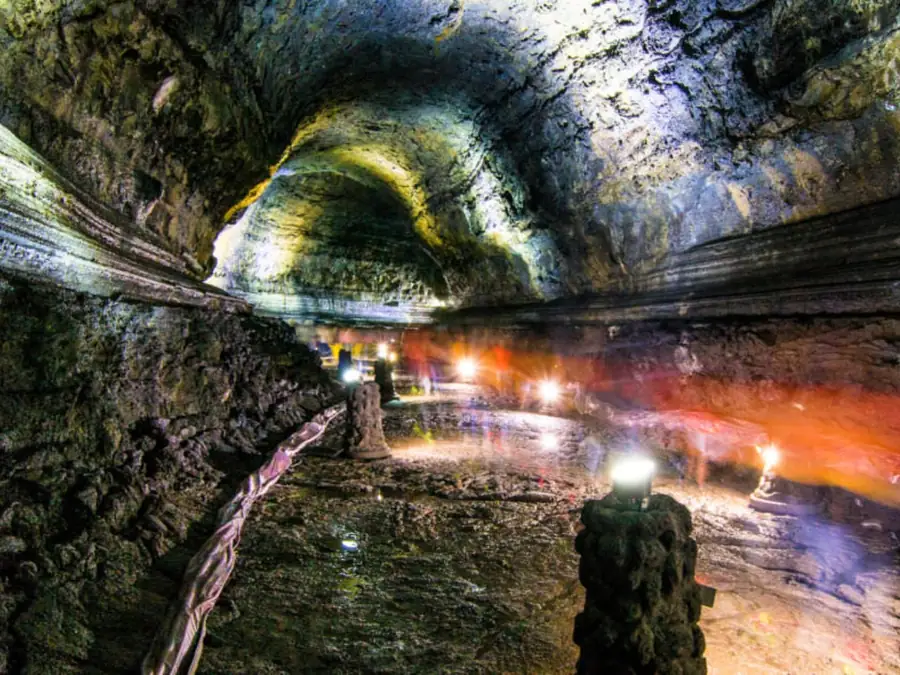
Deep beneath the volcanic soil of Jeju Island lies a subterranean cathedral formed by a river of fire. Manjanggul Cave is one of the finest lava tunnels in the world, a massive arterial tube left behind when molten rock flowed toward the sea hundreds of thousands of years ago. The scale of the cavern is staggering, with ceilings that soar to thirty meters and walls that bear the horizontal scorch marks of the cooling lava levels. Unlike limestone caves with their delicate, dripping stalactites, Manjanggul is brutal and muscular, a monument to the raw geological forces that birthed the island. The air inside is perpetually cool and damp, carrying the metallic scent of minerals and ancient earth.
“Deep beneath the volcanic soil of Jeju Island lies a subterranean cathedral formed by a river of fire.”
Manjanggul Cave, South Korea
Formed roughly 200,000 to 300,000 years
Formed roughly 200,000 to 300,000 years ago, Manjanggul is part of the Geomunoreum lava tube system. While the total length of the cave extends over thirteen kilometers, only a one-kilometer section is open to the public. For millennia, this underworld remained a secret to the islanders, known only to those who stumbled upon its narrow vertical entrances. It wasn't until 1946 that a local schoolteacher named Bu Jong-hyu and his students explored the depths with torches, mapping the tunnels and revealing the geological wonders hidden inside. Today, it is a UNESCO World Heritage site, recognized for its exceptional preservation of volcanic features like lava stalagmites and the massive stone pillars that look like petrified waterfalls.
Manjanggul is located on the northeastern
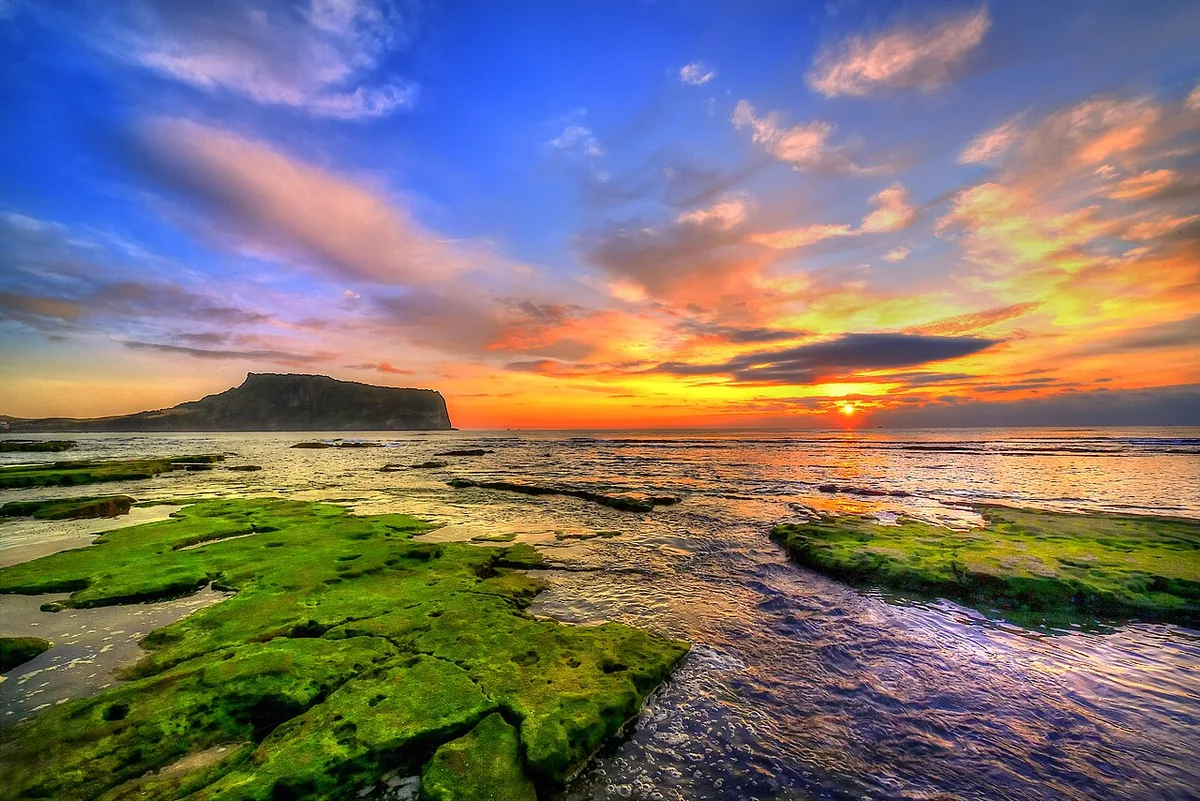
Manjanggul is located on the northeastern side of Jeju Island, about a 40-minute drive from Jeju City. Public transport is available via the 201 bus, which runs along the coastal road, followed by a short transfer to a local bus or a brisk 20-minute walk from the main road. Most visitors combine a trip here with the nearby Seongsan Ilchulbong. A light jacket and sturdy shoes with good grip are essential, as the floor is notoriously bumpy and can be slippery from the constant condensation. The walk through the open section takes about forty-five minutes to an hour at a leisurely pace.
Visiting Manjanggul Cave
Descending the stairs into the cave entrance feels like leaving the surface of the earth for another planet. The lighting is dim and dramatic, casting long shadows across the uneven floor. An impression of sudden chill, the temperature hovers between 11 and 15 degrees Celsius year-round, which makes your breath visible in the air. The path is rough and often wet, requiring careful footing passing 'Lava Shelves' and 'Lava Toes' that look like flowing wax barely changed since. The highlight of the walk is the stone pillar at the end of the public trail, a 7.6-meter column of lava that formed when a top layer of the tube breached and poured molten rock into the lower chamber. The sound is limited to the occasional rhythmic 'plink' of water dripping from the ceiling into dark pools.
The Experience
The silence in the cave is heavy and absolute, broken only by the sound of your own footsteps on the damp basalt. There is a strange sense of scale; the ceiling is so high in places that the flashlights of other tourists seem like distant stars in a black sky. The grain of the walls is fascinating, smooth in some places like polished glass and jagged in others like broken teeth. What draws the eye is the 'Turtle Rock,' a lava flow that shaped itself into the perfect likeness of Jeju's favorite animal. The humidity clings to your skin, but the cool air keeps you from feeling stifled.
Why It Matters
Manjanggul is more than a tourist attraction; it is a geological time capsule. It provides one of the clearest records of volcanic activity on Earth, helping scientists understand how basaltic lava behaves over long distances. For Jeju, it is a source of immense pride, anchoring the island's 'Volcanic Island and Lava Tubes' UNESCO designation and serving as a literal foundation for the island's unique ecosystem.
Why Visit
If you are tired of the sunny beaches and emerald forests of the surface, Manjanggul offers a visceral descent into the planet’s raw architecture. It is a place of shadows and giants, where you can touch the literal heat of the earth’s past. It is the most impressive natural wonder on Jeju for anyone who prefers the mysterious and the monumental over the striking.
Insider Tips
- 1
Wear shoes with thick soles; the 'floor' is actually the solidified bottom of a lava river and is incredibly uneven and hard on the arches.
- 2
Keep your phone or camera in a pocket when not in use to prevent the high humidity from fogging up the lenses.
- 3
Look for the 'Lava Lines' on the walls, which show exactly how high the molten rock rose during different eruptions like a prehistoric tide mark.
- 4
Visit in the late afternoon to avoid the large school groups that typically arrive in the mid-morning.
- 5
Check the weather before you head out; heavy rains can sometimes cause parts of the cave to be closed due to increased water dripping.