“Inside a single blue room, a row of microphones on a table marks the only place in the world where you can technically walk into North Korea and back without a visa.”
About The DMZ (Joint Security Area)
The JSA was originally a circular area where both sides moved freely, but the 1976 axe incident led to the creation of the Military Demarcation Line, the concrete curb that now separates the guards. It is a site of extreme vigilance; the South Korean guards stand half-hidden by buildings to minimize their exposure to potential fire. Despite the name, the Demilitarized Zone is one of the most militarized places on earth, littered with landmines and tank traps. Ironically, because of the total absence of human development, the surrounding zone has become an accidental nature preserve for endangered species like the red-crowned crane and the Asiatic black bear.
Overview
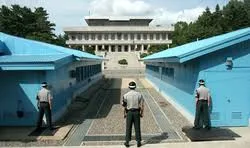
Blue UN barracks sit straddled across a concrete line that marks the most heavily fortified border on the planet. The Joint Security Area (JSA) within the Demilitarized Zone is the only place where soldiers from North and South Korea stand face-to-face in a permanent, silent standoff. The air air here feels heavy, almost thick with a tension that has remained unresolved since 1953. Walking in a single-file line, guided by military escorts. Notice how the sound of birds in the surrounding wildlife sanctuary contrasts with the sterile, surveillance-heavy atmosphere of the compound. It is a landscape of paradoxes where the absence of war does not equate to the presence of peace.
Blue UN barracks sit straddled across a concrete line that marks the most heavily fortified border on the planet.
The DMZ was established
The DMZ was established at the end of the Korean War, creating a four-kilometer-wide buffer zone that runs 250 kilometers across the peninsula. Panmunjom, the village where the armistice was signed, became the site of the JSA, the only point of direct contact between the opposing forces. Over the decades, it has been the scene of dramatic defections, diplomatic breakthroughs, and violent skirmishes, including the notorious 'Axe Murder Incident' of 1976. The blue buildings themselves serve as meeting rooms where negotiations still occur, with the microphones and cables on the tables serving as the physical border between two ideologies that have been at odds for over seventy years.
Stepping into the negotiation barracks,
Stepping into the negotiation barracks, There is a chill that has nothing to do with the air conditioning. You catch the ROK soldiers standing in a modified taekwondo stance, hidden behind dark sunglasses to mask any emotion or eye movement. Overhead, the space is an eerie mix of wind whistling through the valley and the occasional, distant propaganda broadcast from the North. A weight of the strict protocols, no pointing, no waving, no sudden movements, that govern every second of your visit. The stark difference in architecture between the South's glass-and-steel Freedom House and the North's concrete Panmungak Pavilion. The most surreal moment occurs walking to the far side of the conference table, technically crossing into North Korean territory while remaining under the protection of UN guards.
Access to the JSA is strictly regulated
Access to the JSA is strictly regulated and can only be done through authorized tour operators, usually departing from Seoul. You must book at least several weeks in advance and provide passport information for a background check by the UN Command. Tours can be cancelled without notice due to military exercises or diplomatic tensions. Most itineraries include a stop at the Third Infiltration Tunnel and the Dora Observatory, where you can peer through binoculars into the North Korean 'propaganda village' of Kijong-dong. The journey takes about an hour from central Seoul, but the mental distance you travel feels infinitely longer.
Access to the JSA is strictly regulated and can only be done through authorized tour operators, usually departing from Seoul.
The Experience
The feel is one of absolute, disciplined stillness. You register the smell of the country air, fresh and grassy, which feels strangely out of place in a zone of high-intensity conflict. A gaze of the North Korean soldiers watching through binoculars from their balcony across the courtyard. The sound of your own footsteps on the gravel feels unnervingly loud. Initially, the 'Bridge of No Return' nearby, where prisoners of war once chose their fate, its crumbling concrete now overgrown with weeds. The most lasting impression is the sense of being a witness to a frozen moment of history that refused to thaw with the rest of the world.
Why It Matters
The JSA is the physical embodiment of the Cold War and the tragic division of the Korean people. It serves as a vital diplomatic conduit and a constant reminder of the unfinished nature of the conflict. Historically, it is the most significant site of 20th-century geopolitical tension still in operation today.
Why Visit
No book or documentary can replicate the physical sensation of the border's tension. The JSA is the only place where the abstract concept of a 'divided nation' becomes a tangible, terrifyingly thin line of concrete. You come here to see the edge of the world and to appreciate the fragile stability that keeps the rest of the peninsula moving.
✦ Insider Tips
- 1
Follow the dress code strictly; ripped jeans, sandals, or camouflage clothing can lead to you being barred from the bus by military police.
- 2
Bring your physical passport, as digital copies or ID cards are not accepted at the numerous military checkpoints.
- 3
Do not wave or attempt to communicate with any soldiers on either side; it is interpreted as a provocation and can halt the tour.
- 4
Keep your camera in your bag until the guards explicitly tell you that you can take photos in specific directions.
- 5
The tour is physically easy but mentally taxing; eat a good meal beforehand as there are very few places to buy food once you enter the secure zone.