“The last Moorish kingdom in Iberia built its finest palace on a Granada hilltop in the fourteenth century, and the ceiling of the Hall of the Two Sisters contains over five thousand individually carved plaster cells.”
About Alhambra
The Nasrid dynasty ruled Granada as the final Islamic kingdom in Iberia, building the Alhambra primarily in the fourteenth century before surrendering to Ferdinand and Isabella in 1492. Charles V later added an incongruous Renaissance palace within the compound.
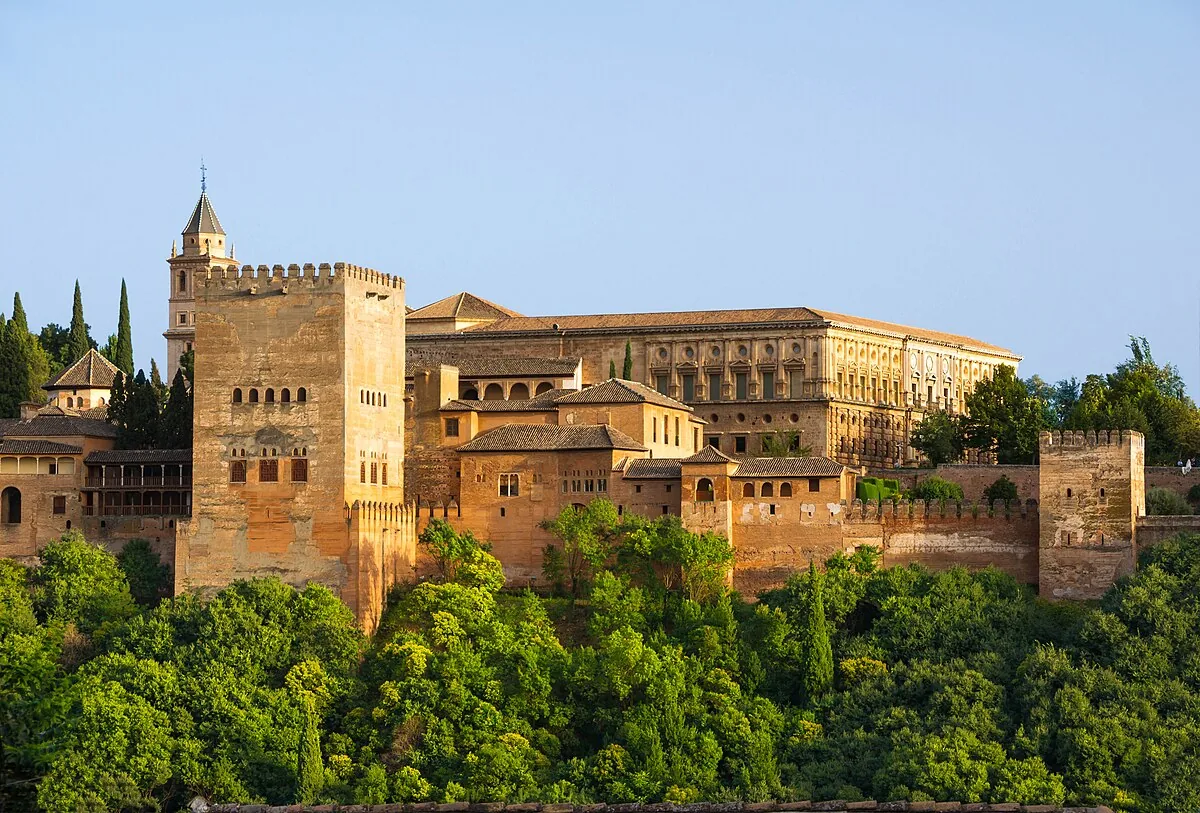
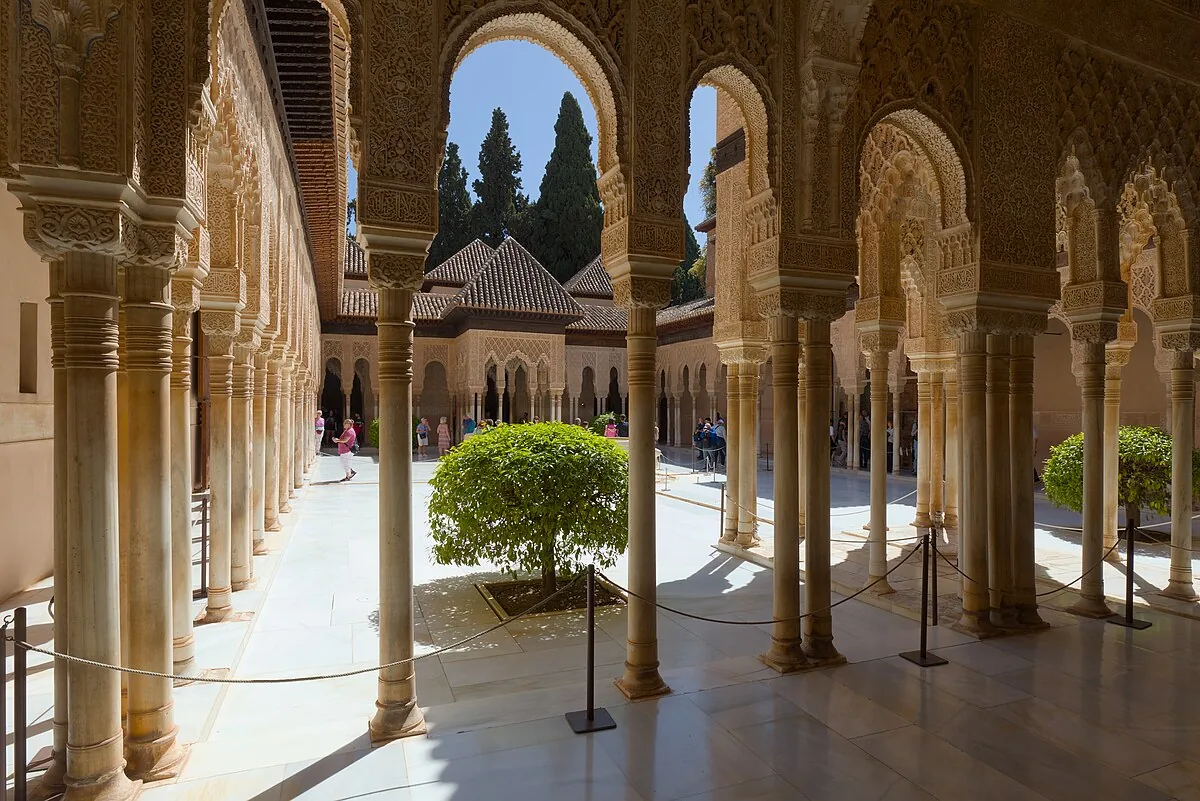
The Alhambra occupies a red-earthed ridge above Granada, a palace and fortress complex that represents the final flowering of Moorish architecture in the Iberian Peninsula before the fall of the Nasrid Kingdom in 1492. The complex consists of three main areas: the Alcazaba military fortress, the Nasrid Palaces, and the Generalife summer gardens. The Nasrid Palaces, particularly the Court of the Lions and the Hall of the Ambassadors, contain decorative work of extraordinary precision: intricate stucco muqarnas, geometric tile dados, and Arabic calligraphy carved into every surface.
The complex consists of three main areas: the Alcazaba military fortress, the Nasrid Palaces, and the Generalife summer gardens.
The Nasrid dynasty ruled Granada from the mid-thirteenth century as the last Islamic kingdom in Iberia, surviving by paying tribute to the expanding Christian kingdoms to the north. The Alhambra as it survives was built primarily in the fourteenth century by sultans Yusuf I and Muhammad V. After the Catholic Monarchs Ferdinand and Isabella received the keys to Granada in January 1492, the complex passed into Christian hands. Charles V later added a Renaissance palace within the Alhambra compound, a fine building that is entirely out of place, and subsequent centuries brought varying degrees of neglect and repair.
Access to the Nasrid Palaces requires a timed entry slot and is the most tightly managed part of the visit. The Court of the Lions, a courtyard centered on a fountain of twelve marble lions supporting a basin, surrounded by delicate colonnaded arcades, is the most photographed space, but the adjacent Hall of the Two Sisters with its stalactite ceiling of over five thousand individual plaster cells is a stronger architectural achievement. The Generalife gardens, connected by a bridge, offer a cooler and less crowded counterpoint to the palace interiors. Views from the Alcazaba towers take in the Albaicín neighborhood and the Sierra Nevada beyond.
The Alhambra
The Alhambra is on the hill above central Granada. Buses run from the city center to the main entrance; the walk up through the Albaicín neighborhood is pleasant and historically interesting. Tickets must be booked well in advance online, palace entry slots sell out weeks ahead.
Buses run from the city center to the main entrance; the walk up through the Albaicín neighborhood is pleasant and historically interesting.
The Experience
Moving through the timed Nasrid Palace entry past the Court of the Lions, spend time under the stalactite ceiling of the Hall of the Two Sisters, walk the Generalife gardens, and climb the Alcazaba towers for views over the Albaicín and Sierra Nevada.
Why It Matters
The finest surviving example of Nasrid Moorish architecture, representing the last and most refined phase of Islamic building in the Iberian Peninsula, a UNESCO World Heritage Site.
Why Visit
The decorative density of the Nasrid Palaces, every surface carved, tiled, or inscribed, is unlike anything else in Europe. The Hall of the Two Sisters ceiling in particular requires time and a stiff neck to appreciate fully.
✦ Insider Tips
- 1
Book Nasrid Palace entry at least three weeks ahead in peak season, available slots genuinely disappear.
- 2
Your Nasrid Palace entry has a thirty-minute window; being late forfeits your slot and there are no refunds.
- 3
The Hall of the Two Sisters ceiling is more architecturally remarkable than the Court of the Lions, allocate time accordingly.
- 4
Evening visits are available for the palaces only, the artificial lighting creates a different atmosphere worth booking separately if you can.