A ninety-kilometer limestone mountain range along Mallorca's northwestern coast preserves centuries of agricultural terracing, and the dry-stone path that traverses it end to end uses routes that shepherds have walked for a thousand years.
About Serra de Tramuntana
The Tramuntana's terraced landscape was shaped by Moorish cultivators who introduced the water management systems later maintained by Mallorcan farmers. The UNESCO inscription recognizes the cultural landscape they created, terracing, stone villages, irrigation channels, as an outstanding example of human adaptation to difficult terrain.
About Serra de Tramuntana
The Serra de Tramuntana is the mountain range that runs along the northwestern edge of Mallorca, from the cape of Formentor in the northeast to Andratx in the southwest, roughly ninety kilometers of limestone peaks, terraced olive groves, and coastal cliffs dropping directly into the Mediterranean. The range is a UNESCO World Heritage Site, inscribed for the cultural landscape created by centuries of agricultural terracing, traditional water management systems, and stone villages perched on precipitous slopes.
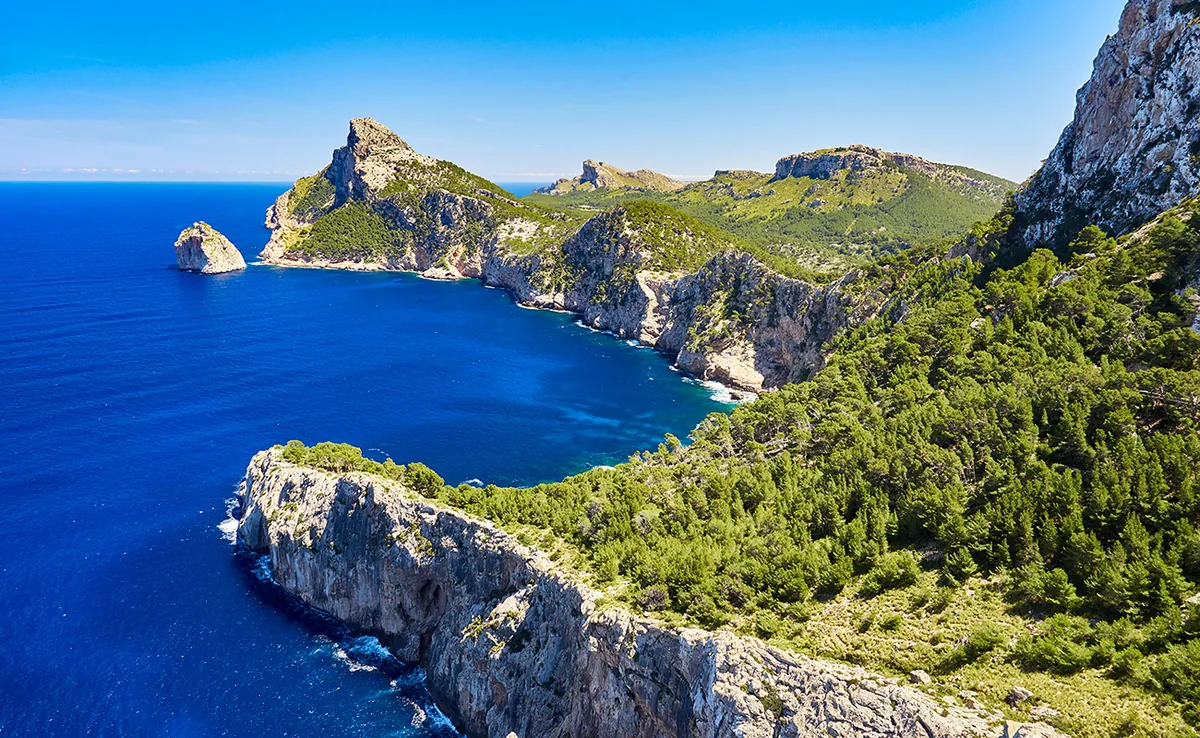
Serra de Tramuntana, Spain
The terracing visible across the Tramuntana hillsides represents centuries of labor by Mallorcan farmers and, before them, by Moorish cultivators who established many of the water management techniques still in use. The terraces prevented erosion, created soil where the limestone bedrock would otherwise be barren, and enabled olive and citrus cultivation at altitudes and slopes that would otherwise be unusable. The villages of the range, Valldemossa, Deià, Sóller, Fornalutx, developed distinct identities shaped by their geographic isolation; the narrow roads connecting them were impassable to most vehicles until relatively recently.
The GR-221 dry-stone route traverses the range from end to end over approximately eight stages, using ancient shepherd paths and stone-walled tracks through the highest terrain. The village of Deià, where the poet Robert Graves lived for decades and where a community of international artists settled around him, retains a particular atmosphere despite its fame. The drive over the Coll de Sóller pass from Palma, or better, the vintage electric train through the tunnel and into the Sóller valley, provides the most accessible introduction to the range's topography. The Formentor peninsula at the range's northeastern tip, where vertical cliffs fall to turquoise water, is the landscape most associated with Mallorca internationally. Mallorca's international airport connects to most European cities. Palma is the base; the orange train from Palma to Sóller runs through the mountains and is a heritage route worth taking independently. A car is necessary for reaching the more remote villages and walking trails.
The Experience
Walk sections of the GR-221 dry-stone route through the highest terrain, take the vintage electric train from Palma through the mountain tunnel to Sóller, visit the village of Deià where Robert Graves lived, and drive or walk the Formentor peninsula to the cliff-edge viewpoint.
Why It Matters
A UNESCO World Heritage Site for its cultural landscape, one of the best examples in the Mediterranean of how human agricultural practice transformed a geologically hostile environment into a productive and beautiful one.
Why Visit
The GR-221 through the high Tramuntana is among the finest multi-day walks in Spain. Even a single section reveals the combination of wild limestone peaks and ancient terraced cultivation that gives the range its character.
Insider Tips
- 1
The vintage Sóller train from Palma runs twice daily and requires advance booking in summer, the route through the mountains is the point, not just the destination.
- 2
The GR-221 trail stages are well-documented; each can be done independently or as part of the full traverse over eight days.
- 3
Deià's Robert Graves museum is small but well-curated, worth an hour if you have any connection to his writing.
- 4
The Formentor lighthouse road closes to private vehicles in summer, a bus runs from Port de Pollença to replace it.