Spain's highest mountain rises from the center of Tenerife as a still-active volcano, and the summit permit required to reach the crater is limited, free, and books out weeks in advance.
About Teide National Park
A UNESCO World Heritage Site since 2007 for its exceptional shield volcano geology, Teide last erupted in 1909 and is actively monitored. The indigenous Guanche people considered it sacred, a entry point to the underworld.
What Teide National Park actually is
Mount Teide rises to 3,715 meters from the center of Tenerife, the highest point in Spain and, measured from the ocean floor, one of the tallest mountains on earth. The national park surrounding it protects a caldera of hardened lava flows, volcanic rock formations, and a high-altitude landscape of reds, blacks, and ochres that looks more like a planetary surface than a conventional mountain environment. At the summit, the views on clear days extend across the entire Canary archipelago.
“Mount Teide rises to 3,715 meters from the center of Tenerife, the highest point in Spain and, measured from the ocean floor, one of the tallest mountains on earth.”
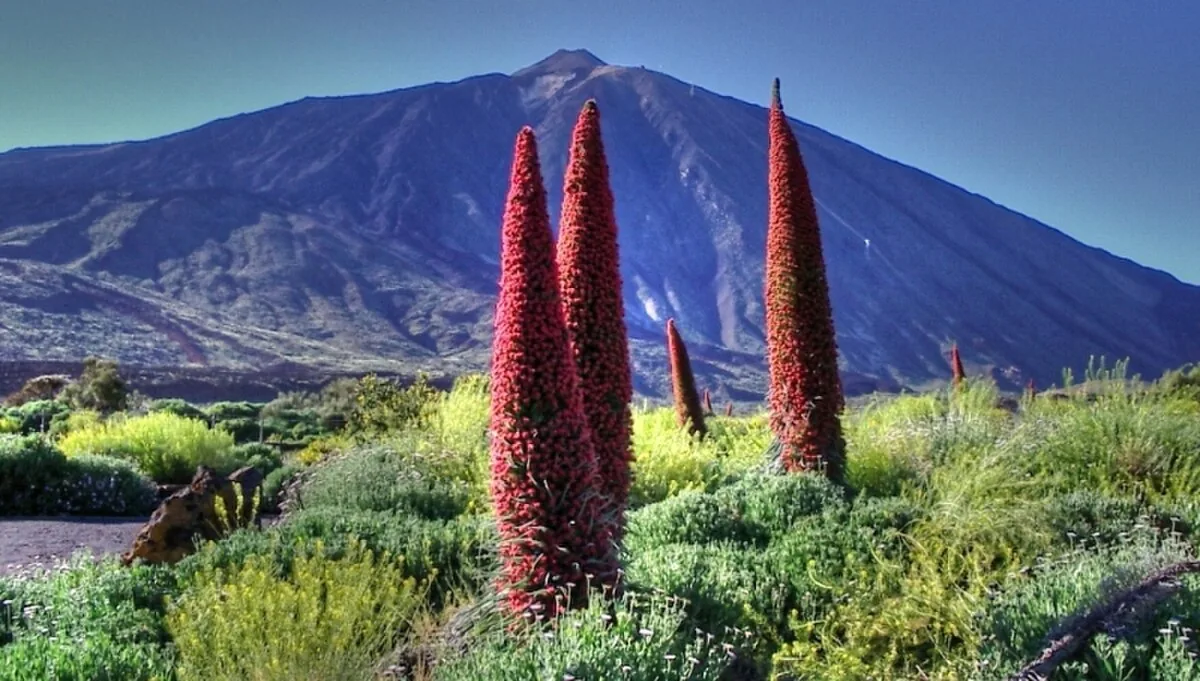
Teide National Park, Spain
Teide is a stratovolcano that last erupted in 1909 and remains active, the national park designation reflects both its outstanding landscape value and the ongoing monitoring of the volcanic system beneath it. The UNESCO World Heritage inscription in 2007 recognized the park's exceptional geology and its position as one of the world's finest examples of a shield volcano in a caldera setting. The indigenous Guanche people of Tenerife held Teide sacred, associated with the entry to the underworld, and the mountain's influence on the island's culture runs centuries deep.
Visiting Teide National Park
The cable car from the Cañada del Teide base station rises to 3,555 meters in eight minutes, providing access to the upper slopes for those who don't wish to hike. A permitted summit trail continues a further 200 meters to the crater rim; summit permits are free but must be reserved in advance through the national park and are limited daily. The volcanic landscape around the cable car base station, the Roques de García formations, the lava fields, the Los Azulejos colored mineral outcrops, rewards two to three hours of walking without any summit ambition. Stargazing from the park at night, at over 2,000 meters above sea level and far from coastal light pollution, is among the best in the Atlantic.
The Experience
Take the cable car to 3,555 meters for a summit permit hike to the crater rim, walk the lower volcanic landscape around the Roques de García formations and colored mineral outcrops, and return after dark for some of the Atlantic region's best stargazing.
Why It Matters
Spain's highest peak and one of the world's most accessible active volcanoes, in a UNESCO-protected high-altitude caldera landscape unlike anything else in European territory.
Why Visit
The lunar quality of the caldera landscape, red and black volcanic rock with no vegetation at altitude, under a sky that is closer than almost anywhere in Europe, produces a genuinely disorienting sense of scale and remoteness.
Insider Tips
- 1
Book the free summit permit through the national park website at least two weeks ahead, the daily limit is strict and fills quickly.
- 2
The cable car frequently closes due to wind, check the Teide website on the morning of your visit before driving up.
- 3
The Roques de García loop walk takes about ninety minutes and doesn't require the cable car, worth doing regardless of summit plans.
- 4
Bring warm layers regardless of season, temperatures at 3,500 meters are significantly colder than at sea level.