“In 1661, the citizens of Basel voted to buy a private art collection with public money, creating the world's first civic art museum three centuries before most cities had thought of the concept.”
About Kunstmuseum Basel
The Amerbach Cabinet, assembled across three generations by the Basel humanist family of the same name, contained drawings by Holbein, prints by Dürer, coins, manuscripts, and natural curiosities. When the last Amerbach heir put it up for sale in 1661, the city council of Basel raised the funds and purchased it collectively, placing the collection at the university and opening it to the public. The decision established a principle: that significant cultural property belonged to the citizenry rather than to private individuals. Holbein the Younger had been Basel's most celebrated resident artist a century before, arriving from Augsburg as a young man and finding in the city's humanist intellectual circles, centred on Erasmus of Rotterdam, both patronage and stimulus. His portraits of Erasmus became the defining images of the man; his Dead Christ in the Tomb remains the emotional core of the permanent collection. The current building was completed in 1936 and has been expanded twice, most recently in 2016 with the opening of the annex designed by Christ & Gantenbein, now home to the museum's twentieth-century and contemporary holdings.
About Kunstmuseum Basel
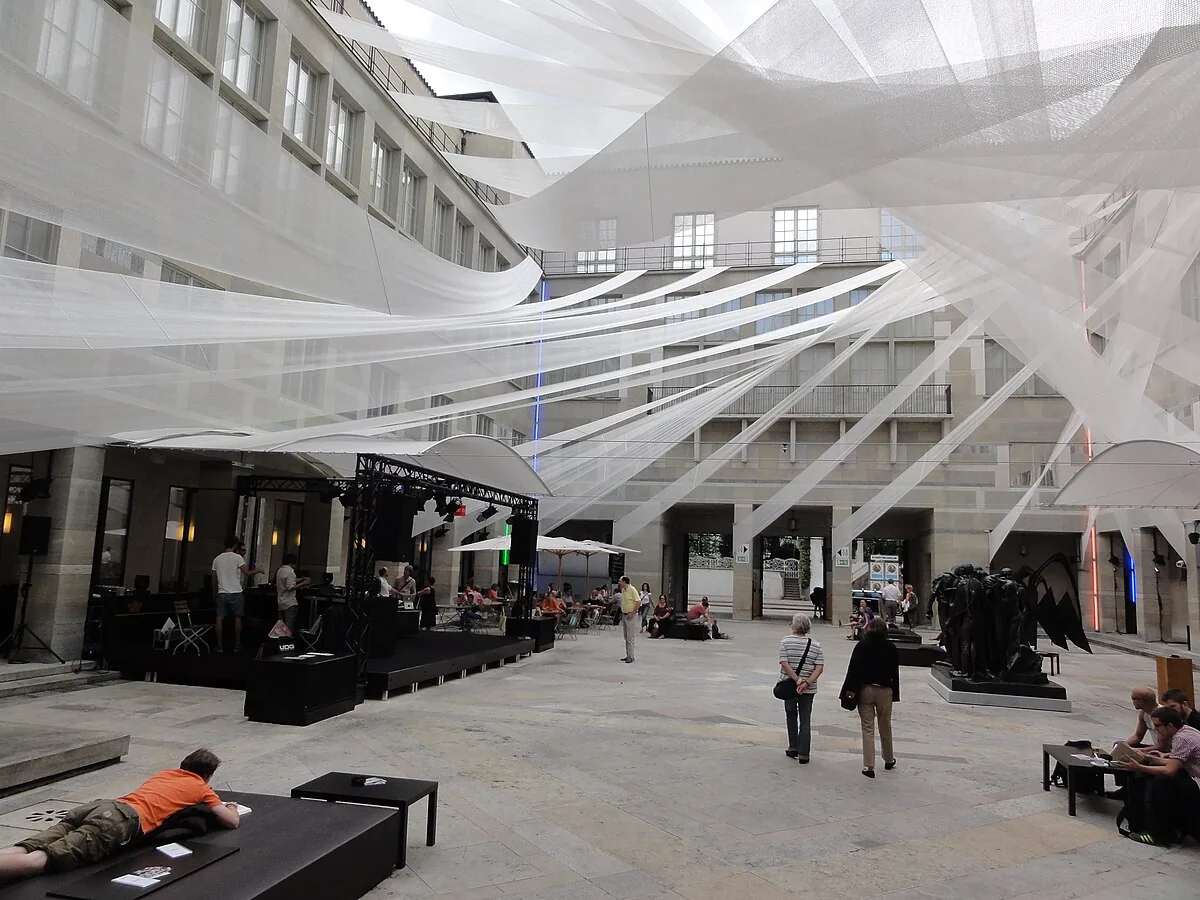
The world's oldest public art museum opened in Basel in 1661, not as a concession to culture but as a civic act of self-definition by a city that decided its collection belonged to everyone. The Kunstmuseum Basel now occupies two buildings connected by an underground passage: the original 1936 neoclassical block on St. Alban-Graben and a striking modern annex that opened in 2016 across the street. Together they house one of the most substantive permanent collections in Europe, anchored by the world's largest holding of works by Hans Holbein the Younger and built outward from there across six centuries. Basel hosts Art Basel every June, and the city's relationship with contemporary art runs deep. But the Kunstmuseum predates that fair by three centuries and operates on a different timescale, the slow accumulation of a collection that was always meant to be definitive rather than fashionable.
The world's oldest public art museum opened in Basel in 1661, not as a concession to culture but as a civic act of self-definition by a city that decided its collection belonged to everyone.
The collection began with the Amerbach
The collection began with the Amerbach Cabinet, a private gathering of art, coins, and manuscripts assembled by the Basel humanist Basilius Amerbach over several generations. When his heir offered it for sale in 1661, the city of Basel purchased it outright using public funds, a decision that was genuinely radical for the period. The collection was held at the university before the current building was constructed in 1936. Holbein lived and worked in Basel from 1515 to 1526 and again from 1528 to 1532, and left behind a concentration of work here that has never been matched anywhere else. His portraits of Erasmus, painted in multiple versions as diplomatic gifts, and the monumental Dead Christ in the Tomb, a horizontal painting of a cadaver so unflinching that Dostoevsky reportedly stood before it saying 'a man's faith could be ruined by that painting', are both in the permanent collection.
The original building rewards systematic exploration.
The original building rewards systematic exploration. The ground floor Holbein rooms are where most visitors slow down involuntarily, the Dead Christ stops you before you have decided to stop. The painting is smaller than you expect and is hung low, at roughly knee height, so that you crouch or kneel to look at it properly. That physical gesture is not accidental. The 2016 annex handles the twentieth and twenty-first century holdings, and the shift in architecture mirrors the shift in content, the new building's raw concrete and wide staircases feel appropriate to the Picassos and Giacomettis. The underground passage between buildings is itself hung with prints and drawings, making the transit between the two feel like a continuation rather than an interruption.
Basel is a three-way border city
Basel is a three-way border city, Swiss, German, and French territories converge here, with two main rail stations. The Kunstmuseum is a ten-minute walk from Basel SBB, the principal Swiss station. From Zürich, the journey takes 55 minutes; from Bern, about an hour; from Paris by TGV, just over three hours. The museum opens Tuesday through Sunday, with extended evening hours on Wednesdays.
Basel is a three-way border city, Swiss, German, and French territories converge here, with two main rail stations.
The Experience
The Holbein rooms on the main floor require unhurried time. The Dead Christ in the Tomb is hung lower than you expect, nearly at floor level, and the painting's horizontal format, a human body occupying the full width of the frame, means you have to lean in or crouch. The realism is clinical and the colour of the skin is exact in a way that feels less like artistry than forensic observation. Upstairs, the collection moves through the northern Renaissance into the twentieth century, and the quality remains consistent in a way that reminds you this institution has been building its holdings for over 350 years. The annex across the street houses Picasso, Léger, and a strong holding of Swiss Concrete art that deserves its own focused visit.
Why It Matters
The Kunstmuseum Basel's significance is architectural and civic as much as aesthetic: it is the proof of concept for the public art museum as an institution. The 1661 purchase established that great art could belong to a city rather than a dynasty, a principle every major museum since has built upon. The Holbein holdings alone, the largest concentration of his work in the world, would justify the institution's existence independently.
Why Visit
If you care about Northern Renaissance painting, there is no substitute for this collection. Holbein's portraits of Erasmus and his Dead Christ are here; you cannot see them anywhere else at this quality. The broader permanent collection is strong enough to fill a full day, and the 2016 annex makes the institution feel genuinely current rather than merely distinguished.
✦ Insider Tips
- 1
The Dead Christ in the Tomb is hung low on purpose, crouch or sit on the floor in front of it as many visitors do; the guards will not intervene.
- 2
The combined ticket covering both the main building and the 2016 annex is worth purchasing even if you plan to focus on one building; the underground passage between them contains additional works.
- 3
The Fondation Beyeler in Riehen, 20 minutes by tram, has one of the strongest private collections in Europe and pairs naturally with the Kunstmuseum.
- 4
The museum café in the annex is considerably better than the average institution café and worth using for lunch between the two buildings.