Four of the seven men who first reached the Matterhorn's summit in 1865 were dead before the day was out.
About The Matterhorn
For the first half of the nineteenth century, the Matterhorn was simply an obstacle, a pyramidal wall of rock that shepherds and traders navigated around without a second thought. That changed when British alpinists began arriving in Zermatt in the 1850s, treating the unclimbed peak as a personal affront. Edward Whymper, a London illustrator turned mountain obsessive, made seven failed attempts before his party reached the top on 14 July 1865. The descent killed four: Lord Francis Douglas, Charles Hudson, Douglas Hadow, and the guide Michel Croz. The rope between them snapped, and the mountain became front-page news across Europe. A parliamentary debate in Britain questioned whether mountaineering was a morally responsible pursuit. Whymper's reputation never fully recovered, though he continued climbing until his death in 1911. Zermatt itself transformed from a farming village into an alpine resort on the back of that notoriety. The mountain's fame made the valley, and the valley has been living off the mountain ever since.
The Matterhorn in Switzerland
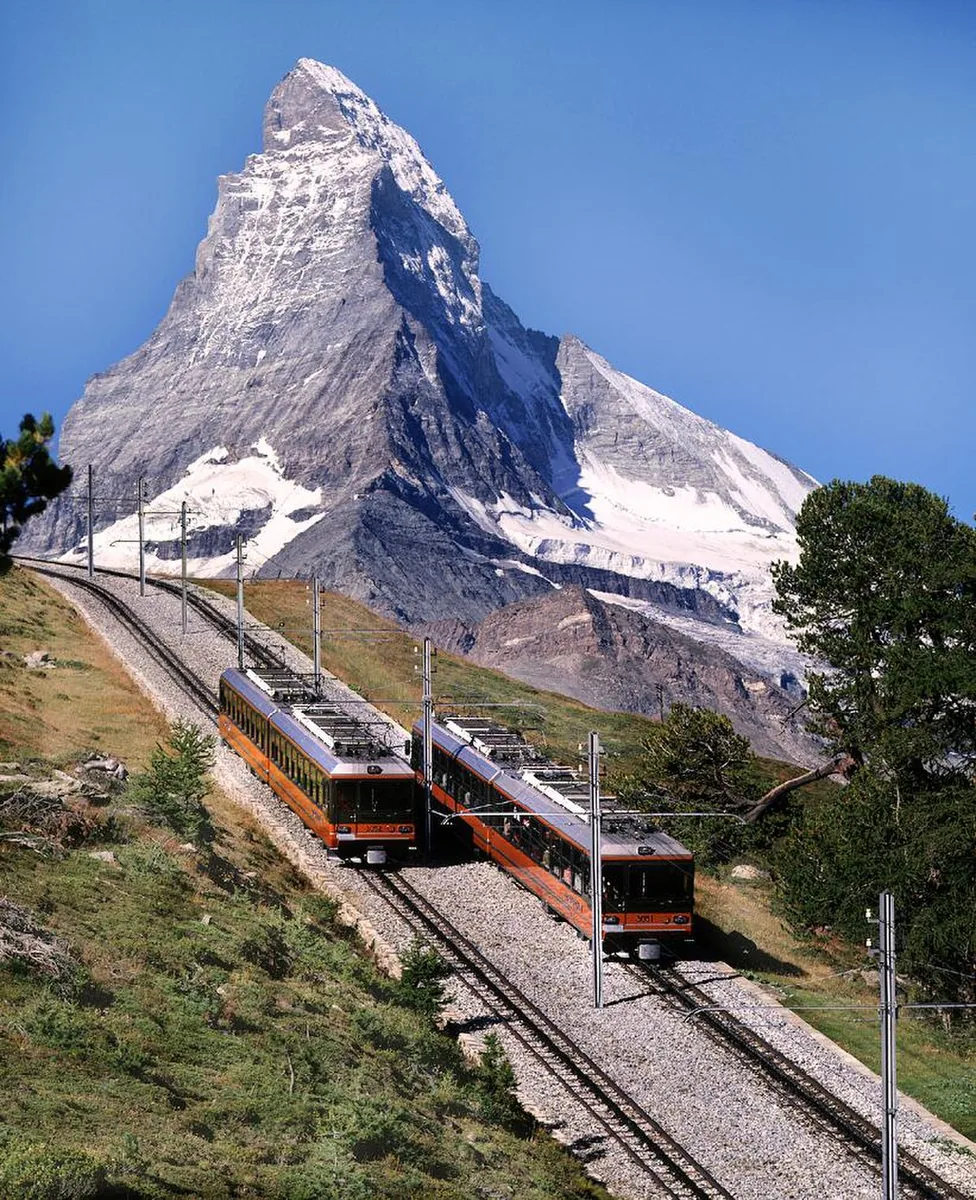
No other mountain on earth has quite earned its shape. The Matterhorn's pyramid rises from the valley around Zermatt with a geometry so precise it seems deliberate, four faces aligned almost perfectly with the compass points, the summit forever trailed by snow that the wind strips into white banners. At 4,478 metres it is not Switzerland's tallest peak, but it is by far its most arresting. Seeing it in person defies every reproduction. The scale takes a full minute to register, and then it does not stop registering. Zermatt sits below it in a valley so narrow the sun arrives late and leaves early. The village is car-free, reached only by train, and that enforced slowness is exactly right. Arriving on foot, step off the platform, and the mountain is simply there at the end of the street, waiting.
“At 4,478 metres it is not Switzerland's tallest peak, but it is by far its most arresting.”
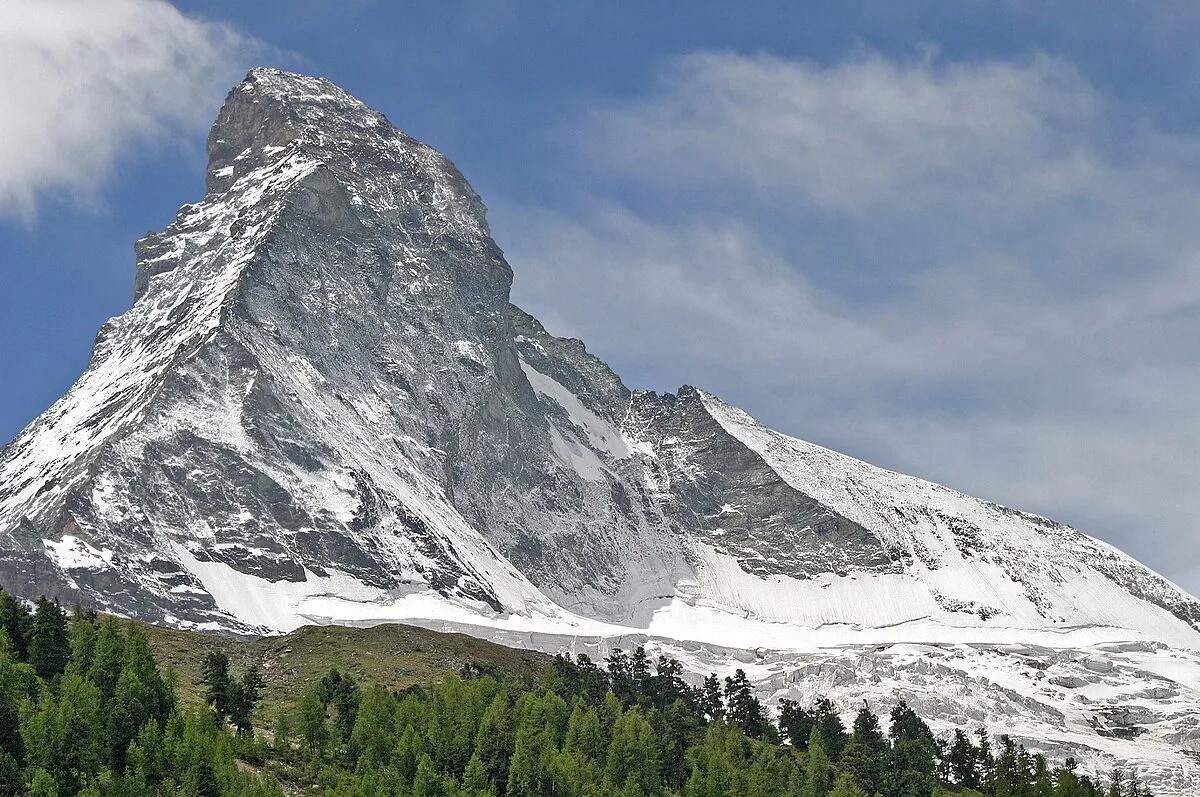
The Matterhorn, Switzerland
For most of the nineteenth century, the Matterhorn was considered unclimbable. British and Italian teams spent years probing its ridges. On 14 July 1865, Edward Whymper's party of seven finally topped the Hörnli Ridge, beating an Italian team by hours. The triumph lasted less than a day. Four members fell to their deaths on the descent. Whymper survived and spent the rest of his life defending his decisions. That combination of glory and catastrophe has shaped the mountain's mythology ever since, and the Zermatt Mountaineers' Cemetery still receives new occupants most summers.
The best view costs nothing.
The best view costs nothing. Walk to the end of Zermatt's main street before seven in the morning and the mountain floats above the rooflines in flat, cold light, perfectly still. By midday, cloud frequently wraps the upper faces. The mountain disappears for hours and then reappears without warning, which makes each reappearance feel like something granted rather than owed. From the Stellisee lake at 2,537 metres, a 45-minute walk from Sunnegga, the peak reflects in still water on calm mornings, doubling its height in the surface. The Gornergrat railway climbs to 3,089 metres and sets you opposite the mountain across a glaciated bowl. almost nothing up there except wind and the occasional crack of loosening rock on the upper ridges.
Zermatt is accessible only by train.
Zermatt is accessible only by train. Drivers leave their cars at Täsch and board the shuttle; through passengers change at Visp. From Zürich the journey runs about three and a half hours; from Geneva, around four. Within the village, electric taxis and the Gornergrat rack railway handle all movement upward. Book the first Gornergrat departure of the day, typically 7am, to reach the top before cloud builds over the summit faces.
“Drivers leave their cars at Täsch and board the shuttle; through passengers change at Visp.”
The Experience
The Matterhorn rewards patience over ambition. The sense is this most at Riffelalp or Stellisee, where on still mornings the peak reflects in the lake below, silent and doubled. The colour shifts throughout the day, bleached white at noon, deep amber in late afternoon, a bruised purple just as the light gives up entirely. Most visitors cluster on the Gornergrat terrace with long lenses aimed at the summit. What they miss is the walk back down to Rotenboden on foot, where the trail cuts along a retreating glacier and the mountain occupies the entire northern sky. The solitude there, even in high season, is genuine.
Why It Matters
The Matterhorn is not simply a peak; it is the image through which most of the world recognises Switzerland. The 1865 first ascent established modern high-altitude mountaineering as both sport and public spectacle, and the deaths that followed reshaped how risk in the mountains was understood. It draws around three million visitors annually to a valley that would otherwise hold a few hundred residents.
Why Visit
Every famous mountain eventually disappoints in person. The Matterhorn is the rare exception. Its profile from Zermatt is identical to every photograph you have seen, but the photographs lie about scale. In the village and tilting your head back, you understand that what looked manageable in images is actually a kilometre of near-vertical rock above you. That gap between expectation and reality is not a letdown, it is the whole point.
Insider Tips
- 1
Book at least two nights, cloud covers the summit on more days than not, and the mountain frequently clears on the second morning.
- 2
The Stellisee reflection requires calm air; go before 8am and walk from Sunnegga rather than taking the gondola directly to Blauherd.
- 3
Zermatt's supermarket near the station sells the same provisions as the mountain huts at a fraction of the price, stock up before any hike.
- 4
If the summit is cloud-free at 6pm, it will almost certainly be clear at dawn; that evening view is your best predictor for the next morning.