Three separate heat sources, direct sun, lake reflection, and stone wall radiation, create a microclimate in these hillside vineyards warm enough to ripen grapes at a latitude that should make it impossible.
About Lavaux Vineyard Terraces
The Lavaux hillside was already cultivated before the monks arrived, but the Cistercians and Benedictines who controlled the land from the eleventh century onwards built the systematic terrace network that still structures the landscape. The monasteries of Saint-Urbain and Hauterive held the most productive sections and understood the three-sun principle, direct radiation, lake reflection, stone heat, that makes the south-facing slope viable for Chasselas. The Reformation of the sixteenth century transferred monastic land to civic and private ownership without disrupting viticulture; the economic logic of the terraces was too strong to abandon. The Vaud wine appellation system that emerged in the twentieth century formally recognised Dézaley and Saint-Saphorin as the region's two grand cru designations, protecting the most ancient terrace sections from development. The UNESCO listing in 2007 was partly defensive, property pressure from Lausanne's expanding suburbs had been threatening the lower terraces, and international heritage status provided a legal and reputational barrier that cantonal zoning alone could not guarantee.
Lavaux Vineyard Terraces in Switzerland
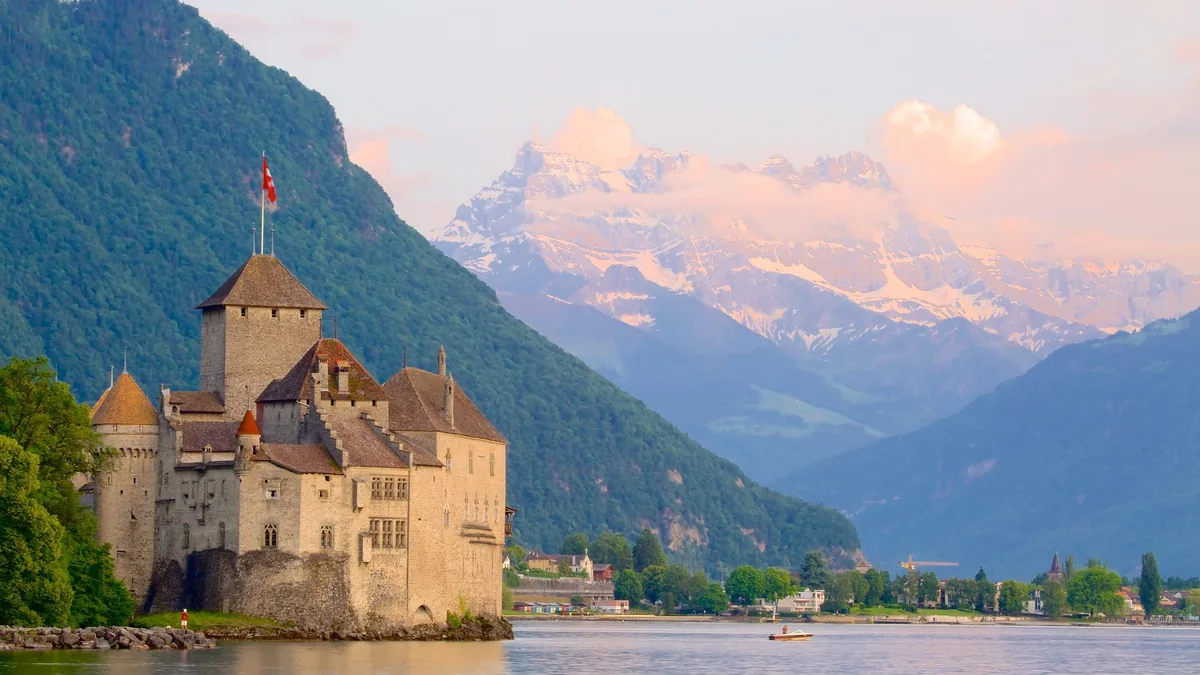
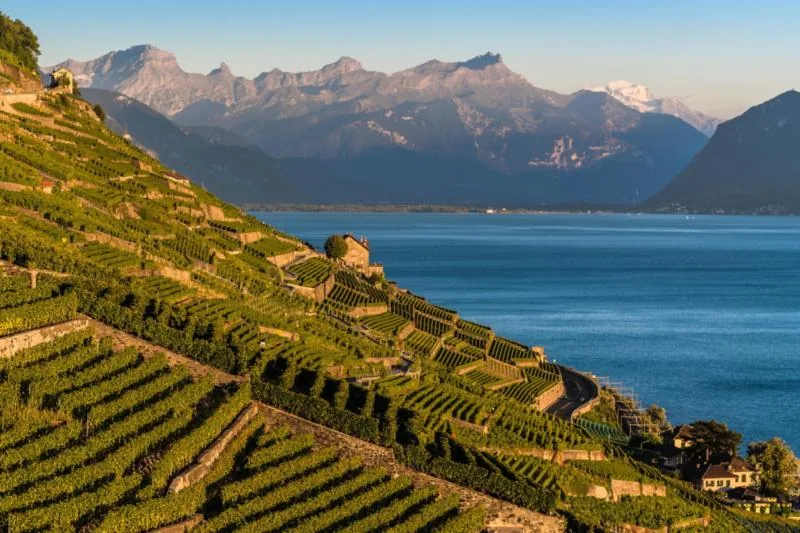
For thirty kilometres along the northern shore of Lake Geneva, between Lausanne and Vevey, the hillside has been cut into terraces and planted with vines since the eleventh century. The Lavaux vineyards rise from the lakeshore in a sequence of green and golden walls, the stone retaining terraces stacked so closely that from the water the hillside looks woven. The villages along the wine route, Lutry, Villette, Cully, Rivaz, Saint-Saphorin, sit inside the vineyards rather than beside them, their church towers rising from the vines with a proximity that makes the whole arrangement feel like a single organism. UNESCO listed Lavaux in 2007, citing the 2,000-year-old interaction between human cultivation and landscape. The designation was appropriate but almost unnecessary: the vineyards look after themselves with the obsessive care of a region whose identity has been inseparable from wine for a millennium.
“For thirty kilometres along the northern shore of Lake Geneva, between Lausanne and Vevey, the hillside has been cut into terraces and planted with vines since the eleventh century.”
Lavaux Vineyard Terraces, Switzerland
The Cistercian and Benedictine monasteries
The Cistercian and Benedictine monasteries that controlled the Lavaux hillside from the eleventh century built the first systematic terraces, understanding that the three heat sources, direct sun, reflected sun from the lake surface, and radiant heat from the stone walls, produced a microclimate capable of ripening Chasselas grapes at a latitude that should be too cold for serious viticulture. The monks were not wrong. Lavaux's white wines, Dézaley and Saint-Saphorin are the two grand cru appellations, have been considered among Switzerland's finest since the medieval period. The Reformation transferred most monastic land to the city of Lausanne and the canton of Vaud, and the vineyards have operated under cantonal and private ownership ever since. Phylloxera devastated European vineyards in the late nineteenth century and Lavaux was not spared; replanting on American rootstock restored production but changed the character of wines that had evolved over centuries. The current terraces are a rebuild, historically authentic in form but viticultural different from what preceded them.
The wine trail that runs through the Lavaux
The wine trail that runs through the Lavaux can be walked from Lausanne to Vevey in a single long day, about 15 kilometres at a comfortable pace, with the lake visible at most points below and the Alps of Savoy rising across the water in France. The path passes through the village interiors, between vine rows close enough to brush your shoulders, past cellar doors where tasting is offered without formality and without the theatre that wine regions with larger reputations tend to perform. The light on the lake in the late afternoon is the defining visual experience: gold hitting the water at a low angle, the terraced hillside glowing amber behind you, the steamer trails cutting white lines across the surface below. The villages of Cully and Saint-Saphorin both have terraced restaurant tables set directly into the vineyards, eating there in September, with the harvest beginning around you, is as close as this kind of landscape gets to total immersion.
The trail is accessible from multiple
The trail is accessible from multiple points along the Lausanne-Vevey railway line, which runs every 30 minutes. Start at Lutry station, 6 kilometres east of Lausanne, and end at Vevey, or begin at Cully for a shorter section. Swiss Travel Pass holders travel free on this regional line. Most cellar doors in the villages are open without appointment from April through October.
“The trail is accessible from multiple points along the Lausanne-Vevey railway line, which runs every 30 minutes.”
The Experience
Walking the wine route in September, when the harvest is underway, you pass vendangeurs moving between the rows with wicker baskets and mechanical carriers that cannot navigate the steepest terrace walls. The smell of crushed grape skin hangs over the path, specific and sweet, cutting through the perpetual lake breeze. The thing most visitors underestimate is the physical steepness of the terraces. What looks from the lake like a gentle incline is, walking it, a series of walls and steps that demand attention. The villages embedded in the vineyards provide natural rest points, and the cellar doors in Cully and Rivaz operate with a directness, a glass poured, a price stated, no performance, that reflects a region confident in what it makes.
Why It Matters
Lavaux is one of the clearest examples in Europe of a living cultural landscape, not a preserved historical relic but an actively farmed system that has operated without interruption for a thousand years. The terrace architecture and the wine culture it supports are inseparable, and the UNESCO listing recognised that both are at risk from the same pressures: urban expansion, climate change, and the economics of Swiss wine in a global market.
Why Visit
Switzerland does not export much of its wine, which means most of what is produced in Lavaux is consumed inside the country. Visiting the vineyards puts you in direct contact with a wine culture that most of the world has never encountered, Chasselas from these specific terraces, poured by the people who grew it, in a landscape that produced it. That particular combination is not available anywhere else.
Insider Tips
- 1
The Cully Jazz Festival in April fills the village's cellar doors and wine caves with concerts, a way to combine music and wine tasting in a setting that the festival has used since 1981.
- 2
Dézaley wine, produced from the oldest terrace section above the village of Epesses, is rarely exported and worth seeking out at the cellar doors along the trail.
- 3
The steamer service on Lake Geneva stops at Cully and Lutry between April and October, arriving by boat and walking the trail back toward Lausanne gives the best introductory view of the terraces from water level.
- 4
The Lavaux Vinorama visitor centre at Rivaz provides context on the appellation system and a guided tasting of regional wines, useful before the trail if you want to understand what you are drinking.