“Switzerland established its only national park on the same day it mobilised for the First World War, and has left 170 square kilometres of Alpine land entirely alone ever since.”
About Swiss National Park
The Swiss National Park was conceived by a group of naturalists who had observed the systematic destruction of Alpine ecology through grazing, logging, and hunting in the nineteenth century and proposed a radical alternative: a zone where human use was not regulated but prohibited. The proposal, submitted to the Swiss Confederation in 1906, was accepted eight years later on 1 August 1914. The Val Cluozza that the park occupied had been heavily exploited for centuries, its forests cut for charcoal, its pastures grazed by communal herds. By 1914, it was already a damaged landscape. The park's founders bet that withdrawal would be sufficient for recovery. The bet held. Within a generation, forest cover was expanding; within two generations, species that had been locally extinct were returning without assisted reintroduction. The bearded vulture, the lammergeier, was exterminated across the Alps by 1900, hunted on the false belief that it carried off lambs and children. Reintroduction programmes beginning in 1986 used the Swiss National Park as one of the primary release sites. The species now breeds freely in the park, its three-metre wingspan occasionally visible from the Val Cluozza trail.
Switzerland has one national park.
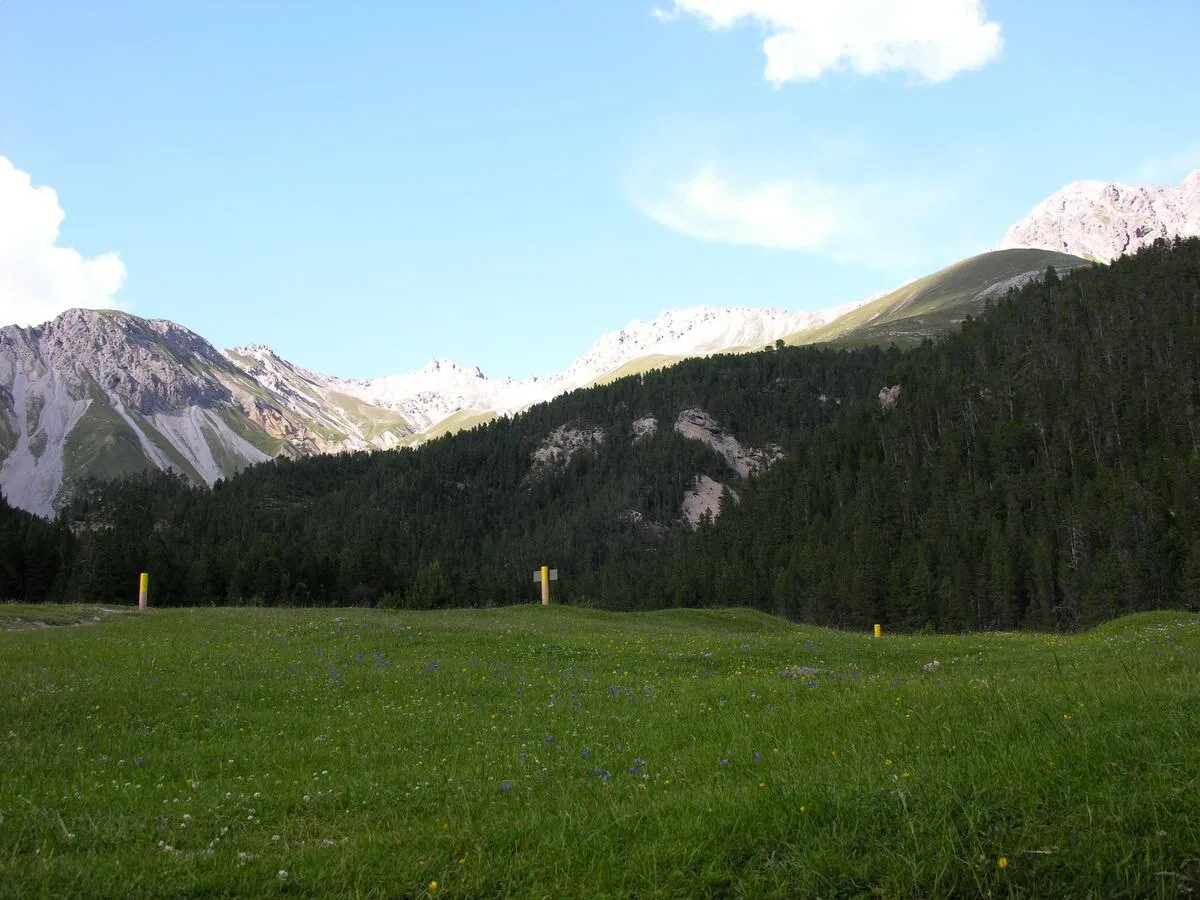
Switzerland has one national park. Not one of many, one. The Swiss National Park in the Engadin district of Graubünden was established in 1914, making it one of the oldest in Europe, and its 170 square kilometres have been operating under a strict non-interference policy ever since. No new trails, no maintenance of existing ones beyond safety markers, no feeding or culling of animals, no harvesting of wood or plants. The forest burns, the rivers reroute, the ungulates crash through the undergrowth, and the park management watches and records but does not intervene. The result, after more than a century of rewilding before the word existed, is a landscape that operates according to its own logic rather than any human preference for how wilderness should look.
No new trails, no maintenance of existing ones beyond safety markers, no feeding or culling of animals, no harvesting of wood or plants.
The park was established
The park was established by the Swiss Confederation on 1 August 1914, the same day Switzerland mobilised its army in response to the outbreak of the First World War, which gives it a founding date that concentrates the mind. The location in the Val Cluozza was chosen because the land was already largely depopulated, the valley having been heavily exploited for timber and pasture in earlier centuries. The founding principle was radical for its time: total prohibition on human intervention, including hunting, grazing, and any development. The scientists who advocated for the park believed that if a damaged landscape was simply left alone, it would restore itself. They were correct. The ibex, hunted to extinction in Switzerland by 1700, were reintroduced starting in 1920 and now number several hundred within the park. Red and roe deer, chamois, golden eagles, bearded vultures, and marmots all exceed their populations from the park's founding.
The park's 80 kilometres of marked trails
The park's 80 kilometres of marked trails are the only access routes, leaving them is prohibited, and the prohibition is meaningful. Rangers patrol regularly, and the fines are significant. This constraint changes the experience: you cannot bushwhack toward an interesting rock or take a shortcut across a meadow. The discipline enforces a particular kind of attention, The trail edge, the animals at a distance, the sounds in the trees above the path. The Val Cluozza, the park's central valley, is the standard introduction. The trail from Zernez climbs gradually through regenerating forest, silver firs and stone pines that have been growing without interference for a century, into open alpine meadow above the treeline. In early morning, before the day's visitors arrive, ibex often stand on the ridge above the path without retreating, having learned over generations that humans on the trail are not a threat. Zernez, the park's main gateway village, is reached by train from St. Moritz in 45 minutes or from Chur in 90 minutes. The National Park House in Zernez functions as the visitor centre, with maps, permits information, and exhibits on the park's ecology. Most trail heads begin within 2 kilometres of the village. No private vehicles are permitted on the park's internal tracks; all movement is on foot.
The Experience
The park's non-intervention policy produces a forest that looks different from managed woodland. Dead trees stand where they fell or remain upright as snags; clearings open where a storm knocked down a section of canopy; the path surface is stone and root rather than graded gravel. There is a logic of a landscape running on its own schedule rather than anyone else's. The ibex are the moment most visitors remember. Seeing them from twenty metres on the ridge above the Val Cluozza, the males with their curved horns backlit against the morning sky, standing entirely still, watching without apparent concern, is one of those experiences that wildlife documentaries reproduce convincingly but cannot actually replicate. The stillness is mutual.
The park's non-intervention policy produces a forest that looks different from managed woodland.
Why It Matters
The Swiss National Park is the longest-running rewilding experiment in Europe, and the data it has produced since 1914 on forest regeneration, ungulate population dynamics, and ecological succession has informed conservation policy across the continent. Its founding principle, that damaged nature recovers if left alone, was contested in 1914 and is now mainstream conservation science. The park is the proof of concept.
Why Visit
Switzerland is a managed landscape almost everywhere, the meadows are cut, the forests are thinned, the rivers are channelled. The Swiss National Park is the one place in the country where the management has stopped. The difference is immediately perceptible, and the wildlife density that results from a century of non-interference is not available anywhere else in Switzerland at comparable scale.
✦ Insider Tips
- 1
Leaving the marked trail is prohibited and actively enforced; rangers patrol daily and issue fines. The restriction is the whole point, respect it.
- 2
The National Park House in Zernez has a free exhibit and sells the official park map, which is better detailed than anything available digitally for route planning.
- 3
Carry binoculars, the park's animals are visible but typically at a distance of 50-200 metres, and the difference between a brown shape and a recognisable ibex requires magnification.
- 4
The Chamanna Cluozza mountain hut inside the park, bookable through the Swiss Alpine Club, allows an overnight stay inside the park boundary, the only way to experience the park at dawn and dusk without a two-hour walk from Zernez.
- 5
Combine the park visit with the Benedictine Convent in Müstair, 30 kilometres east, both are accessible on the same PostBus route and make a logical pairing for a Graubünden day trip.