“A single trip over a tree root in 1966 revealed a 5,000-year-old civilization that shattered every existing theory about the origins of the Bronze Age in Asia.”
About Ban Chiang
Ban Chiang represents a continuous human occupation that began roughly 3,500 years ago. The site evolved through three distinct periods: the Early, Middle, and Late phases, each marked by changes in pottery style and metallurgical sophistication. The discovery challenged the long-held belief that bronze technology was brought to Southeast Asia from elsewhere, proving instead that local populations were pioneering their own techniques. The 1970s saw a massive international effort to categorize the finds, which included everything from delicate silk fragments to heavy bronze socketed axes, painting a picture of a wealthy, stable society that thrived for thousands of years before mysteriously fading away.
What Ban Chiang actually is
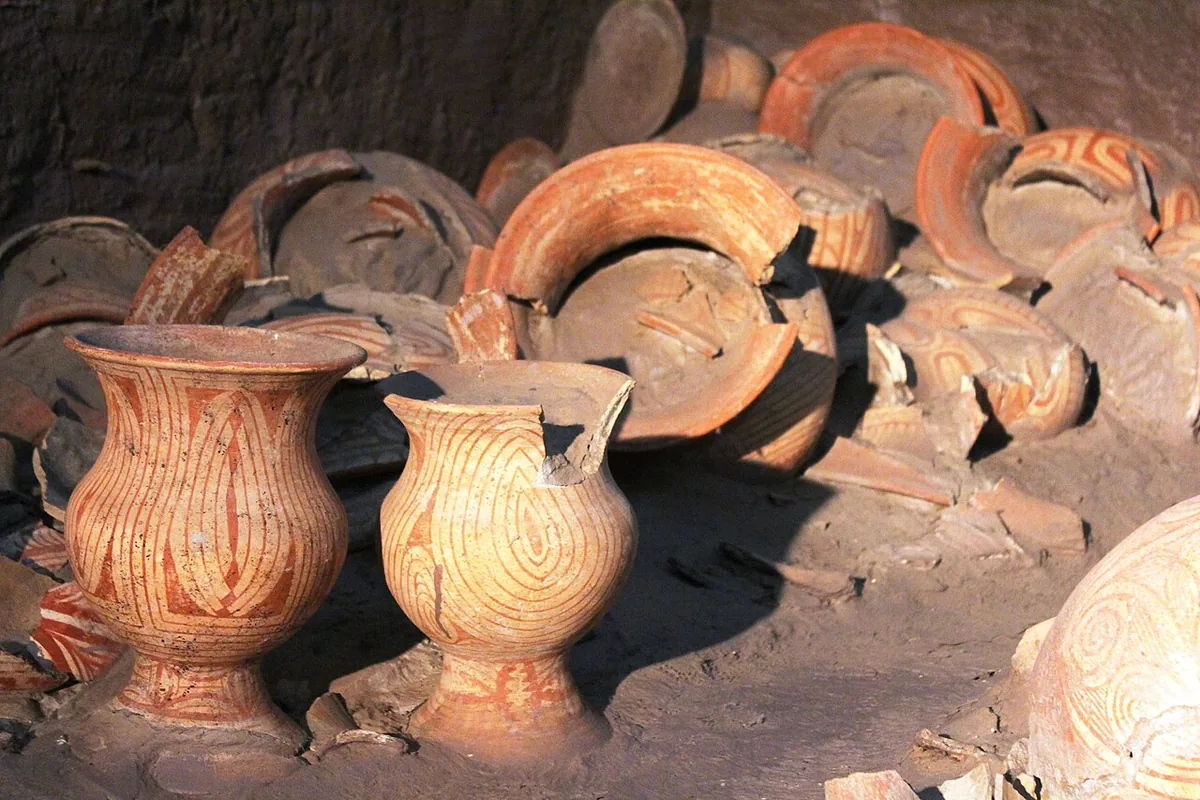
In a quiet corner of Udon Thani province, a chance stumble by a student in the 1960s unmasked a prehistoric civilization that fundamentally rewrote the history of Southeast Asia. Ban Chiang is an archaeological site of global importance, revealing a Bronze Age culture that was independently developing advanced metallurgy and intricate pottery long before previously thought. The site is a layered blend of human existence, where red-on-buff earthenware with swirling, hypnotic patterns tells the story of a peaceful, agrarian society. Unlike the war-torn narratives of other ancient empires, the remains here suggest a community focused on craftsmanship, wet-rice cultivation, and sophisticated funerary rites. Passing through the museum and the open excavation pits, you are confronted with the tangible continuity of human life in the Isan plateau.
In a quiet corner of Udon Thani province, a chance stumble by a student in the 1960s unmasked a prehistoric civilization that fundamentally rewrote the history of Southeast Asia.
The discovery of Ban Chiang
The discovery of Ban Chiang is the stuff of legend. In 1966, Stephen Young, the son of a former American ambassador, tripped over a root and found himself staring at the rim of a buried pot. This accidental find led to decades of excavations by the University of Pennsylvania and the Thai Fine Arts Department. What they found shocked the academic world: bronze artifacts dating back over 4,000 years, suggesting that Southeast Asia was a center of early innovation rather than just a recipient of Chinese or Indian influence. The site revealed a sequence of habitation stretching from the Neolithic to the Iron Age. In 1992, UNESCO recognized Ban Chiang as a World Heritage site, acknowledging its role as the most significant prehistoric settlement yet discovered in this part of the world.
Visiting Ban Chiang
Entering the National Museum, The cool, climate-controlled silence that protects the delicate skeletons and their ceramic treasures. The air smells vaguely of dry clay and old paper. The incredible detail of the spiral patterns on the pottery, which seem almost modern in their graphic simplicity. There is a weight of time standing over the open burial pit at Wat Pho Si Nai, where skeletons remain in situ, surrounded by the objects they were meant to take into the afterlife. Frequently skipped is the subtle differences in the bronze bangles and spearheads that indicate a mastery of alloying techniques far ahead of their time. The element that stays with you is watching a local village craftsman today using the same coil-and-paddle technique that his ancestors used five millennia ago.
Ban Chiang is located approximately
Ban Chiang is located approximately 50 kilometers east of Udon Thani city. The most convenient way to visit is by renting a car or hiring a driver for the day from Udon Thani. There are also local buses and songthaews (shared trucks) that run from the city’s main bus station to the town of Ban Chiang, though they require a bit of patience. The museum and the excavation site are within walking distance of each other in the village. Udon Thani itself is well-connected to Bangkok by multiple daily flights and an overnight train service.
Ban Chiang is located approximately 50 kilometers east of Udon Thani city.
The Experience
What gets you is is the way the light catches the metallic sheen of the ancient bronze ornaments, still bright despite thousands of years in the earth. You hear the village outside, clucking chickens and distant motorbikes, creates a strange contrast with the silent, ancient graves beneath your feet. The feel of the replica pots in the hands-on section, gaining an appreciation for the skill required to maintain such perfect symmetry without a potter's wheel. Most visitors miss the small gallery detailing the illicit antiquities trade that nearly stripped the site bare after its discovery. What remains with you is seeing a 4,000-year-old footprint of a dog in a clay tile.
Why It Matters
Ban Chiang is the most important prehistoric site in Southeast Asia. It serves as the primary evidence for an independent and sophisticated Bronze Age culture in the region. Its discovery shifted the archaeological map of the world, placing the Mekong River valley on par with the Great River civilizations of Mesopotamia and China as a cradle of human innovation.
Why Visit
Visit Ban Chiang if you want to touch the very beginning of the human story in Asia. It offers a profound, quiet alternative to the gilded temples of the south. This is a place for the curious traveler who finds more wonder in a hand-painted clay pot than a gold-leafed stupa, and who wants to see where the roots of Thai culture truly begin.
✦ Insider Tips
- 1
Visit the Wat Pho Si Nai excavation pit first to see the skeletons in their original context before heading to the main museum.
- 2
Stop at one of the village workshops to try painting the iconic red spirals on a replica pot; it is much harder than the masters make it look.
- 3
The museum is closed on Mondays and Tuesdays, so plan your Isan itinerary carefully to avoid disappointment.
- 4
Look for the 'Ban Chiang' stamps on the local indigo-dyed fabrics; the village has integrated ancient motifs into a thriving modern textile industry.
- 5
Hire a local guide for an hour; the stories of the original 1960s 'pottery rush' among the villagers are as fascinating as the archaeology itself.