“A functional railway crossing in a sleepy riverside town is the only remaining physical link to a project that cost a human life for every sleeper laid on the track.”
About Death Railway Bridge
Work on the 415-kilometre line was an extraordinary feat of endurance and cruelty. Engineers estimated the project would take five years, but the Japanese military forced its completion in just sixteen months. Over 12,000 Allied POWs and an estimated 90,000 Asian laborers died during the 'Speedo' period of construction. The bridge at Kanchanaburi was the most significant river crossing on the route, and its survival today is due to extensive post-war reconstruction using parts supplied by the Japanese as part of their war reparations.
Death Railway Bridge in Thailand
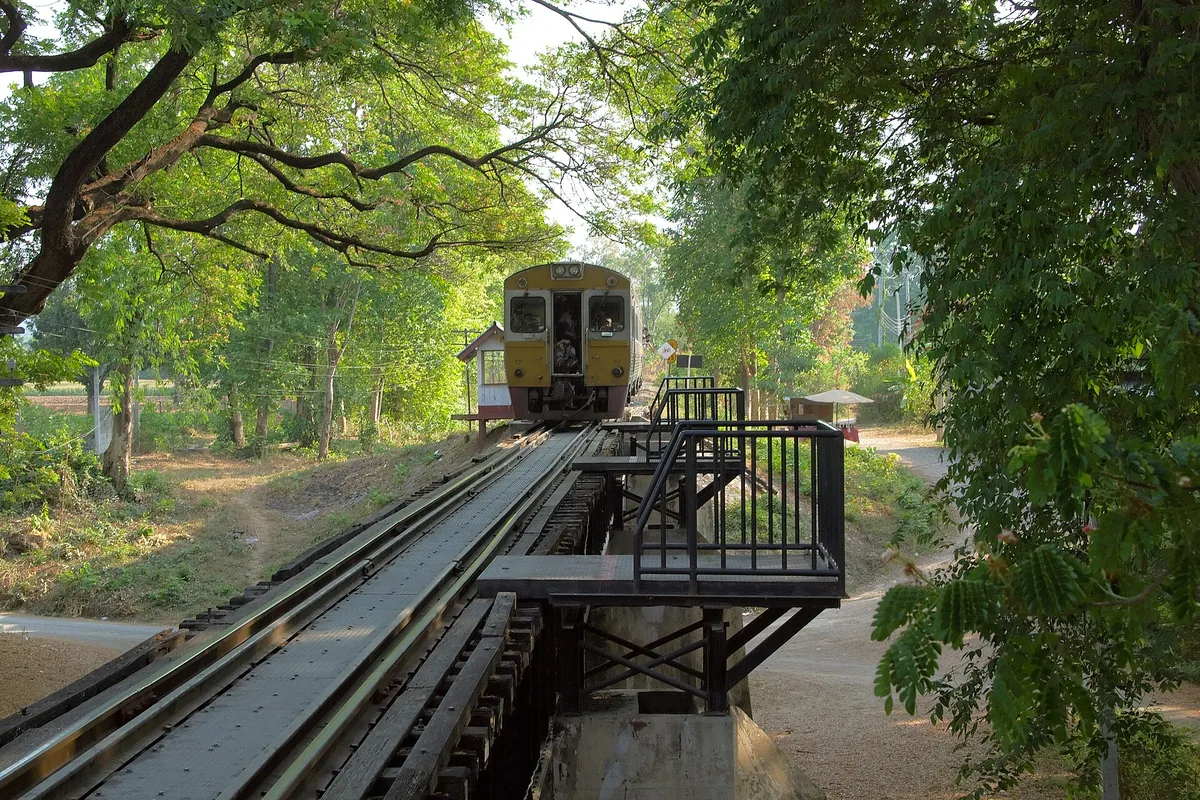
Dark iron spans reach across the River Kwai in Kanchanaburi, standing as a somber monument to one of the most brutal engineering projects of the twentieth century. While the bridge is often associated with the fictionalized film, the reality of its construction is far more harrowing. This segment of the Thailand-Burma Railway was built using the forced labor of Allied prisoners of war and hundreds of thousands of Southeast Asian civilians. Today, the bridge remains functional, a strange intersection of daily life and historical trauma where local trains rumble over the same tracks that claimed countless lives. The surrounding area has evolved into a place of pilgrimage, where the quiet flow of the river provides a peaceful backdrop for reflection.
Dark iron spans reach across the River Kwai in Kanchanaburi, standing as a somber monument to one of the most brutal engineering projects of the twentieth century.
Imperial Japanese forces conceived the railway in 1942
Imperial Japanese forces conceived the railway in 1942 as a way to supply their front in Burma without risking the sea route around Singapore. The original bridge was actually two structures; a wooden one for immediate use and the steel and concrete version that survives today. Between 1942 and 1943, men worked in appalling conditions, facing cholera, starvation, and the relentless heat of the Thai jungle. The bridge was a primary target for Allied bombers, who eventually disabled it in 1945. After the war, the Thai government repaired the damaged spans, replacing the original curved sections with the angular ones seen now, and incorporated the line into the national rail network.
The air is often heavy
The air is often heavy with humidity, smelling of river mud and the diesel fumes of passing excursion boats. The high-pitched whistle of a train approaching, a sound that sends pedestrians scurrying into the small safety niches built along the sides of the iron structure. The walk across the steel plates, The vibration of the river below through the soles of your shoes. The contrast between the bright, colorful market stalls at the bridge's entrance and the quiet, meticulously kept graves at the nearby Kanchanaburi War Cemetery. The light at twilight softens the harsh lines of the black iron, casting long shadows across the water that seem to invite a heavy, contemplative silence.
Trains depart daily from Bangkok’s Thonburi
Trains depart daily from Bangkok’s Thonburi Station, offering a slow and scenic three-hour journey that stops right at the bridge. For those preferring more comfort, private cars or buses from the capital take about two hours. Once in Kanchanaburi, the bridge is easily accessible by foot or bicycle from most guesthouses in the main riverside area, allowing for multiple visits at different times of the day.
Trains depart daily from Bangkok’s Thonburi Station, offering a slow and scenic three-hour journey that stops right at the bridge.
The Experience
Something strange tension as you walk the tracks, caught between the beauty of the Kwai valley and the knowledge of what happened here. Audibly, the of the river is deceptively calm, a steady hum that masks the historical ghosts of the riverbank. The first thing you register is people taking photos and laughing, a jarring reminder of how time eventually blunts the edges of tragedy. The most powerful moment is standing in the center of the span when no train is coming, looking toward the jungle-clad hills and realizing how isolated the laborers must have felt in this beautiful, unforgiving landscape.
Why It Matters
The bridge is the most recognizable symbol of the 'Greater East Asia Co-Prosperity Sphere's' human cost. It functions as a permanent memorial to the resilience of the human spirit under extreme duress and serves as a crucial site for international remembrance and historical education in Southeast Asia.
Why Visit
Visit to pay respects to a history that shaped the modern world. While many come for the cinematic connection, the physical presence of the iron and stone offers a tangible, sobering reality that books cannot convey. It is a necessary stop for anyone who believes that travel should involve understanding the darker chapters of our shared human story.
✦ Insider Tips
- 1
Arrive at the bridge before 8:00 AM to experience the site in relative solitude before the tour buses from Bangkok arrive.
- 2
Check the train schedule at Kanchanaburi station so you can be on the bridge when a train passes for the most dramatic photos.
- 3
Visit the Thailand-Burma Railway Centre museum first to gain the necessary context before walking the bridge itself.
- 4
Walk further down the tracks away from the tourist stalls to see the original embankments and feel the scale of the labor involved.
- 5
Hire a long-tail boat for a short trip under the bridge to see the original concrete pillars from a different perspective.