“While the rest of the world scrambled for higher ground during the 2004 tsunami, the seafaring residents of these islands simply watched the dolphins and walked into the trees.”
About Mu Ko Surin National Park
The Surin Islands were officially declared a National Park in 1981, covering an area of 141 square kilometers. This archipelago has remained the ancestral home of the Moken people, a nomadic maritime tribe whose DNA has uniquely adapted to see more clearly underwater. Throughout the 20th century, the islands remained a quiet backwater, largely ignored by the mainland until the rise of marine conservation highlighted their incredible biodiversity. Today, the park is managed with a focus on sustainable interaction, ensuring that the Moken's traditional lifestyle and the delicate coral ecosystems remain shielded from the pressures of commercial tourism.
What Mu Ko Surin National Park is
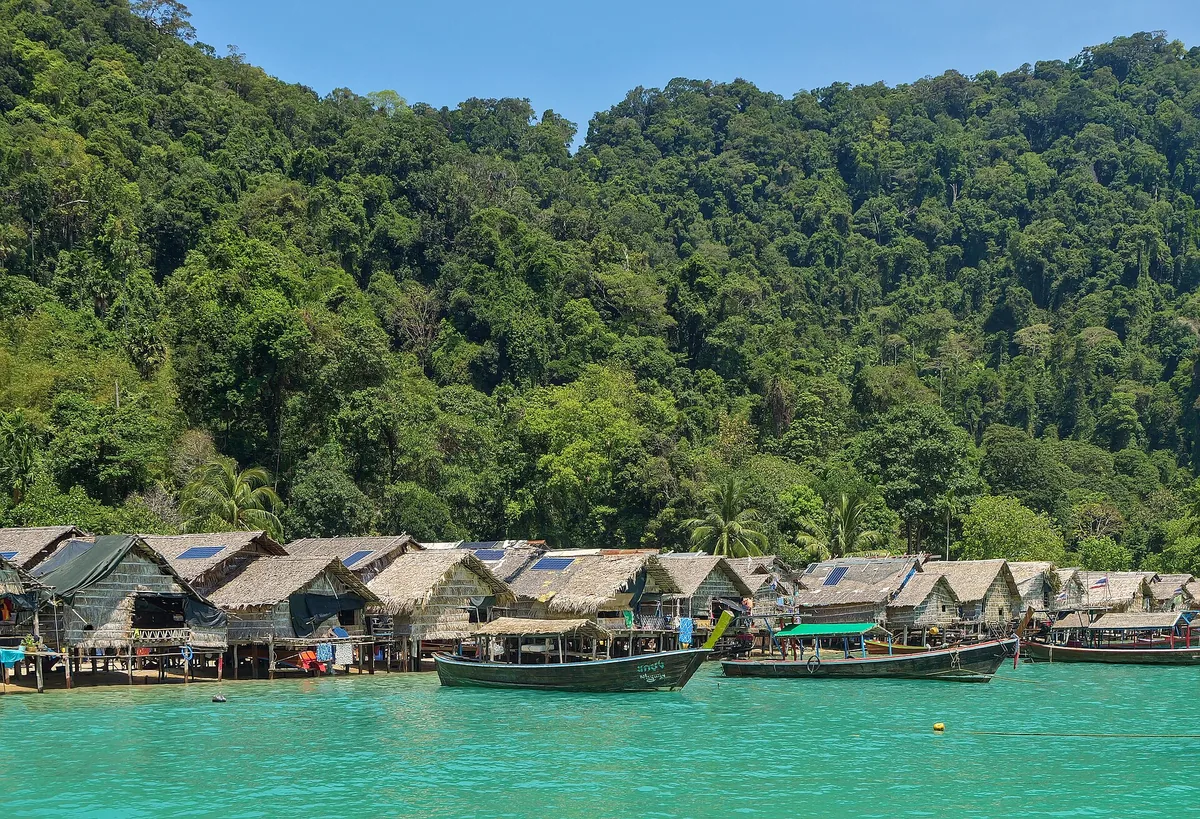
Sixty kilometers from the mainland, five granite outcrops emerge from the Andaman Sea, draped in a jungle so dense it seems to bleed into the turquoise shallows. Mu Ko Surin National Park represents the wildest maritime frontier of Thailand, a sanctuary where the seafaring Moken people have lived in harmony with the tides for generations. Unlike the jagged limestone karsts of Krabi, these islands offer gentle slopes and expansive coral gardens that sit just beneath the surface. The lack of luxury resorts and the presence of a strict national park mandate have preserved a raw, prehistoric energy. Here, the rhythm of the day is dictated by the surge of the tide and the shifting clarity of the water, offering a glimpse into an archipelago that remains largely unscarred by the modern world.
Sixty kilometers from the mainland, five granite outcrops emerge from the Andaman Sea, draped in a jungle so dense it seems to bleed into the turquoise shallows.
Traditional Moken wisdom suggests these islands
Traditional Moken wisdom suggests these islands have always been a refuge, but the modern history of the park began with its official designation in 1981. The Moken, often referred to as sea gypsies, survived the catastrophic 2004 Indian Ocean tsunami by reading the ocean's subtle warnings, retreat into the high jungle long before the water hit. This event solidified the park's dual mission of ecological and cultural preservation. For decades, the Surin Islands have was a vital laboratory for marine biologists, boasting some of the highest coral diversity in the Gulf of Bengal. While other islands succumbed to mass development, Surin’s isolation and its status as a royal project protected it, allowing the primary inhabitants to maintain their stilted village at Ao Bon while the park rangers manage the small, low-impact camping grounds.
Gliding over the reefs at Mae Yai Bay
Gliding over the reefs at Mae Yai Bay, The sunlight piercing through the water to illuminate giant sea fans and darting clownfish. Audible: the longtail boat's engine cutting out leaves a profound silence, broken only by the rhythmic splash of waves against the wooden hull. The fine, flour-like texture of the white sand at Ao Chong Khat, which stays remarkably cool even under the midday sun. The scent of wild hibiscus and salt air walking the short jungle trails connecting the beaches. Frequently skipped is the intricate hand-carved totems at the edge of the Moken village, which stand as silent sentinels to ancestral spirits. What sticks with you is snorkeling in the late afternoon, finding yourself surrounded by a massive school of neon-blue damselfish as the water turns a deep, bruised purple.
Reaching this remote archipelago requires
Reaching this remote archipelago requires a speedboat journey from Khuraburi Pier in Phang Nga province. The crossing takes approximately ninety minutes and can be jarring when the Andaman swell picks up. Most travelers arrive via overnight bus from Bangkok or a van from Phuket to Khuraburi town. Because the park is strictly closed during the monsoon season from mid-May to mid-October, the window for visiting is narrow. Once on the islands, transport is limited to the park’s longtail shuttle boats that move between the various snorkeling spots and the two main campsites on North and South Surin.
Reaching this remote archipelago requires a speedboat journey from Khuraburi Pier in Phang Nga province.
The Experience
You notice the water is so clear that boats seem to hover in mid-air over their own shadows on the seabed. The clatter of the jungle at night is a dense wall of cicadas and nocturnal birds that vibrates through the canvas of your tent. Something of gentle sandpaper texture of the dead coral paths that lead to the Moken village. Most visitors miss the chance to buy hand-woven pandanus baskets directly from the islanders, a craft that is slowly disappearing. The bit that stays with you is waking up at dawn to see the Moken elders launching their 'kabang' boats into a glass-calm bay.
Why It Matters
Mu Ko Surin is the crown jewel of Thailand’s marine conservation efforts and a UNESCO-recognized site of cultural importance. It protects one of the few remaining places where a nomadic maritime culture still exists in its traditional environment. Ecologically, it serves as a critical spawning ground for hawksbill turtles and a sanctuary for diverse coral species that have shown remarkable resilience to global bleaching events.
Why Visit
Visit Surin if you find the neon lights and crowded bars of other Thai islands exhausting. This is a place for the purist who wants to sleep under the stars and spend eight hours a day in the water. It offers a level of immersion in nature that is becoming increasingly rare, providing a sense of quietude that only a truly remote archipelago can provide.
✦ Insider Tips
- 1
Bring a high-quality waterproof bag; the transfer from the speedboat to the longtail 'shuttle' can be a splashy affair.
- 2
Power at the campsites is only available from 6:00 PM to 10:00 PM, so bring a high-capacity power bank for your electronics.
- 3
The Moken village is closed to visitors during their 'Loi Ruea' festival in the fifth lunar month; respect this sacred time and plan accordingly.
- 4
Pack your own snorkeling gear rather than renting; the park’s fins and masks are heavily used and might not provide the best seal.
- 5
Avoid the day-trip crowds by staying at least two nights in the park-managed tents at Ao Mai Ngam for a much more peaceful experience.