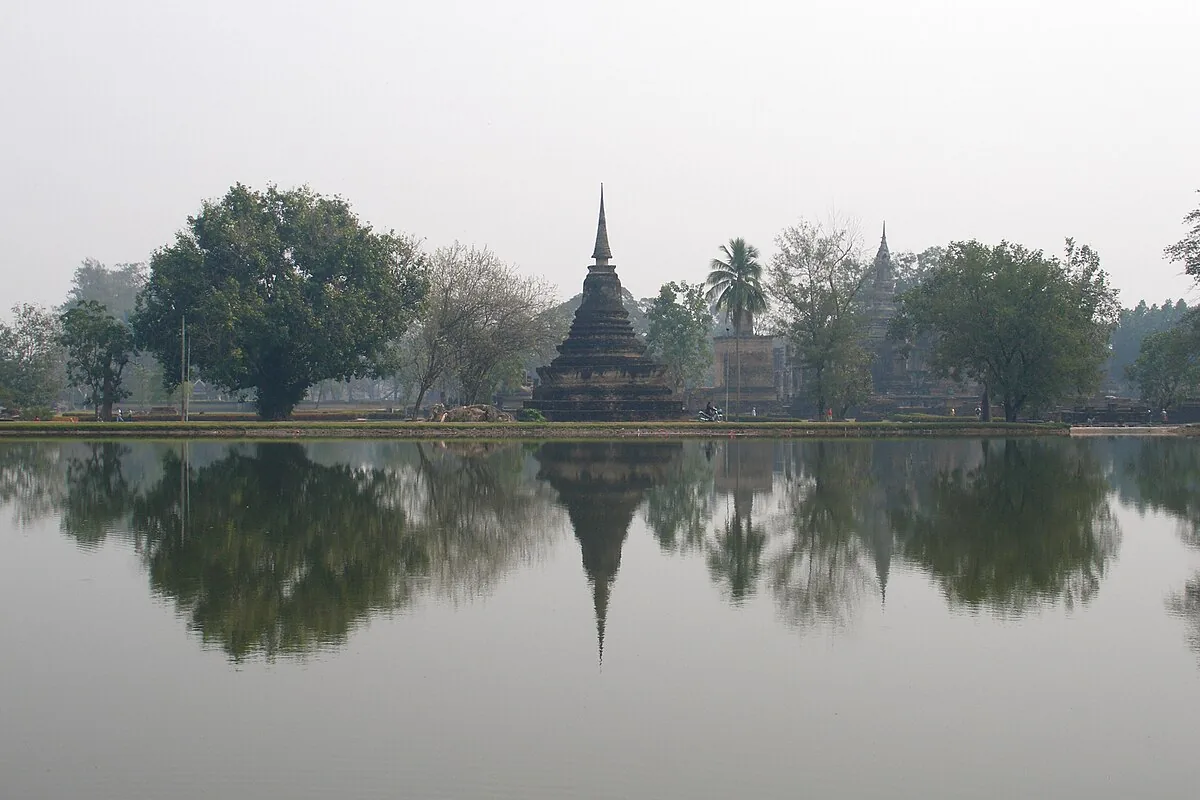
“Long before Angkor Wat reached its peak, this Buddhist sanctuary was built at the end of a 200-kilometer royal highway to serve as the center of the universe.”
About Phimai Historical Park
Phimai was the cradle of the Mahidharapura dynasty, which eventually rose to rule the entire Khmer Empire from Angkor. Its construction began under Jayavarman VI and was likely completed by his successors. The site served as a major administrative and religious center, controlling the fertile Mun River valley. During the 13th century, the temple was modified to include more Brahmanical elements, reflecting the shifting religious tides of the empire. By the time the Thai kingdoms asserted control over the Isan plateau, Phimai had become a revered, though crumbling, holy site. The 20th-century restoration by the Fine Arts Department was one of the first major archaeological projects in Thailand to use modern scientific techniques.
What Phimai Historical Park actually is
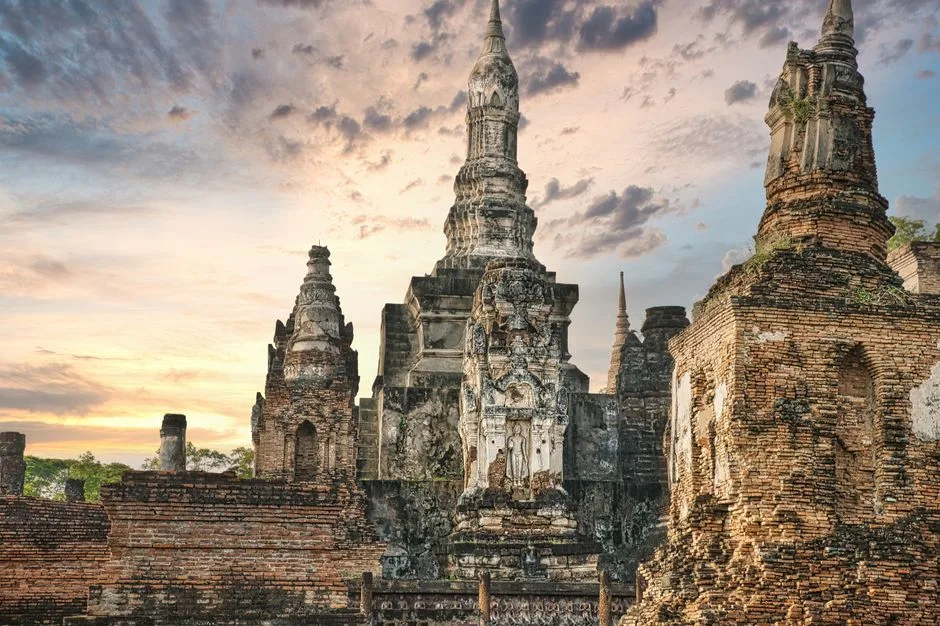
Rising from the dusty plains of Nakhon Ratchasima, a massive sandstone sanctuary marks the terminus of the ancient Khmer Royal Road that once stretched all the way from Angkor Wat. Phimai Historical Park is one of the most significant Khmer monuments in Thailand, a walled city of stone that predates the more famous Cambodian capital in its current form. Built as a Mahayana Buddhist temple rather than a Hindu one, Phimai features a central 'prang' that symbolizes Mount Meru, the center of the universe. The architecture is a masterclass in balance, with intricate lintels and pediments carved so deeply they appear to be made of lace rather than heavy rock. The grandeur of a lost empire is still palpable in the symmetry of the galleries and the cool, echoing shadows of the inner sanctum.
Rising from the dusty plains of Nakhon Ratchasima, a massive sandstone sanctuary marks the terminus of the ancient Khmer Royal Road that once stretched all the way from Angkor Wat.
Background
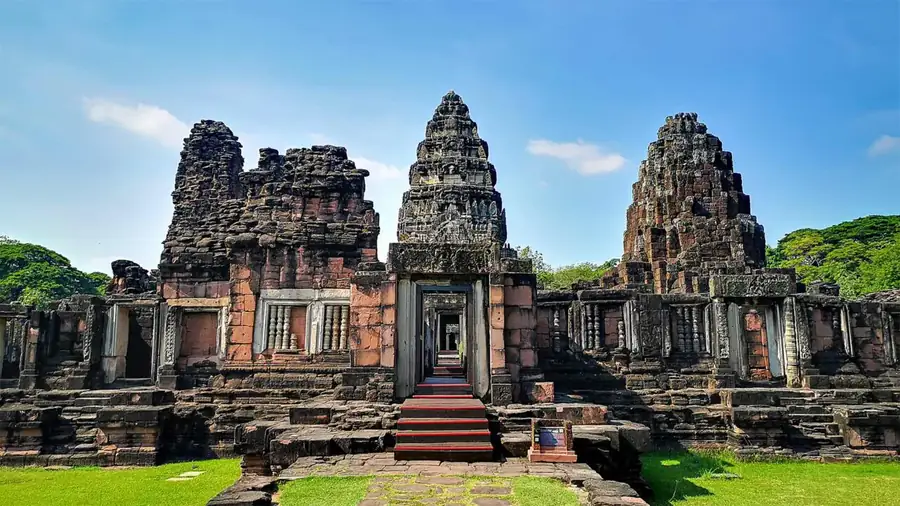
Phimai was constructed during the late 11th and early 12th centuries, primarily under the reign of King Jayavarman VI. It was a vital provincial capital of the Khmer Empire, connected to Angkor by a 225-kilometer highway lined with hospitals and rest houses. Worth knowing: Phimai faces southeast, toward Angkor, rather than the traditional east, shaped by its political and spiritual orientation. While most Khmer temples were dedicated to Shiva or Vishnu, the carvings at Phimai celebrate Buddhist themes, reflecting the unique religious syncretism of the region. After the fall of the Khmer Empire, the site was absorbed into the Ayutthaya Kingdom and later rediscovered by French explorers in the 19th century. A major restoration in the 1960s used the 'anastylosis' method, meticulously numbering and reassembling the stones to restore the temple to its former glory.
Walking through the main cruciform bridge
Walking through the main cruciform bridge, The sound of your footsteps echoing against the heavy sandstone floor. The air inside the galleries is still and smells of damp stone and ancient dust. What gets your attention is the incredible detail of the 'Naga' balustrades, where the multi-headed serpents seem to pulse with a serpentine energy. A sense of drop in temperature moving from the sun-scorched courtyard into the shade of the central sanctuary. People tend to miss the small, worn carvings of musicians and dancers at the base of the pillars, which give a glimpse into the vibrant court life that once filled these halls. The element that stays with you is standing in the central chamber, looking up through the soaring corbelled arch at the small patch of bright sky, feeling the immense weight of the stone pressing down on the silence.
Phimai is located about 60 kilometers
Phimai is located about 60 kilometers northeast of the city of Nakhon Ratchasima (Khorat). Regular buses run every half hour from Khorat’s Bus Terminal 2, taking about an hour to reach the town of Phimai. The historical park is located right in the center of the modern town, within easy walking distance of the bus stop. For those coming from Bangkok, it is a four-hour drive or a similar journey by bus or train to Khorat, followed by the local transfer. Many travelers choose to stay overnight in Phimai to experience the ruins in the soft light of early morning before the day-trippers arrive.
Phimai is located about 60 kilometers northeast of the city of Nakhon Ratchasima (Khorat).
The Experience
Watch the way the red and white sandstone changes color as the sun moves, shifting from a dull grey to a warm, glowing rose. Audible: the wind whistling through the narrow stone doorways creates a haunting, melodic hum. A sense of physical scale of the enclosure walls, which were designed to keep the chaos of the world out and the sanctity of the temple in. Most visitors miss the 'Prang Brahmadat,' which houses a replica of a famous statue of King Jayavarman VII sitting in a meditative pose. The element that stays with you is the view from the outer gate, seeing the ancient stone towers rising above the roofs of the modern Thai town.
Why It Matters
Phimai is the most important Khmer temple complex in Thailand and a key link in the history of Southeast Asian architecture. It is uniquely significant for its Mahayana Buddhist orientation within a predominantly Hindu architectural tradition. It serves as a product of the power and reach of the Khmer Empire and remains a vital site for understanding the cultural exchange between modern-day Thailand and Cambodia.
Why Visit
Visit Phimai if you want to see the majesty of Khmer architecture without the overwhelming crowds of Angkor. It is a remarkably well-preserved site that allows for a much more intimate and contemplative experience. The town of Phimai itself is charming and slow-paced, offering a taste of authentic Isan life that is often missed by travelers sticking to the main tourist trail.
✦ Insider Tips
- 1
Visit the Phimai National Museum just down the road before entering the park; it houses the original, more delicate carvings that were removed for protection.
- 2
Look for the lintel over the southern door of the main prang; it depicts a rare scene of the Buddha defeating Mara, carved with exquisite detail.
- 3
The park is beautifully lit at night, though you cannot enter; a walk around the perimeter after dark is highly recommended.
- 4
Visit 'Sai Ngam,' a nearby park featuring Thailand's oldest and largest banyan tree, which covers an entire island with its sprawling aerial roots.
- 5
Stay in one of the local guesthouses in town; most are within a five-minute walk of the ruins and offer a very warm, local welcome.