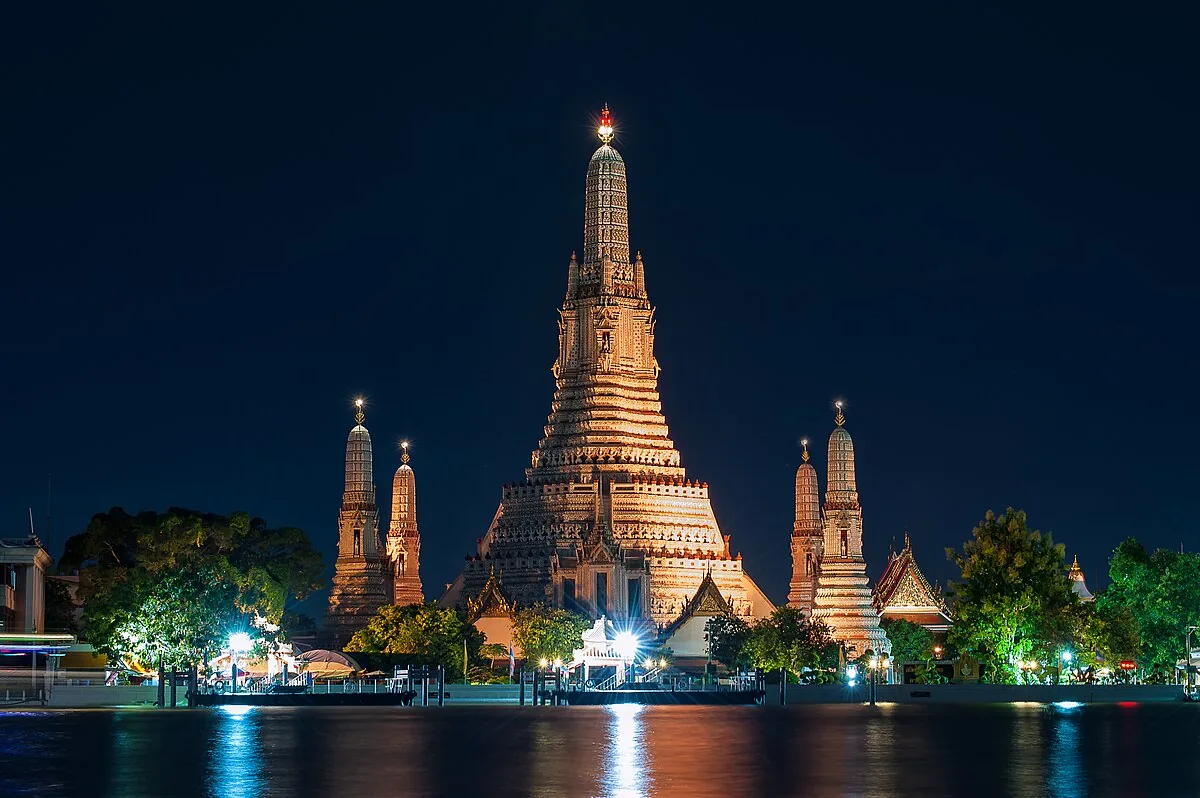
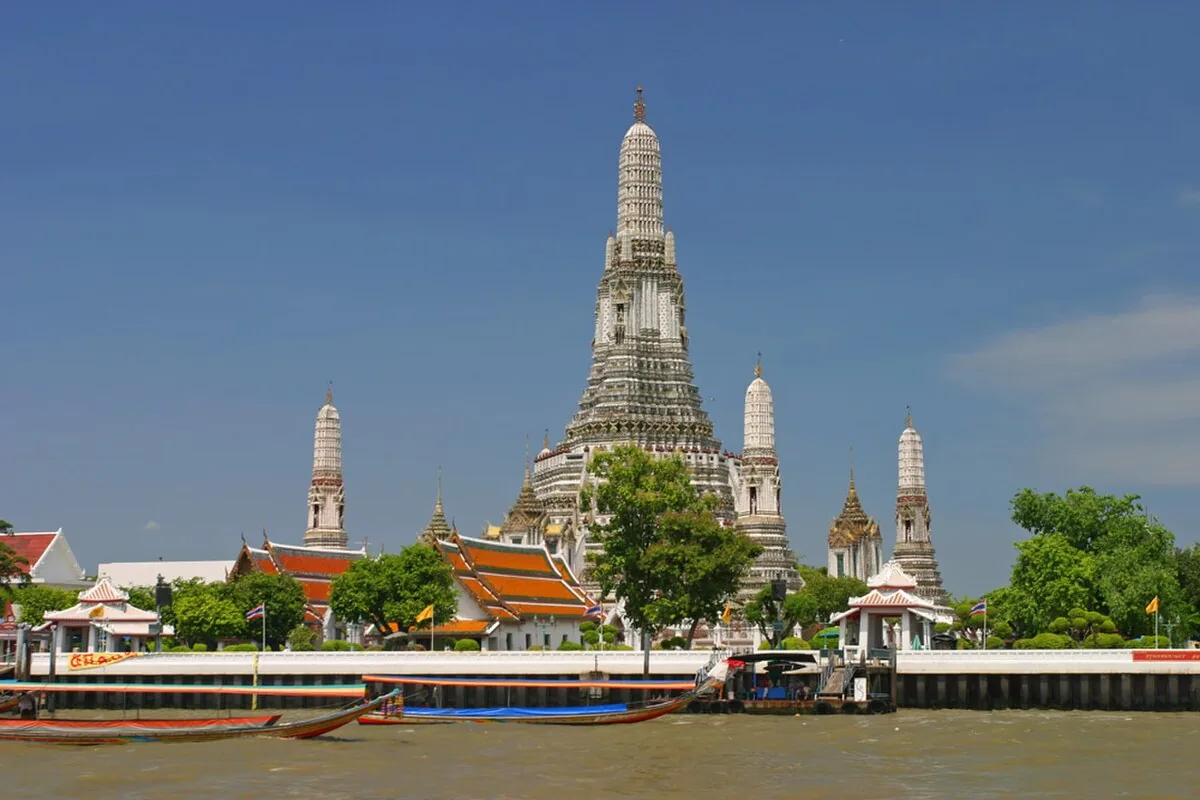
Millions of broken pieces of Chinese porcelain, once used as simple ship ballast, now create the most intricate floral mosaic in the world on a seventy-meter riverside spire.
About Wat Arun
Wat Arun’s current form is the result of a massive 19th-century engineering effort that required reinforcing the soft riverbank with thousands of timber piles to support the weight of the stone prang. The temple underwent a major three-year restoration ending in 2017, which cleaned the white plaster and replaced damaged porcelain shards, sparking a debate about the 'new' look versus the aged patina. Despite the controversy, the restoration has ensured the structural integrity of the spire against the shifting currents of the Chao Phraya.
Rising seventy meters over the west bank
Rising seventy meters over the west bank of the Chao Phraya River, the 'Temple of Dawn' is an architectural masterpiece decorated with millions of pieces of broken Chinese porcelain. The central prang, built in the Khmer style, represents Mount Meru, the center of the universe in Hindu-Buddhist cosmology. Unlike the gold-drenched temples of the Grand Palace, Wat Arun has a tactile, textured beauty, with intricate floral patterns made from discarded ceramic plates that once served as ballast on trading ships. The steep, narrow stairs leading up the main spire offer a literal climb toward the heavens, providing a panoramic view of the river and the glittering spires of the city beyond.
“Rising seventy meters over the west bank of the Chao Phraya River, the 'Temple of Dawn' is an architectural masterpiece decorated with millions of pieces of broken Chinese porcelain.”
Wat Arun, Thailand
The past
The temple has existed in various forms since the Ayutthaya period, but it rose to prominence in 1768 when King Taksin established his new capital in Thonburi. Legend says the King arrived at the temple just as the sun was rising, leading him to rename it Wat Arun Ratchawararam. For a short time, it housed the Emerald Buddha before the icon was moved across the river. The current towering prang was started by King Rama II in the early 19th century and completed by Rama III, transforming the modest shrine into one of the most iconic landmarks in the world. The porcelain decoration was a creative solution to a shortage of building materials, utilizing the broken ceramics that were commonly used as ballast on ships coming from China.
The air near the river is always moving
The air near the river is always moving. The rhythmic sweeping of the monks in the morning and the chatter of visitors navigating the incredibly steep steps of the central prang. The surface of the temple is unique; The smooth, glazed surface of the porcelain shards and the rough, weathered mortar that holds them in place. The opening note is the four smaller prangs that surround the central spire, each guarded by statues of the wind god, Phra Phai. The light at sunset is legendary, as the temple’s porcelain facade catches the orange glow and the entire structure appears to be made of pearl.
Take the Chao Phraya Express Boat
Take the Chao Phraya Express Boat to Tha Tien Pier on the East Bank, then hop on the small cross-river shuttle boat that costs only a few baht. This short ferry ride provides the best angle for viewing the temple’s full scale as it looms over the water. Alternatively, many travelers visit Wat Arun as part of a private long-tail boat tour of the Thonburi canals, which allows for a more relaxed arrival away from the main ferry crowds.
“Take the Chao Phraya Express Boat to Tha Tien Pier on the East Bank, then hop on the small cross-river shuttle boat that costs only a few baht.”
The Experience
The climb up the central stairs is a humbling experience; the steps are so narrow and steep that you find yourself clutching the railings, eyes focused on the mosaic flowers just inches from your face. A sense of relief and wonder as you reach the first balcony, where the view of the river reveals a chaotic ballet of barges and ferries. The intricate detail of the 'Kinnari', mythical half-human, half-bird creatures, that seem to support the weight of the levels above. Standing there as the sun dips below the horizon, the temple doesn't just reflect the light; it seems to glow from within, a signal of white and pastel color in the darkening city.
Why It Matters
Wat Arun is the physical embodiment of Bangkok's history as a global trading hub. It reflects the intersection of Thai religious architecture, Khmer design influence, and the practical ingenuity of using international trade waste to create high art, making it the most distinct silhouette on the Thai skyline.
Why Visit
Visit to experience the most tactile and unusual temple in Bangkok. While other sites dazzle with gold, Wat Arun fascinates with its thousands of handmade ceramic details and its vertiginous climb. It offers the best riverside perspective in the city and a tangible connection to Thailand's maritime past.
Insider Tips
- 1
The stairs are genuinely steep and can be terrifying for those with a fear of heights; take it slow and use both hands on the railings.
- 2
Dress code is strictly enforced; if you are wearing shorts, you will be required to rent a sarong at the entrance for a small fee.
- 3
The 'best' view of Wat Arun is often from the riverside bars and restaurants on the opposite bank (Tha Tien) just as the sun goes down.
- 4
Look closely at the porcelain; you'll find entire pieces of bowls and saucers integrated into the floral designs of the pillars.
- 5
Arrive by the cross-river ferry to experience the temple the way locals have for centuries, approaching from the water.