“Deep in the northern mountains, a single grain of rice once saved a village from a flood that created Vietnam's largest and most mysterious alpine lake.”
About Ba Be National Park
Ba Be is a geological anomaly that has baffled scientists; while most lakes in limestone areas drain into the earth, Ba Be’s bottom is lined with a layer of clay that keeps the water on the surface. This has created a stable environment for species that have vanished elsewhere in Southeast Asia. The Tay people, the primary residents of the park, have built a culture that is inseparable from the lake, using 'doc moc' (dugout canoes) made from single tree trunks to navigate the waters for generations. During the struggle for independence, the dense forests and hidden caves of the park served as a sanctuary for revolutionaries. Today, the park is a UNESCO Ramsar site, recognized as a wetland of international importance.
What Ba Be National Park actually is
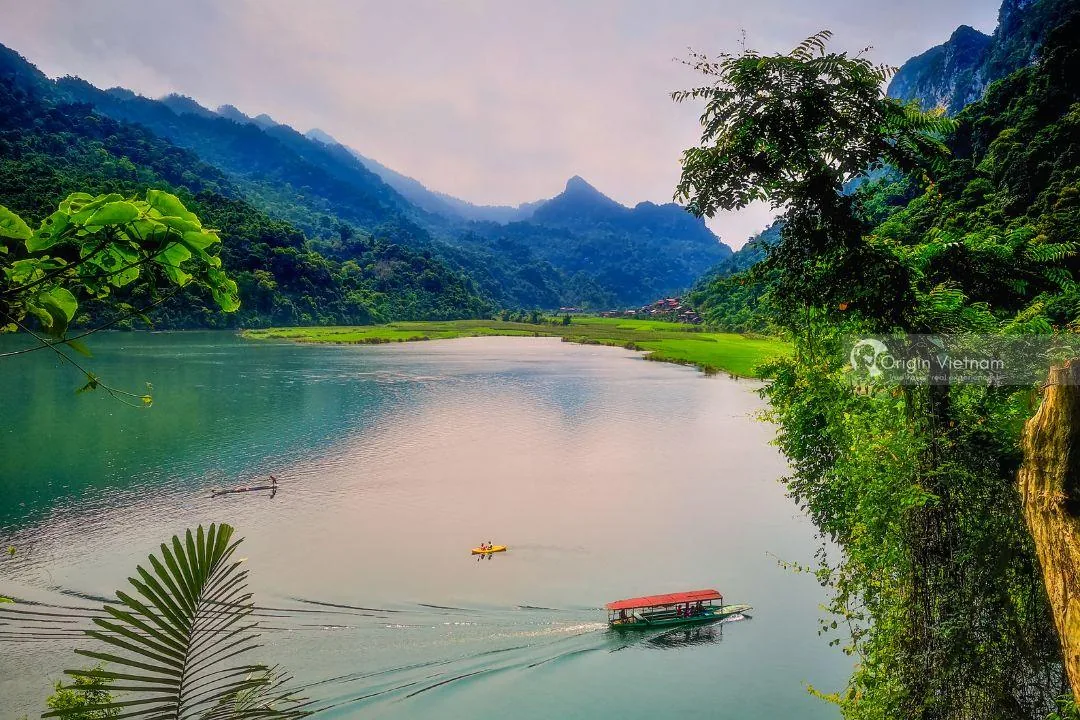
High-altitude freshwater lakes and limestone peaks form a serene, emerald sanctuary in the rugged mountains of Bac Kan province. Ba Be National Park is centered around three interconnected lakes, Pelam, Pelu, and Peleng, which together form the largest natural lake system in Vietnam. The water is surrounded by steep karst cliffs and dense, primary evergreen forests that are home to hundreds of bird species and rare primates. Instead of the high-rise hotels found in more developed parks, Ba Be is characterized by the traditional stilt-houses of the Tay ethnic minority, who live in small hamlets along the shore. It is a landscape of profound, deep greens and reflective surfaces, where the only sound is often the rhythmic splash of a fisherman’s oar or the distant call of a kingfisher.
High-altitude freshwater lakes and limestone peaks form a serene, emerald sanctuary in the rugged mountains of Bac Kan province.
Local legend tells of a great flood
Local legend tells of a great flood that submerged the valley, sparing only a widow and her son who had been kind to a beggar who turned out to be a dragon. The beggar gave them a grain of rice that turned into two canoes, which they used to rescue their neighbors as the waters rose to form Ba Be Lake. Geologically, the lake is a rare phenomenon, a freshwater body that has never dried up despite being located in a karst region where water usually drains away through underground fissures. The park was established in 1992 to protect this unique ecosystem and the cultures of the Tay, Dao, and Hmong people who have called these mountains home for centuries. It remains one of the most pristine and least-visited corners of the northern highlands, preserved by its relative isolation and the local commitment to sustainable living.
The air is cool, damp, and heavy
The air is cool, damp, and smelling of mountain moss, pine needles, and woodsmoke. From somewhere comes the low, melodic sound of the river flowing into the Puong Cave and the wind whispering through the bamboo groves on the lake’s edge. Along the forest trails, the springy, leaf-covered earth underfoot and the sudden drop in temperature entering the mouth of a massive limestone cavern. The way the water changes from a deep, glassy indigo in the center to a bright, translucent turquoise near the shore. The light at dawn is a soft, milky white that hangs in the valleys until the sun burns through the mist. From a wooden balcony of a stilt-house at night, the absolute darkness of the mountains makes the stars look impossibly bright and close. Ba Be is located about 240 kilometers north of Hanoi, a journey that takes roughly five to six hours by car or local bus. The road has improved significantly in recent years, but the final stretch into the park remains winding and steep. Those visiting arrive via private transfer or a specialized trekking tour. Once inside the park, transportation is limited to motorbikes or boats. A boat trip across the lake and through the Puong Cave is the essential Ba Be experience, allowing you to see the karst formations from the water and reach the more remote villages that are inaccessible by road.
The Experience
The sense of total isolation as your boat glides into the mouth of Puong Cave, where thousands of bats hang from a ceiling as high as a cathedral. The hum of the engine echoing off the limestone walls is the only thing that breaks the mountain silence. The moment that hits is how the Tay women still wear their traditional indigo blue outfits as they tend to their hillside crops. Most visitors stay for one night, but the real peace comes on the second day when you hike to the hidden silk waterfalls or the Fairy Pond. The moment the morning mist lifts to reveal the jagged peaks reflected perfectly in the still water is when you realize why this place is sacred.
The sense of total isolation as your boat glides into the mouth of Puong Cave, where thousands of bats hang from a ceiling as high as a cathedral.
Why It Matters
Ba Be National Park is a critical biodiversity hotspot and a living museum of Tay ethnic culture. It represents one of the world’s most important examples of a non-draining karst lake system. Culturally, it is a rare example of a national park where indigenous people and nature exist in a functional, centuries-old symbiosis.
Why Visit
Visit Ba Be because it is the antithesis of the modern, noisy tourist trail. It is a place of deep silence and vibrant natural color. You go to escape the city, but you stay because the rhythm of life on the lake, the slow rowing, the stilt-house dinners, and the mountain air, is the most restorative thing you will find in Vietnam.
✦ Insider Tips
- 1
Stay in a homestay in Pac Ngoi village to experience authentic Tay hospitality and eat food grown literally within sight of your bedroom window.
- 2
Take the full-day boat tour that includes the Dau Dang Waterfall and the Puong Cave; the cave is massive enough for the river to flow through it.
- 3
Rent a mountain bike to explore the paved loop around the lake; it is mostly flat and offers the best views of the karst cliffs away from the water.
- 4
Look for the rare Francois' langur in the trees above the water; they are shy, but their distinctive white sideburns make them easy to spot with binoculars.