A mother dragon supposedly spit jewels into these waters to create a fortress of stone, leaving behind 1,600 islands that look like a serrated spine breaking the surface.
About Ha Long Bay
The bay's limestone has undergone over 500 million years of formation, suffering through tropical downpours and fluctuating sea levels that eventually dissolved the stone into the towers we see today. Evidence of the Soi Nhụ culture suggests humans lived in these caves as far back as 18,000 BC, surviving on shellfish and mountain plants. During the 13th century, the jagged islands played a crucial role in naval warfare, providing cover for Vietnamese forces against the fleet of Kublai Khan. More recently, the bay became a theater of the Vietnam War, with its caves used as hospitals and supply depots during the intense aerial campaigns.
What Ha Long Bay actually is
Thousands of limestone towers rise abruptly from the jade waters of the Gulf of Tonkin, draped in thick jungle and emerald vines. Ha Long Bay translates to the place where the dragon descends into the sea, a name that captures the surreal, primordial scale of this aquatic karst landscape. The bay encompasses nearly two thousand islets, many of which are hollowed out by massive, vaulted caves or ringed by secret tidal lagoons accessible only by kayak. Fishing villages float on plastic drums in the sheltered lee of these giants, where life follows the rhythm of the tides rather than the ticking of a clock. While the central areas hum with the white noise of cruise boat engines, the further reaches of the bay offer a silence so profound it feels as if you have slipped back into a prehistoric era.
“Thousands of limestone towers rise abruptly from the jade waters of the Gulf of Tonkin, draped in thick jungle and emerald vines.”
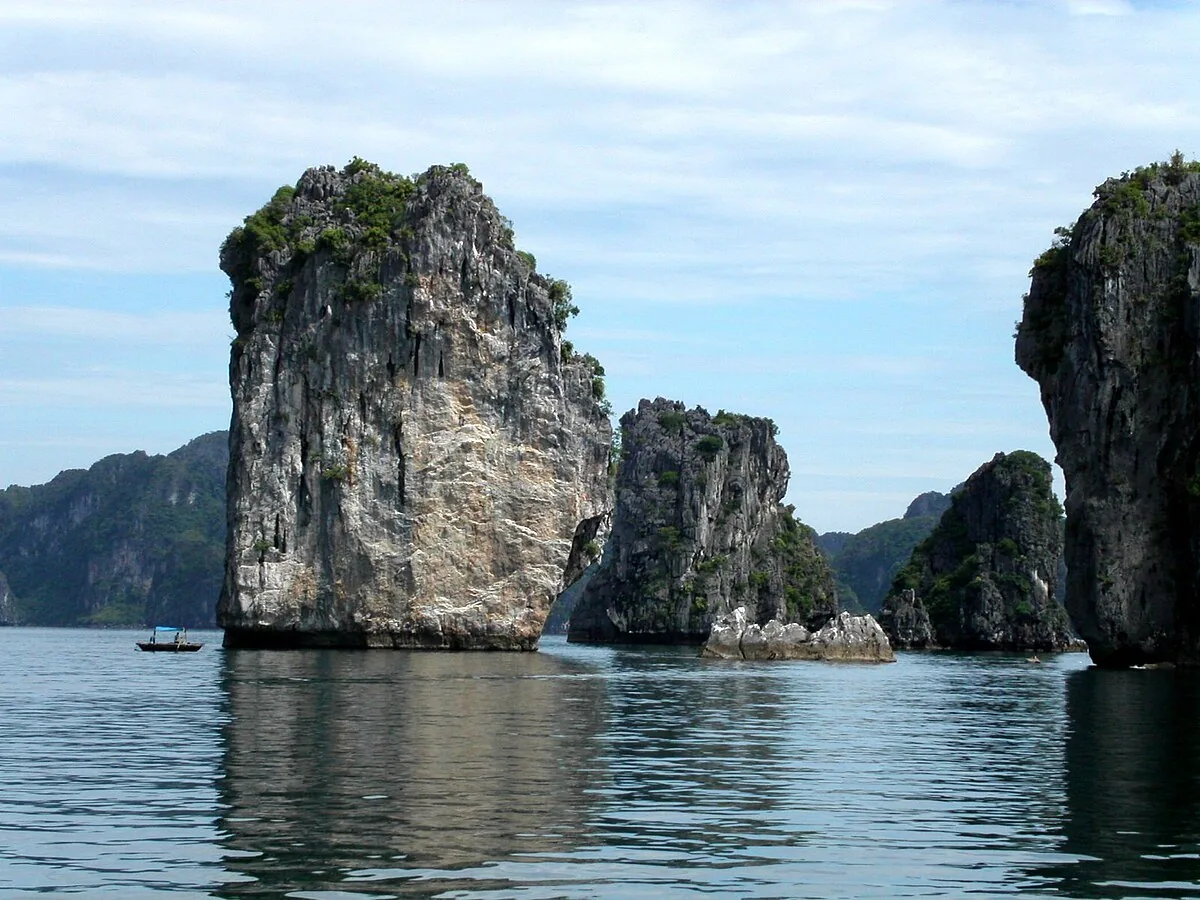
Ha Long Bay, Vietnam
Geological time scales of five hundred million years
Geological time scales of five hundred million years shaped these pillars, but local mythology tells of a mother dragon and her children who spat pearls into the sea to block invaders. These pearls transformed into the stone islands that protected the Vietnamese heartland from naval conquest throughout the centuries. Historically, the bay was a labyrinthine stronghold for rebels and pirates, most notably during the Mongol invasions when General Tran Hung Dao planted sharpened stakes in the nearby Bach Dang River. In 1994, UNESCO recognized the bay for its exceptional aesthetic value, and it has since become the primary symbol of Vietnam's natural heritage. Despite the pressure of modern tourism, the traditional floating communities still harvest pearl oysters and maintain a way of life that has existed for generations.
Most travelers depart from Hanoi, making
Most travelers depart from Hanoi, making the journey via the modern expressway which has reduced the travel time to roughly two and a half hours. High-speed ferries and traditional cruise boats launch from Tuan Chau International Marina or the quieter Sun World Port in Ha Long City. For those seeking an alternative perspective, seaplanes offer a thirty-minute flight from the capital, providing a birds-eye view of the archipelago that highlights the sheer density of the limestone pillars. Once on the water, small tenders and kayaks are used to navigate the narrow inlets and low-hanging cave entrances that the larger vessels cannot reach.
Visiting info
A heavy, briny humidity mixed with the scent of wet limestone and diesel from the wooden junks. From somewhere comes the rhythmic slap of water against the hull and the distant, shrill cries of hawks nesting high on the cliff faces. Walking onto the top deck at sunrise, the cool morning mist cling to your skin as the grey silhouettes of the islands slowly sharpen into green. The opening note is the tiny, weathered sampans navigated by lone women selling fruit and beer to passing boats, their conical hats bobbing in the swells. The light at dusk turns the water into a sheet of hammered pewter, reflecting the silhouettes of the karsts until the world looks like a charcoal drawing. Standing inside Sung Sot Cave, the sheer volume of the stalactites makes like a speck within a subterranean cathedral.
The Experience
Something strange, suspended sense of time as your boat glides into a lagoon enclosed by four walls of vertical rock. Audibly, the of the outside world is instantly replaced by the drip of water from limestone ceilings and the soft splash of your paddle. What gets your attention is the intricate patterns of erosion at the water line, where centuries of tides have carved deep notches into the base of each islet. The majority focus on the famous 'Kissing Rocks,' but the real magic is watching the lights of the floating villages flicker to life after the day-trippers have left. The moment the fog rolls in and swallows the tops of the islands is when the bay feels most like an ancient legend.
Why It Matters
Ha Long Bay is the definitive example of a mature karst landscape in a humid tropical environment. It is a biological stronghold for endemic species like the Cat Ba Langur and a cultural monument to the seafaring traditions of northern Vietnam. Beyond its beauty, it represents the geological resilience of a coast shaped by half a billion years of change.
Why Visit
Visit Ha Long Bay because no photograph can convey the physical sensation of being surrounded by a stone forest that stretches to the horizon. It offers a perspective on the earth's age that is both humbling and exhilarating. You go to witness the scale of nature's architecture in a place that feels completely separate from the modern world.
Insider Tips
- 1
Book a two-night cruise rather than a day trip to reach the quieter waters of Lan Ha Bay or Bai Tu Long Bay where the crowds are significantly thinner.
- 2
Bring a dry bag for your camera if you plan to kayak, as the wake from passing junks can easily swamp a small boat.
- 3
Check the weather forecast for fog; if the mist is too thick, the harbor master often cancels all departures for safety reasons.
- 4
Look for the wild monkeys on the cliffs of 'Monkey Island,' but keep your distance as they are opportunistic thieves of bags and food.
- 5
Wake up at 5:30 AM for Tai Chi on the deck; even if you don't participate, the silence of the bay at that hour is the highlight of the trip.