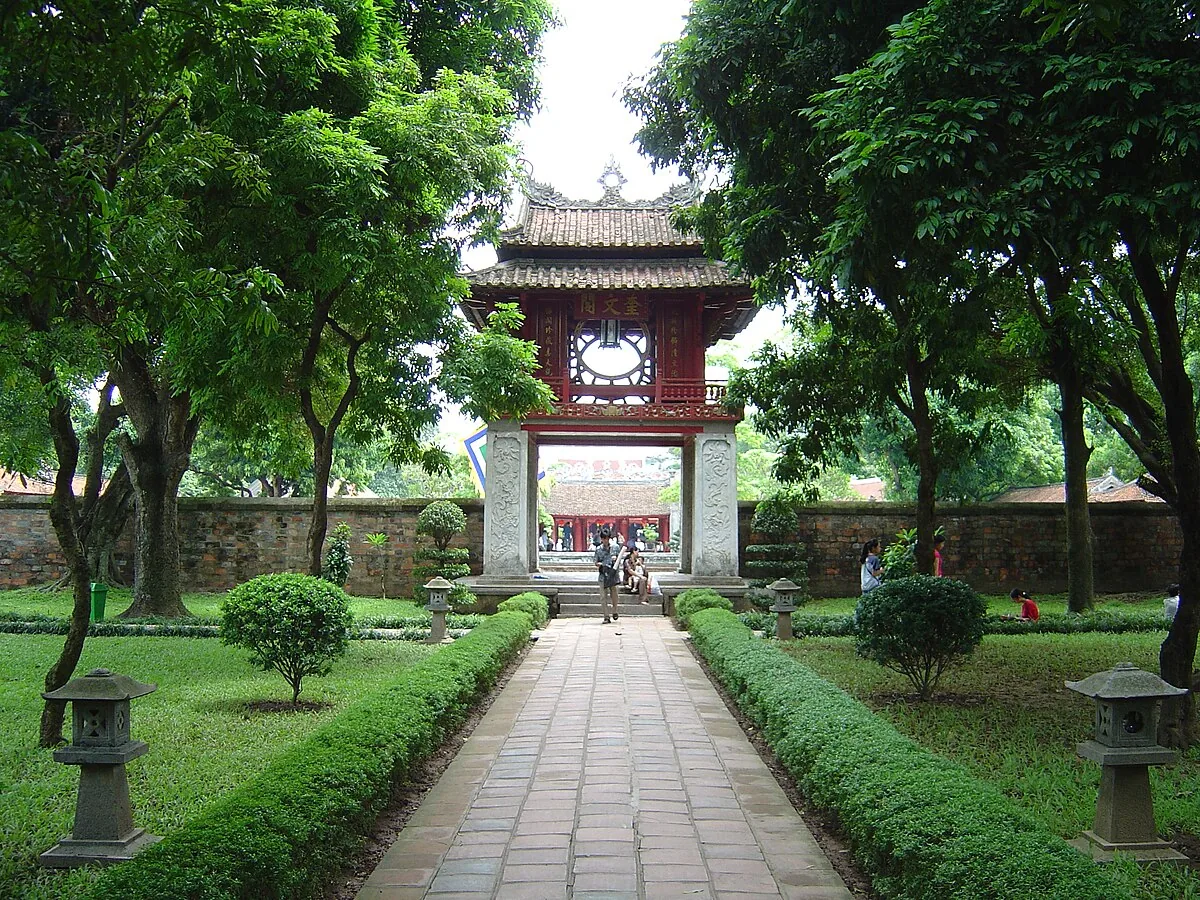
“Only twenty out of 160 original buildings survived the 1968 Battle of Hue, leaving a haunting ghost city of grassy foundations and meticulously restored gates.”
About Imperial City of Hue
The Nguyen Dynasty chose Hue for its strategic position, but also for its spiritual alignment between 'The King's Mountain' and the river. For 143 years, the Imperial City was a sovereign universe where only the emperor, his family, and his eunuch servants could enter the innermost sanctum. The fall of the monarchy in 1945 turned the city from a living palace into a museum, which then became a primary target during the Vietnam War due to its symbolic value. Recent restoration efforts have used traditional techniques, including the use of ironwood and natural pigments, to rebuild the halls of the Mandarins and the royal theater. It remains a site of immense pride and sorrow for the Vietnamese people.
What Imperial City of Hue actually is
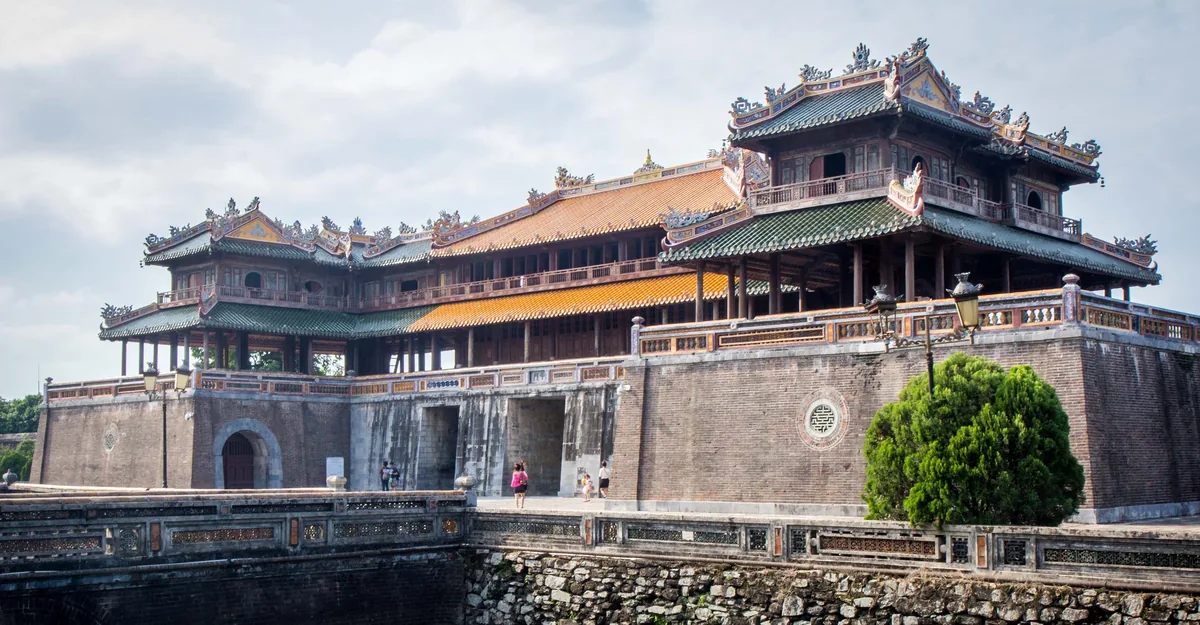
Thick stone ramparts and a sprawling moat filled with lotus flowers guard the remains of a dynastic world that once governed all of Vietnam. The Imperial City of Hue, a massive citadel modeled after the Forbidden City in Beijing, was the political and cultural heart of the Nguyen Emperors for nearly a century and a half. Within its walls, a series of courtyards, ornate gates, and yellow-roofed pavilions tell a story of absolute power and tragic decline. The complex is a study in geomancy, aligned with the Perfume River and the surrounding mountains to balance the flow of spiritual energy. Despite the heavy scarring from 20th-century conflicts, the city is undergoing a meticulous restoration that is bringing the vibrant reds and golds of its imperial past back to the banks of the river.
Thick stone ramparts and a sprawling moat filled with lotus flowers guard the remains of a dynastic world that once governed all of Vietnam.
Commissioned by Emperor Gia
Emperor Gia Long began the construction of this massive fortress in 1804, employing tens of thousands of workers to dig the ten-kilometer moat and build the massive brick walls. Thirteen emperors of the Nguyen Dynasty lived within these gates, overseeing a sophisticated court life governed by rigid Confucian ethics and artistic refinement. The city's peak ended abruptly in 1945 when the last emperor, Bao Dai, abdicated the throne. The 1968 Tet Offensive proved devastating for the citadel, as intense urban combat between North Vietnamese and Allied forces reduced many of its finest wooden palaces to rubble and charred timbers. Today, the site is still a poignant reminder of Vietnam’s imperial height and its subsequent struggle through the fires of the modern era.
The air is often heavy with the scent
The air is often smelling of incense and the damp, earthy smell of ancient brickwork. From somewhere comes the rhythmic, hollow sound of wooden clappers from nearby pagodas and the occasional splash of a fish in the quiet moats. Passing through the Thai Hoa Palace, The cool touch of the lacquered columns and the grit of history beneath your shoes. The standout is the intricate mosaic patterns on the gates, made from thousands of shards of broken porcelain and glass that catch the tropical sun. The light at mid-day is intense, reflecting off the yellow tiles of the rooftops and casting deep shadows in the narrow corridors of the Forbidden Purple City. In the middle of the vast, grassy voids where palaces once stood, The weight of what was lost. Hue is located in Central Vietnam and is easily accessible via its own domestic airport or the scenic train route from Da Nang and Hoi An. The Imperial City sits on the northern bank of the Perfume River, a short cyclo or taxi ride from the main hotel district. Most visitors enter through the Noon Gate (Ngo Mon), which sits directly opposite the massive Flag Tower. Exploring the entire citadel requires significant walking, so many travelers opt to hire a guide with an electric cart to navigate the sprawling perimeter before diving into the inner courtyards on foot.
The Experience
A sense of solemnity as you pass through the Noon Gate, where the emperor once sat to observe military parades. Audibly, the of your footsteps echoes in the vast courtyards, which feel strangely quiet despite the groups of tourists. First, the dragon motifs everywhere, on the rooftops, the staircases, and the royal urns, symbolizing the emperor's divine authority. Most people visit the main throne room and leave, but the real atmosphere is found in the overgrown corners near the Royal Library where the moss has claimed the ruins. The moment you stand before the Nine Dynastic Urns, each weighing two tons, you realize the staggering ambition of the men who built this place.
A sense of solemnity as you pass through the Noon Gate, where the emperor once sat to observe military parades.
Why It Matters
The Imperial City is the soul of Vietnam's feudal history. It is a unique example of late-imperial urban planning that fused Eastern philosophy with military architecture. Culturally, it remains the center of Vietnamese traditional music, dress, and cuisine, all of which were refined to their highest forms within these palace walls to satisfy the royal court.
Why Visit
Visit the Imperial City because it offers a narrative of Vietnam that predates the wars of the 20th century. It is a place of incredible architectural detail and profound historical irony. You go to see the grandeur of the Nguyen Dynasty and to understand the resilience of a culture that refuses to let its heritage disappear into the grass.
✦ Insider Tips
- 1
Rent a traditional Ao Dai from a nearby shop to take photos in the courtyards; the vibrant colors look spectacular against the weathered red and gold of the palaces.
- 2
Visit the Royal Antiquities Museum just outside the main walls to see the actual furniture and clothing used by the emperors.
- 3
Stay for the sunset when the Flag Tower is illuminated and the local families gather on the banks of the moat to fly kites.
- 4
Look for the bullet holes still visible in the stone walls near the eastern gates; they are a grim evidence of the intensity of the 1968 conflict.
- 5
Carry an umbrella even if it's sunny, as the vast open courtyards offer very little shade from the punishing midday sun.