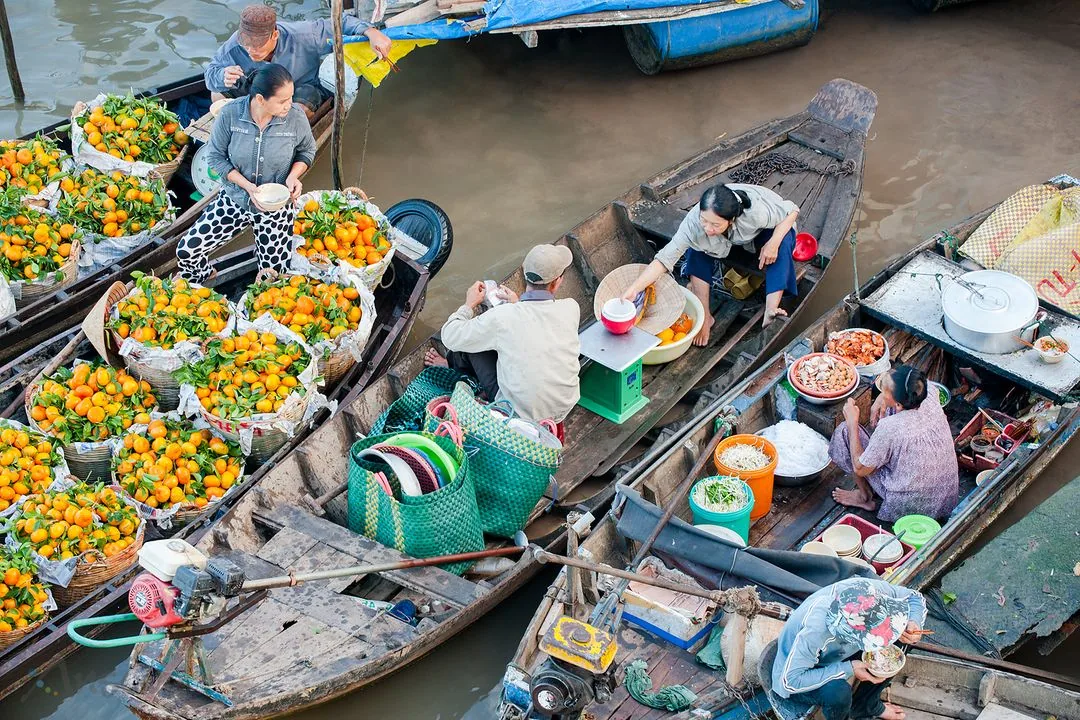
Before the rest of Vietnam has even hit the snooze button, a thousand boats are already tied together in a floating warehouse of pineapples and morning noodles.
About Cai Rang Floating Market
Cai Rang has functioned as the Delta's primary clearinghouse for over a century, outlasting colonial administrations and war. The market follows the tides and the seasons, moving with the pulse of the Mekong River itself. It was originally established to facilitate trade between the remote fruit orchards and the urban centers, creating a middleman class that lived entirely on the water. These families developed their own dialect and customs, including the 'cay beo' pole system which predates modern advertising. Despite the construction of the massive Can Tho Bridge nearby, the market persists because the river is a heritage that the local people refuse to abandon for the asphalt of the mainland.
Hundreds of wooden boats congregate on a wide
Hundreds of wooden boats congregate on a wide stretch of the Hau River long before the sun clears the horizon, creating a floating city of commerce and tradition. Cai Rang is the largest wholesale floating market in the Mekong Delta, a place where the highway is made of water and the shopfronts are the prows of heavy barges. Unlike the manicured floating markets aimed at tourists in neighboring countries, this is a working engine of the regional economy. Large boats from the countryside arrive laden with pineapples, watermelons, and pumpkins, while smaller sampans dart between them selling breakfast noodles and iced coffee. The entire scene is governed by a unique visual shorthand: long bamboo poles called 'cay beo' stand at the front of each boat, with samples of the day’s produce tied to the top to signal what is for sale to buyers from a distance.
The market emerged out of necessity centuries ago
The market emerged out of necessity centuries ago when the complex network of canals and rivers was the only viable way to transport goods through the soggy terrain of the Delta. Before modern roads and bridges connected the provinces, the river was the social and economic lifeline for the Khmer, Cham, and Vietnamese communities. Cai Rang has survived the transition to a modern economy because the river remains the most cost-effective way to move bulk agricultural produce from the farms to the city of Can Tho. While the number of boats has decreased slightly as trucking becomes more prevalent, the market remains a vital cultural touchstone for the 'water people' of the south, many of whom spend their entire lives living and working on these river-worn vessels.
The air is a thick, humid cocktail of river water, diesel exhaust, and the sweet, tropical aroma of ripening fruit. The low, chugging rhythm of boat engines and the sharp whistles of vendors calling out to potential customers. Sitting in a low-slung sampan, The gentle roll of the wake from larger barges and the occasional spray of cool river water. The opening note is the incredible dexterity of the noodle sellers who balance bowls of hot 'hu tieu' while stepping between bobbing boats. The light at 6:00 AM is a soft, bruised purple that slowly dissolves into a bright, hazy gold as the market reaches its frantic peak. Up on the deck of a pineapple boat, the sight of the river clogged with thousands of pieces of fruit feels like witnessing a floating harvest festival. Can Tho is the starting point for the market, located about three hours south of Ho Chi Minh City by bus. To see Cai Rang at its best, you must be on the water by 5:30 AM, which usually requires an overnight stay in Can Tho. Boats leave from the Ninh Kieu pier in the city center, and the journey to the market takes about forty minutes. Hiring a private small boat rather than a large tourist vessel allows you to navigate the narrow gaps between the trading barges, offering a much more intimate view of the river life and the morning trade.
The Experience
A surge of pure joy when a small coffee boat hooks onto your sampan and hands over a glass of condensed-milk coffee while you're still mid-river. The clatter of the market is a cacophony of commerce, the thud of pumpkins being tossed from boat to boat and the splash of anchors. The laundry drying on the rigging of the larger boats, a sign that these aren't just shops, but homes. The majority just watch from a distance, but the real thrill is getting close enough to smell the fresh-cut ginger and see the calloused hands of the traders. The moment the sun hits the water and the river turns a shimmering ochre is when the chaos feels like a masterpiece.
Why It Matters
Cai Rang is the cultural heart of the Mekong Delta. It represents a vanishing way of life where the river dictates every aspect of human existence, from diet to architecture. Historically, it is the most significant surviving example of the traditional waterborne commerce that once defined the entire Southeast Asian peninsula.
Why Visit
Visit Cai Rang because it is a place where you can see the soul of the Mekong before it is moved to a supermarket shelf. It is messy, loud, and entirely authentic. You go for the photos of the fruit boats, but you stay for the incredible resilience of a community that still finds everything it needs in the flow of the river.
✦ Photo Gallery
Best Season
🌤 From the dry season beginning December to April offers the most comfortable temperatures and the most predictable market hours, with the added bonus of the lunar new year fruit harvests.
Quick Facts
Best time to visit
From the dry season beginning December to April offers the most comfortable temperatures and the most predictable market hours, with the added bonus of the lunar new year fruit harvests.
Getting there
In Can Tho, Vietnam; reach Can Tho first, then continue to the site.
Location
Can Tho, Vietnam
Type
attraction
Insider Tips
- 1
Order a bowl of 'Hu Tieu' from a passing boat; the rocking of the water is the secret ingredient that makes this the best breakfast in Vietnam.
- 2
Look at the 'cay beo' poles to know what each boat sells; if you see a shirt hanging on the pole, it means the boat itself is for sale.
- 3
Avoid the larger, two-story tourist boats that can't get into the heart of the action; a small wooden sampan is the only way to go.
- 4
Bring small change in Vietnamese Dong, as the vendors on the water cannot easily handle large bills or credit cards.
- 5
Ask your boat pilot to take you to a nearby rice paper workshop after the market to see the traditional sun-drying process.