Inside this silent sanctuary, 82 stone tortoises have carried the names of the nation’s smartest people on their backs for over five hundred years.
About Temple of Literature
The temple has undergone numerous restorations, most significantly after the French colonial period and the heavy bombing of the 20th century. It was originally built according to the layout of the Temple of Confucius in Qufu, China, but over the centuries, it incorporated uniquely Vietnamese design elements like the lotus ponds and local woodcarvings. The stone stelae were almost lost during the various sieges of Hanoi, but they were protected as sacred objects by the local community. In 2010, UNESCO added these doctor stelae to the Memory of the World Register, recognizing them as an irreplaceable record of global educational history. It stands today as the premier symbol of Hanoi’s thousand-year history as a city of learning.
What Temple of Literature actually is
A series of five tranquil courtyards provides a rare escape from the frenetic swarms of motorbikes in Hanoi's historic center. The Temple of Literature, or Van Mieu, is a serene complex of red-lacquered pavilions and ancient trees dedicated to Confucius and the scholars of Vietnam. Built in the 11th century, it housed the Imperial Academy, the country's first national university, where the brightest minds studied for years to pass the grueling royal examinations. The architecture is a classic example of the Ly and Tran dynasties, featuring low-slung roofs, heavy timber beams, and the iconic Khue Van Cac pavilion. It remains a site of immense reverence, where the deep-seated Vietnamese respect for education and lineage is physically manifested in stone and wood.
“A series of five tranquil courtyards provides a rare escape from the frenetic swarms of motorbikes in Hanoi's historic center.”
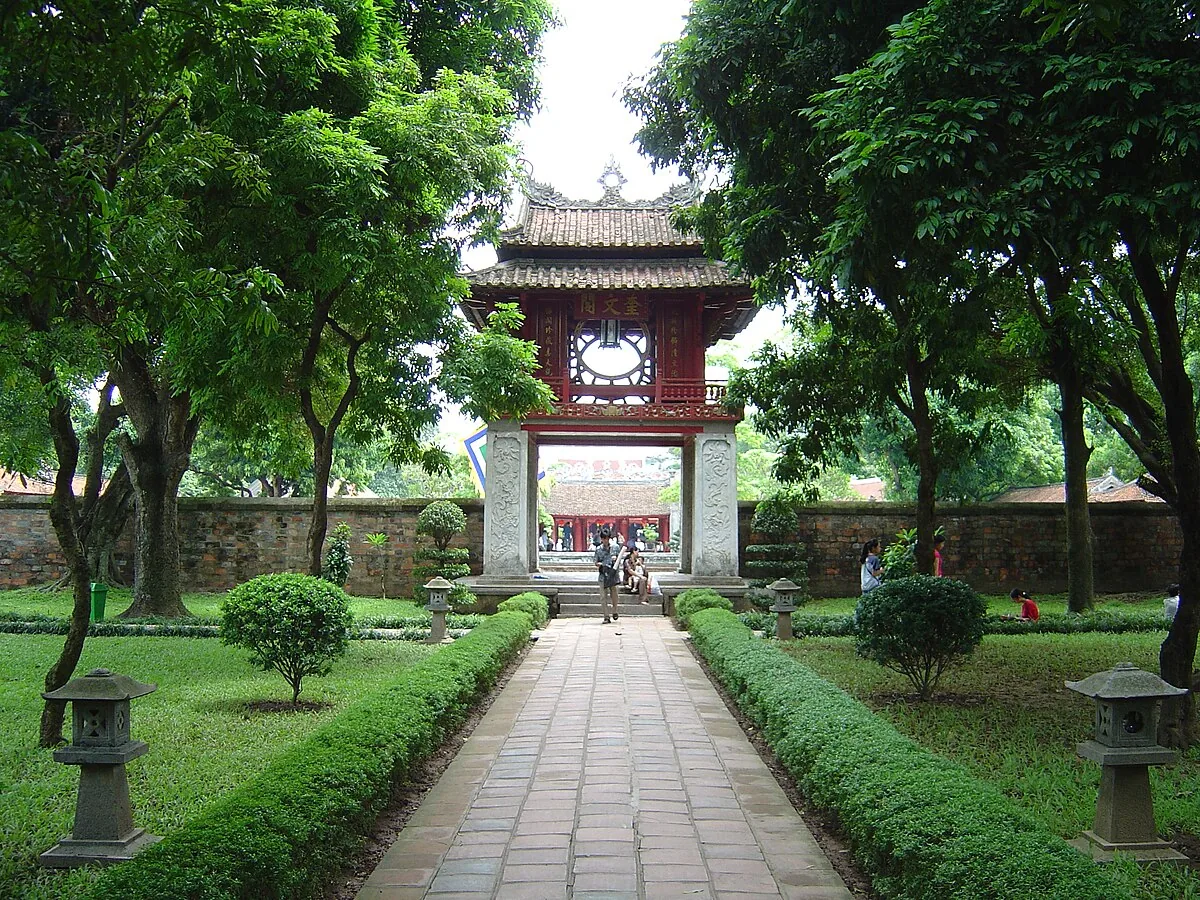
Temple of Literature, Vietnam
Commissioned by Emperor Ly
Emperor Ly Thanh Tong founded the temple in 1070 to honor the teachings of Confucius and to serve as a school for the crown prince and the children of the aristocracy. By 1076, it had expanded to become the Quoc Tu Giam, opening its doors to exceptionally gifted commoners from across the kingdom. For over seven hundred years, this institution was the crucible of Vietnamese intellect, producing the mandarins who would run the imperial bureaucracy. The most famous features of the temple are the eighty-two stone stelae resting on the backs of giant tortoises, each inscribed with the names of those who passed the doctoral exams between 1442 and 1779. These stones survived centuries of war and neglect, serving as a permanent record of the nation’s commitment to meritocracy.
The air is significantly cooler under the shade of the centuries-old banyan trees, carrying the faint, sweet smell of lotus blossoms from the central ponds. Sound-wise is the low, rhythmic hum of the city beyond the walls, but it is masked by the soft rustle of leaves and the occasional chime of a ceremonial bell. The walk across the Well of Heavenly Clarity, the smooth, sun-warmed stone of the balustrades and the stillness of the water. The weathered textures of the tortoise stelae, their stone shells smoothed by the hands of thousands of students seeking luck before their exams. The light at mid-morning filters through the dense canopy in dappled patterns, illuminating the bright red altars and the gold-leafed statues of the sages. Inside the final courtyard, the symmetry of the architecture creates a feeling of profound intellectual order.
The temple is located a short
The temple is located a short distance west of the Hoan Kiem Lake district, making it an easy ten-minute taxi or Grab ride from most central hotels. It is often included in walking tours of the city's 'Ba Dinh' district, which also houses the Ho Chi Minh Mausoleum and the One Pillar Pagoda. The entrance is marked by the Great Middle Gate on Quoc Tu Giam street. Because the site is a popular destination for school groups and graduation photos, arriving right at opening time allows for a much more contemplative experience before the main crowds fill the courtyards.
“The temple is located a short distance west of the Hoan Kiem Lake district, making it an easy ten-minute taxi or Grab ride from most central hotels.”
The Experience
What comes is a sense of historic weight as you walk the same central path once reserved only for the Emperor. Audibly, the of a traditional zither playing in one of the pavilions adds a haunting, beautiful layer to the atmosphere. First, the tiny details in the ceramics on the roof ridges, dragons and phoenixes that seem to guard the scholars below. The majority rush to the main altar, but the real charm is found in the quiet corners of the third courtyard where the doctor stelae stand in silent rows. The moment you see a group of modern students in their graduation gowns posing for photos, you realize that the temple’s mission of honoring education is still very much alive. It is a place where the past and the future of Vietnam meet.
Why It Matters
The Temple of Literature is the intellectual birthplace of Vietnam. it represents the enduring influence of Confucianism on Vietnamese social structure and the long-standing value placed on academic achievement over inherited wealth. Architecturally, it is one of the most important survivors of pre-colonial Hanoi, offering a rare glimpse into the city's original aesthetic and spiritual landscape.
Why Visit
Visit the Temple of Literature because it is the most sophisticated and peaceful site in Hanoi. It offers a profound counter-narrative to the chaos of the city’s streets, providing a space where you can appreciate the depth of Vietnamese culture. You go to see the history of a civilization that has prioritized the pen over the sword for over a millennium.
Insider Tips
- 1
Arrive at 8:00 AM sharp to photograph the courtyards before the large tour groups and school trips arrive.
- 2
Do not touch the heads of the tortoises; while it was once a tradition for luck, it is now strictly forbidden to prevent further erosion of the stone.
- 3
Look for the Khue Van Cac pavilion on the back of the 100,000 VND banknote and compare it to the real structure in the second courtyard.
- 4
Dress respectfully with shoulders and knees covered, as this is still considered a sacred site of worship and ancestral respect.
- 5
Visit the gift shop in the rear courtyard to find high-quality traditional calligraphy and prints that are more authentic than the usual street souvenirs.