Hanoi’s ancient heart is a maze where every street is named after the one thing they’ve been selling there since the year 1010.
About Old Quarter (36 Streets)
The 36 Streets were originally a swampy area outside the palace walls that the merchant guilds reclaimed and settled. Each street functioned like a miniature village, with its own gates that were closed at night to protect the valuable stock of silk, herbs, or silver. The French arrived in the late 19th century and added a layer of European aesthetics, but they could never quite tame the organic growth of the market stalls. Through decades of revolution and economic reform, the quarter has remained the commercial engine of the city, proving that traditional markets can survive even in the age of global e-commerce. It is the longest-running urban experiment in Southeast Asia.
What Old Quarter (36 Streets) actually is
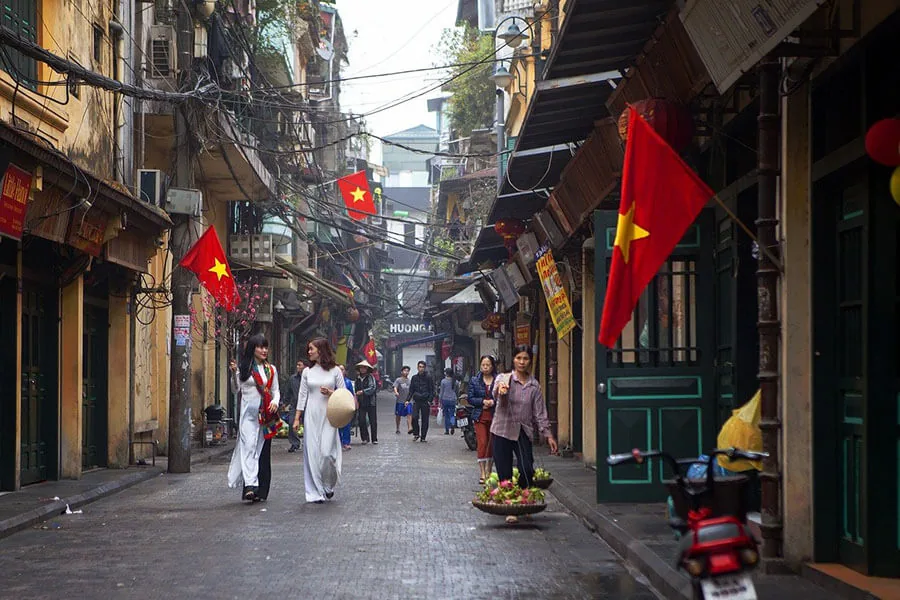
A tangle of narrow alleys and medieval streets is the relentless, beating heart of Hanoi, where commerce has been conducted in the same fashion for a thousand years. The Old Quarter, famously known as the 36 Streets, is a sensory blitz of motorbikes, street food smoke, and silk merchants. Each street was historically dedicated to a specific craft, silver, tin, bamboo, or roasted fish, and while some have modernized, many still retain their original specialized trade. The architecture is a frantic vertical stack of 'tube houses,' narrow buildings designed to avoid property taxes based on street frontage, which now host everything from boutique hotels to hidden speakeasies. The 13th century and the 21st century collide in a cacophony that is both exhausting and deeply intoxicating.
“A tangle of narrow alleys and medieval streets is the relentless, beating heart of Hanoi, where commerce has been conducted in the same fashion for a thousand years.”
Old Quarter (36 Streets), Vietnam
Background
Emperor Ly Thai To established the city in 1010, and the Old Quarter grew as a cluster of artisan guilds serving the nearby imperial palace. Each guild built its own communal house and temple, many of which are still tucked away behind storefronts selling modern electronics. During the French colonial period, the area was partially redesigned with the addition of shuttered villas and grand markets, but the original labyrinthine layout remained untouched. The quarter survived the intense bombings of the Vietnam War and the subsequent years of poverty, emerging as a resilient symbol of Hanoian grit. Today, it is a protected heritage zone, though the definition of 'protection' is loosely interpreted by the thousands of entrepreneurs who redefine the space every single day.
The air is a dizzying mix of exhaust fumes, charcoal-grilled pork, and jasmine tea. In your ears is the constant, rhythmic beep of horns, the clacking of plastic stools on pavement, and the shouting of vendors selling everything from SIM cards to steamed buns. Moving through the narrow sidewalks, The heat of the cooking fires and the occasional splash of water from a shopkeeper washing the front of their store. Leading with the intricate layers of electrical wires that hang over the streets like a black, chaotic web. The light at night is a neon-tinted blur, reflected in the puddles and the chrome of the passing bikes. At the 'Bia Hoi' corner, the sheer density of human life is so overwhelming that you eventually stop trying to navigate and simply let the crowd carry you. The Old Quarter is the primary destination for most travelers to Hanoi and is easily reached from the airport via express bus or taxi. Once inside the quarter, the best way to move is on foot, though you must master the art of walking into traffic with a steady, predictable pace to let the motorbikes flow around you. Cyclos offer a slower, more traditional perspective for those who want to take photos without dodging traffic, but negotiate the price firmly before sitting down. Many streets become pedestrian-only on weekend nights, providing a much-needed break from the motorized chaos.
The Experience
There is a surge of pure adrenaline the moment you try to cross the street, realizing the traffic will not stop for you, only flow around you like a river around a stone. Audibly, the of the city is a 24-hour combination of labor, from the early morning vegetable sellers to the late-night soup stalls. The element that hits is how the houses are impossibly narrow but stretch back for blocks, hiding quiet courtyards and ancient altars. The majority stay on the main tourist drags, but the real heart of the quarter is found in the dark, wet alleys where the locals are doing their laundry and eating breakfast. The moment you find a hidden cafe up three flights of stairs overlooking the chaos is when you finally fall in love with Hanoi.
Why It Matters
The Old Quarter is the living history of Hanoi. It represents the endurance of the guild system and the unique 'Tube House' architecture that defines the city's skyline. Historically, it is the center of the nation's resistance and its commercial rebirth, making it the most important cultural and economic landmark in northern Vietnam.
Why Visit
Visit the Old Quarter because it is the most honest version of a city you will ever see. It doesn't hide its mess, its noise, or its age. You go to experience a world where the street is the living room, the kitchen, and the marketplace all at once.
Insider Tips
- 1
Walk at a slow, steady pace when crossing the street; the motorbike riders are experts at calculating your trajectory and will miss you if you don't make sudden movements.
- 2
Look for the street names starting with 'Hang', it means 'merchandise,' followed by the name of what they traditionally sell there.
- 3
Head to the 'Train Street' (Le Duan) around 3:00 PM or 7:00 PM to see the locomotive pass just inches away from the cafe tables.
- 4
Explore the Dong Xuan Market early in the morning to see the wholesale trade in action before it becomes a standard tourist market.