An ancient prophecy about a mysterious lady in a red dress led to the construction of a tower so iconic it became the unofficial symbol of Vietnam's former capital.
About Thien Mu Pagoda
Founded at the dawn of the 17th century, the pagoda served as a spiritual anchor for the Nguyen dynasty long before they became emperors. It witnessed the rise and fall of imperial power, survived colonial pressures, and stood firm through the devastating floods of the Perfume River. During the mid-20th century, it moved from being a quiet monastery to a center of political resistance, symbolizing the moral authority of the Buddhist sangha. The preservation of the blue car used in the 1963 protests remains a jarring but vital reminder of how deeply this temple is woven into the political fabric of the nation.
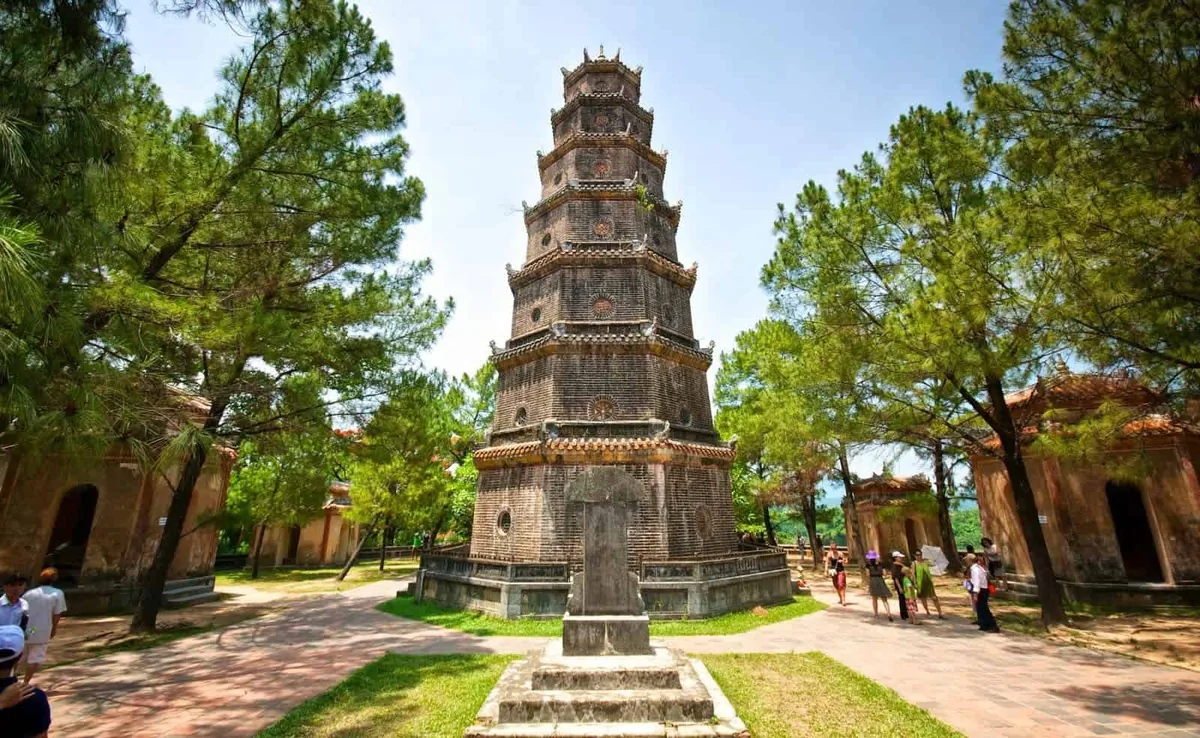
Seven stories of octagonal brickwork rise above
Seven stories of octagonal brickwork rise above a curve in the Perfume River, acting as a sentinel for the spiritual life of Hue. Thien Mu Pagoda, or the Pagoda of the Celestial Lady, balances on a hill where the scent of river pine and incense thickens the air. The Phuoc Duyen tower is the most recognizable silhouette in central Vietnam, but the complex behind it stretches deep into a series of manicured gardens and monk residences. Stone turtles carry heavy stelae on their backs while giant bronze bells hang in open-air pavilions, waiting to signal the start of meditation. Here, the rigid geometry of imperial architecture softens into the fluid lines of Buddhist devotion, creating a space that feels both fragile and eternal.
on this hill, 1601
Legend says an old woman in a red and green dress appeared on this hill in 1601, prophesying that a great lord would build a pagoda to bring peace to the realm. Nguyen Hoang, the first of the Nguyen lords, heard the tale and immediately ordered the construction of the temple to fulfill the vision. Over the centuries, subsequent emperors expanded the site, adding the iconic tower in 1844 under the reign of Thieu Tri. The pagoda also became a flashpoint for modern history in 1963, when it was a center for Buddhist protests against the South Vietnamese government. The simple blue Austin car parked in the rear of the complex belonged to Thich Quang Duc, the monk who drove to Saigon to commit self-immolation in protest, tying this ancient sanctuary forever to the struggle for religious freedom.
A sharp, clean fragrance of frangipani blossoms and the smoky trail of burning joss sticks. The low, rhythmic chanting of monks drifting from the main sanctuary and the distant, muffled slap of water against the riverbank. Inside the gate, the transition from the sun-drenched river stairs to the deep, cool shadows cast by the temple's massive wooden beams. First, the intricate patterns of the blue and white ceramic mosaics on the temple ridges, which sparkle like jewels against the grey Hue sky. The light at sunset turns the river into a sheet of hammered gold, casting the shadow of the seven-story tower across the garden paths. Standing near the massive bronze bell, the stillness is so deep that the rustle of a monk’s robe sounds like a sudden intrusion.
Most travelers arrive by dragon boat
Most travelers arrive by dragon boat from the central docks of Hue, a slow and meditative journey that offers the best perspective of the pagoda as it appears on the horizon. The river trip takes about thirty minutes, though you can also reach the site via a five-kilometer bicycle ride along the leafy banks of the Perfume River. Taxis and cyclos are readily available from the city center, but the approach from the water remains the most traditional and rewarding way to enter the grounds.
The Experience
Something strange, calm gravity as you step off the boat and climb the steep brick stairs toward the tower. The hum of the wind moving through the pine trees provides a natural percussion to the temple's silence. The weathered texture of the stone statues, which have been smoothed by centuries of humidity and prayer. Most people stop at the tower, but the real soul of the place lives in the quiet garden at the very back, where monks tend to bonsai trees with surgical precision. The moment the giant bell is struck at dusk, its deep vibration resonates in your chest, grounding you in the present.
Why It Matters
Thien Mu is the oldest pagoda in Hue and a pillar of Vietnamese Buddhist identity. It represents the fusion of folklore, imperial patronage, and modern political activism. Culturally, it is the most significant site in the region for understanding the relationship between the Vietnamese people and their spiritual history.
Why Visit
Visit Thien Mu Pagoda because it offers a sense of continuity that is hard to find in a country so rapidly modernizing. It is a place of profound aesthetic balance and historical weight. You go for the famous view of the tower, but you stay for the stories of the monks who shaped the nation's conscience.
✦ Photo Gallery
Best Season
🌤 April and May are the best months, as the weather is dry and the temple is often decorated with vibrant lanterns for the Buddha's birthday celebrations.
Quick Facts
Best time to visit
April and May are the best months, as the weather is dry and the temple is often decorated with vibrant lanterns for the Buddha's birthday celebrations.
Getting there
In Hue, Vietnam; reach Hue first, then continue to the site.
Location
Hue, Vietnam
Type
attraction
Insider Tips
- 1
Take a boat trip for the journey out but hire a taxi for the return to see the rural life along the riverbank from two different angles.
- 2
Visit the kitchen area in the late morning to see the massive wood-fired stoves where the monks prepare their communal vegetarian meals.
- 3
Dress conservatively with shoulders and knees covered, as this is an active monastery where the rules of modesty are strictly observed.
- 4
Look for the stele carved during the reign of Emperor Tu Duc, which contains his personal reflections on the beauty of the site.