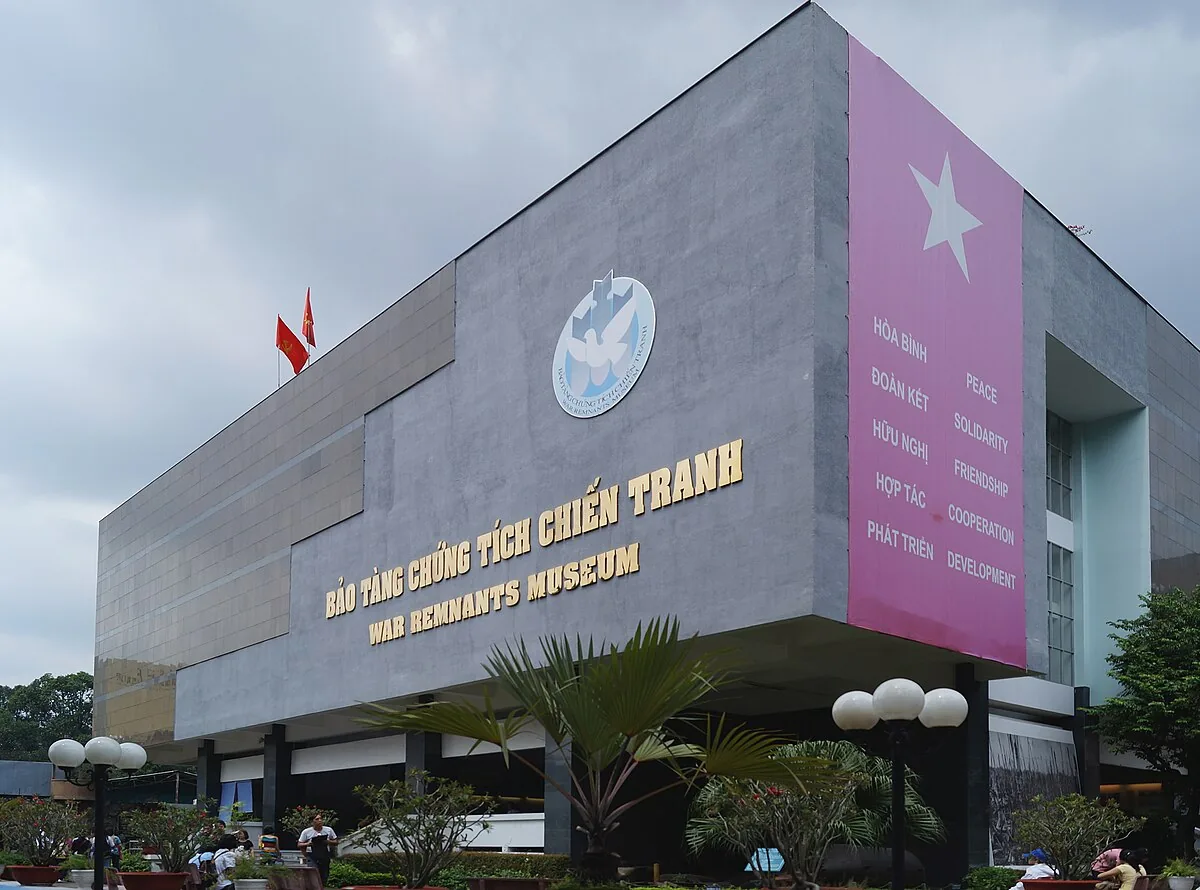
“A silent fleet of captured U.S. bombers and tanks sits in a quiet Saigon courtyard, surrounding a building that houses the most uncomfortable truths of the 20th century.”
About War Remnants Museum
The facility grew from a small display of military equipment into a three-story repository of wartime memory. In the early 1990s, curators worked alongside international veterans' groups to broaden the scope of the exhibits, ensuring the focus shifted toward the universal tragedy of conflict. The inclusion of the Requiem exhibit, donated by the people of Kentucky and including photos by legends like Robert Capa and Larry Burrows, transformed the museum's international standing. Today, it operates as a site of pilgrimage for peace activists and a crucial educational stop for the millions of young Vietnamese born after the guns fell silent. It is a product of to the fact that healing requires a brutal honesty about the past.
Shadows of American fighter jets and heavy tanks
Shadows of American fighter jets and heavy tanks stretch across the courtyard of a former United States Information Agency building, serving as a somber entry point to the most visited museum in Ho Chi Minh City. The War Remnants Museum offers a visceral, unapologetic look at the decade of conflict that defined modern Vietnam. Inside the grey, multi-story structure, the narrative shifts from the hardware of war to the harrowing human cost captured through the lenses of international photojournalists. Rooms dedicated to the effects of Agent Orange and the Requiem gallery showcase a perspective that rarely mirrors Western textbooks. While the subject matter is undeniably heavy, the facility provides a necessary space for reflection on the resilience of a nation that has moved forward while refusing to forget the scars of its past.
The War Remnants Museum offers a visceral, unapologetic look at the decade of conflict that defined modern Vietnam.
fall of Saigon, 1975
Opening its doors just months after the fall of Saigon in 1975, the institution was originally named the Museum of American War Crimes. The name changed in 1993 as diplomatic relations between Vietnam and the United States began to thaw, reflecting a broader shift toward reconciliation. Most of the artifacts on display were captured from the South Vietnamese and American forces, ranging from massive Chinook helicopters to the agonizingly small 'tiger cages' used for political prisoners on Con Dao Island. The heart of the collection lies in the Requiem exhibit, which features works by photographers from both sides who perished in the field. These images transitioned the museum from a tool of state propaganda into a world-class archive of wartime journalism and human rights documentation.
The air inside the galleries feels hushed and heavy, a stark contrast to the chaotic roar of motorbikes just outside the perimeter fence. You catch is the low, polyglot murmur of visitors from every corner of the globe, often punctuated by a sharp intake of breath or a stifled sob. Moving through the ground floor, the radiating heat from the massive iron hulls of tanks parked in the open sun. What registers is how the light softens in the photography wings, drawing your eye to the grainy, black-and-white expressions of soldiers and civilians caught in impossible moments. The silence in the Agent Orange room is particularly thick, as visitors grapple with the genetic legacy of chemical warfare. Standing before the oversized guillotine used by the French and later the South Vietnamese, you sense the cold, mechanical reality of 20th-century political repression. District 3 is the museum's home, placing it within easy reach of the Reunification Palace and Notre Dame Cathedral. People typically arrive via a short, inexpensive Grab ride or a brisk fifteen-minute walk from the central Ben Thanh area. Because the museum observes a midday break for lunch, typically between 11:30 AM and 1:30 PM, timing your arrival for either the early morning opening or the late afternoon is essential to avoid being turned away at the gate. The courtyard remains open during the break, allowing for a closer look at the heavy artillery and aircraft even when the indoor galleries are shuttered.
The Experience
You feel a lump in your throat as you realize the crowded room of tourists is almost perfectly silent, everyone eyes-locked on the same haunting photograph. Audibly, the of the city traffic feels a million miles away despite being just over the wall. The way American veterans often stand apart, their faces unreadable as they look at equipment they might have once operated. Most people rush the outdoor displays, but the real impact occurs in the upstairs galleries where the personal letters of soldiers are displayed. The moment you step back out into the bright, buzzing energy of modern Saigon, the contrast between the city's past and its vibrant present feels electric.
You feel a lump in your throat as you realize the crowded room of tourists is almost perfectly silent, everyone eyes-locked on the same haunting photograph.
Why It Matters
The museum represents the definitive Vietnamese perspective on the 'American War.' It serves as a global archive for the physical and psychological impact of chemical agents and unconventional warfare. Historically, it is a rare example of a victory museum that has successfully transitioned into a site of international reconciliation and peace education.
Why Visit
Visit the War Remnants Museum because skipping it means missing the most critical chapter of Vietnam’s modern identity. It offers a necessary, if painful, balance to the romanticized views of the country. You go to honor the scale of human loss and to understand why the peace of the present is so fiercely cherished.
✦ Insider Tips
- 1
Avoid the midday closure by arriving exactly at 7:30 AM to see the outdoor hardware in the softest morning light before the heat intensifies.
- 2
Start on the top floor and work your way down to follow the chronological flow of the conflict, ending with the photography exhibits.
- 3
Bring a small pack of tissues; the emotional weight of the second-floor galleries frequently catches even the most stoic visitors off guard.
- 4
Look for the display of protest posters from across the world, which shows the global scale of the anti-war movement during the 1960s.
- 5
Visit the small shop near the exit where you can find books written by survivors and veterans that provide a deeper context than the placards.