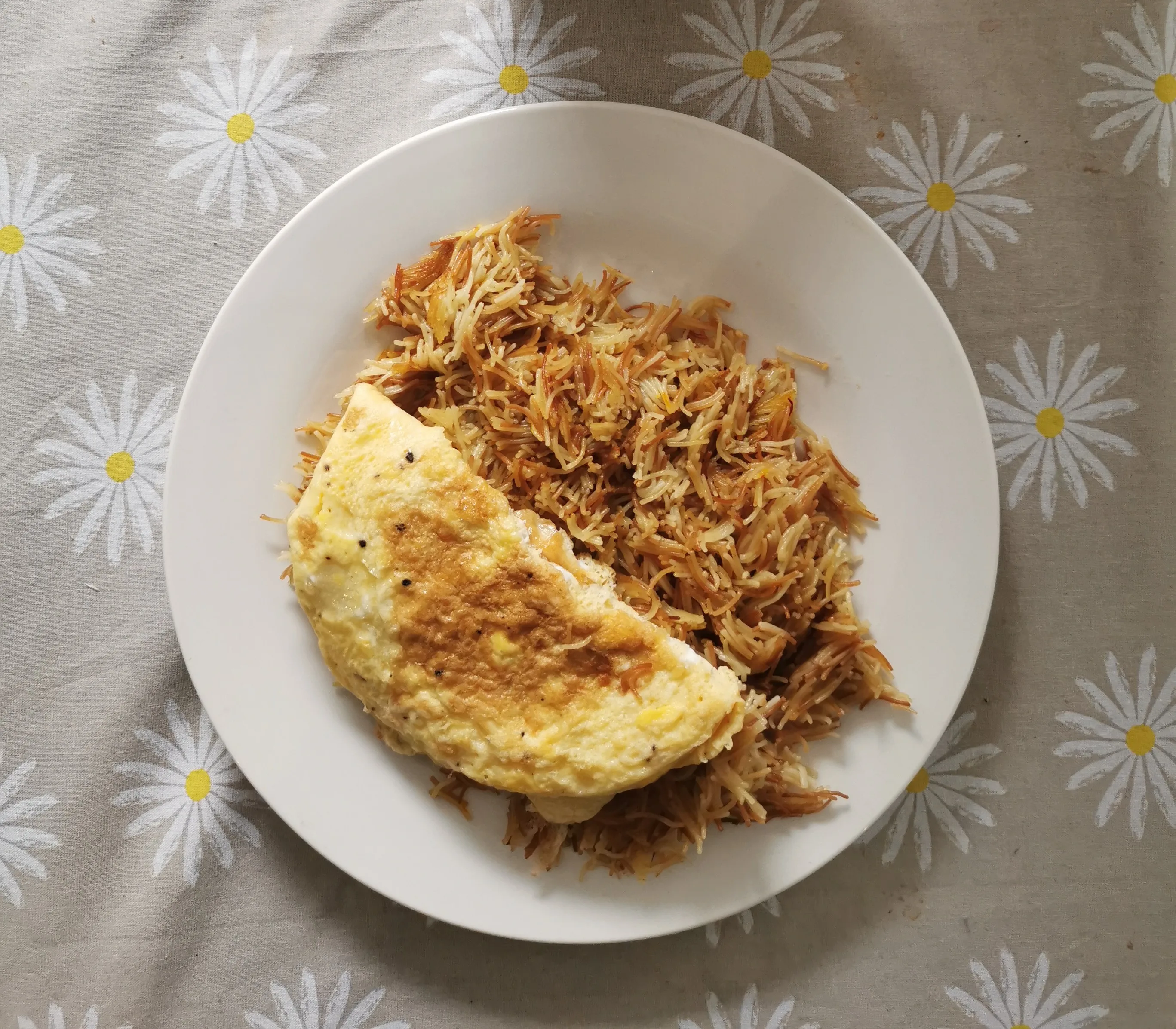
"A fried egg placed on top of saffron-and-rose-water-sweetened vermicelli noodles sounds like a culinary accident but is in fact the UAE's most intellectually interesting breakfast, a deliberate sweet-savoury collision that has been eaten across the Gulf for centuries."
About Balaleet
A beloved Emirati breakfast paradox, sweet vermicelli noodles perfumed with saffron, cardamom and rose water topped with a savoury fried egg; the sweet-salt collision is jarring at first and then deeply addictive; served at Friday family breakfasts across the Gulf.
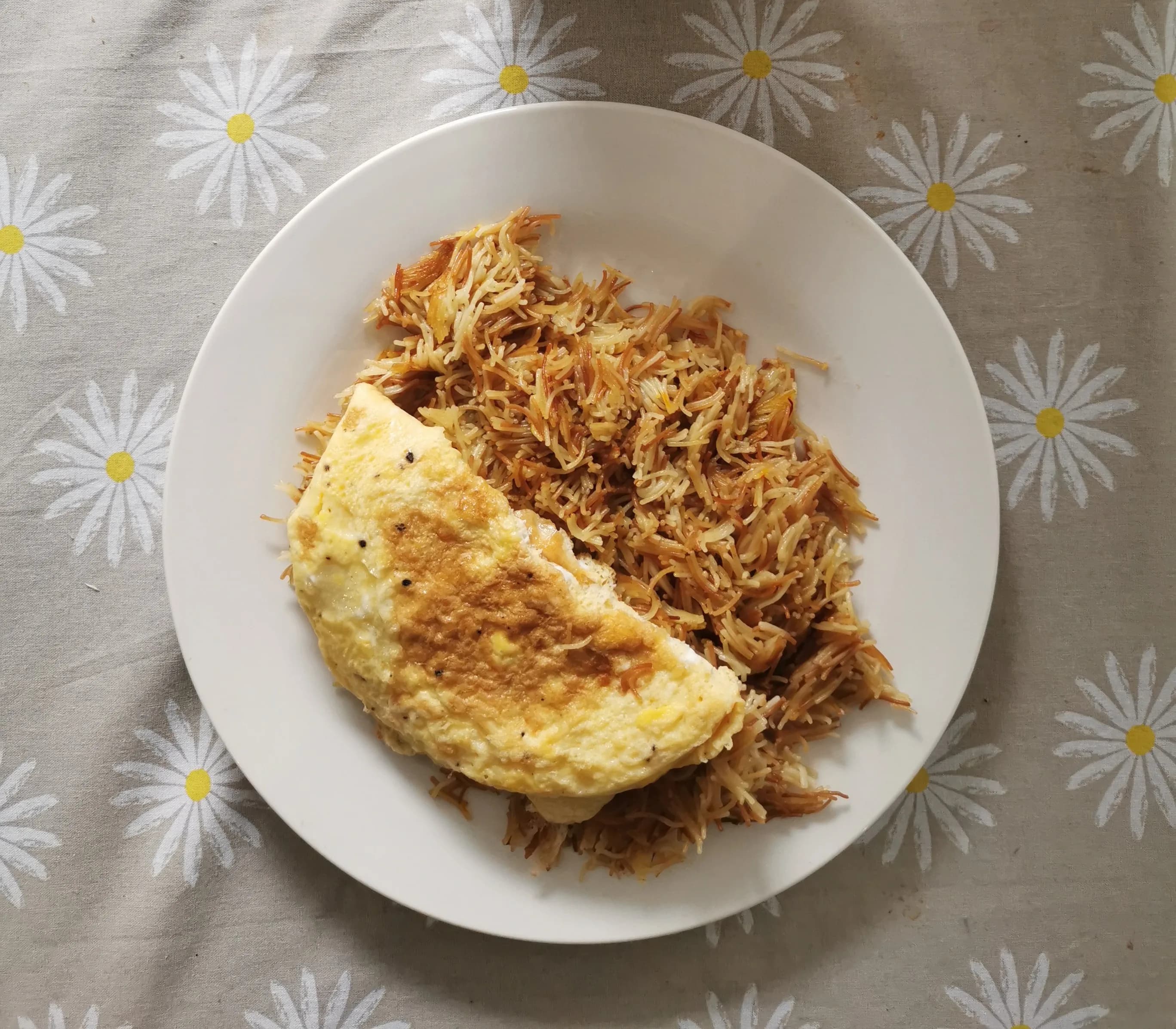
Balaleet, a staple of United Arab Emirates's cuisine
Overview
Balaleet is the UAE's most confounding dish to encounter for the first time and its most revealing once understood. At its core, it is sweet vermicelli noodles (cooked with clarified butter, cardamom, saffron, rose water and sugar until they are fragrant and slightly caramelised) served beneath or alongside a plain fried egg, the yolk still runny. The sweet-savoury collision is immediate and deliberate, not accidental. This is not fusion; this is a centuries-old preference. The dish belongs to the Emirati breakfast tradition, eaten on Friday mornings when families gather after the early prayer, and served at wedding breakfasts across the Gulf. The noodle base (sha'riyya or vermicelli) is the same used across the Arab world in sweet preparations, but the Emirati version is distinguished by its use of rose water and the specific combination of warming spices, cardamom being the dominant note above the saffron's floral warmth.
The Story Behind It
Balaleet reflects the Gulf's ancient position at the intersection of trade routes from South Asia and East Africa. The sweet noodle preparation is found across the Indian Ocean rim, from the Zanzibar coast to the Malabar Coast of India, adapted everywhere it landed. In the UAE, the egg addition transformed it from a sweet dish into something more ambiguous and more interesting: a hybrid that became the country's most distinctive breakfast. Gulf pearling families historically ate balaleet on the morning a fleet departed, the sweetness a wish for a safe and prosperous voyage.
What It Tastes Like
The first forkful, if taken where the noodles meet the egg, delivers the full paradox simultaneously: the sweet cardamom-scented noodle, the savoury fat of the egg white, the rich yolk that breaks and coats everything in gold. The rose water does not perfume aggressively. It hovers just at the edge of perception, elevating the dish above simple sweetness. The texture of the noodles is slightly sticky from the saffron butter, clinging together without becoming a mass.
Where to Find It
Balaleet is a home dish that requires a family kitchen to reach its full expression, but several Emirati restaurants serve reliable versions. The Arabian Tea House in Al Fahidi Historical Neighbourhood, Dubai, is the most celebrated, with a courtyard setting that matches the dish's traditional register. The Al Fanar Restaurant chain serves it at breakfast. In Abu Dhabi, the Mezlai restaurant at Emirates Palace offers a refined version. For the most authentic experience, any Emirati-run hotel breakfast buffet during the weekend will include balaleet among its morning offerings.
What to Expect
Balaleet arrives in a small bowl or on a flat plate, the noodles saffron-yellow and glistening with butter, the fried egg centred on top with the yolk intact. Breaking the yolk immediately and folding it through the noodles with a fork creates ribbons of gold through the sweet threads. The combined mouthful, sweet, savoury, fragrant, fatty, takes a moment to resolve into coherence. When it does, the dish becomes one of the most satisfying breakfasts imaginable: the sugar gives energy, the egg gives satiation, and the cardamom and rose water make the whole experience feel ceremonial rather than functional.
Why Try It
Balaleet is the dish that breaks the assumption that the Gulf has no indigenous food culture beyond grilled meat and rice. It is a nuanced, historically layered preparation that encodes the UAE's maritime trade history in its spice selection and reflects a sophisticated approach to combining sweet and savoury that the Western culinary tradition has only recently begun to explore. To eat balaleet is to eat something that cannot be fully understood from a recipe. It requires the context of an Emirati morning.
✦ Photo Gallery
Insider Tips
Order balaleet at a Friday or Saturday morning breakfast, the weekend timing is when Emirati families eat it and when restaurants serve it freshest.
Break the egg yolk immediately and fold it into the noodles rather than eating the two elements separately, the emulsified yolk changes the dish entirely.
The Arabian Tea House in Al Fahidi (Dubai) serves balaleet in the most atmospheric setting in the country, a covered courtyard in the oldest neighbourhood of the city.
Pair it with karak chai (heavily spiced milk tea) rather than coffee, the spiced tea echoes the cardamom in the noodles and is the traditional pairing.
Ask for extra rose water on the side if the version seems underperfumed, the fragrance fades quickly after cooking and a few drops tableside restores the dish's character.