Tucked behind a nondescript door in Amsterdam’s loudest shopping district lies a medieval courtyard where silence has been a legal requirement for over six hundred years.
About Begijnhof
The Begijnhof was originally a series of modest timber structures surrounded by a moat, a layout that emphasized its role as a secluded refuge. Over the centuries, as the city around it burned and rebuilt, the Beguines replaced their wooden homes with the tall, brick gables we see today, many of which date to the 17th and 18th centuries. The community was the site of the 'Miracle of Amsterdam' in 1345, a religious event that turned the city into a major pilgrimage destination. Even during the dark years of the 16th-century religious wars, the Beguines navigated the political landscape with incredible skill, maintaining their Catholic identity in a fiercely Calvinist city. The last true Beguine, Sister Antonia, died in 1971, ending a continuous female lineage that had occupied this ground for seven centuries.
What Begijnhof actually is
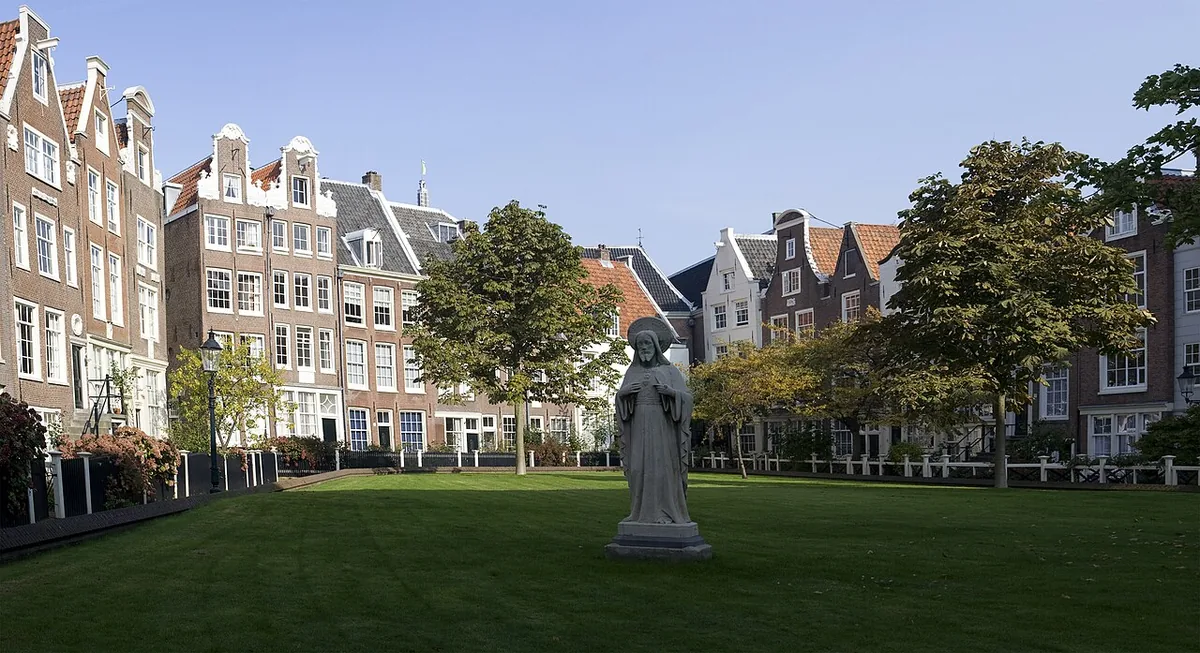
A heavy wooden door on the Spui square marks the threshold between the neon-lit frenzy of central Amsterdam and a silent, grassy courtyard that has remained a sanctuary for women since the 14th century. The Begijnhof is a medieval courtyard surrounded by tall, elegant gables, a place where the city's frantic pulse suddenly flatlines into a holy hush. The setting here smells of damp stone, freshly cut lawn, and the faint, cold scent of candle wax from the hidden chapel. You walk along the narrow brick paths. Notice how the sound of the nearby tram lines is replaced by the chirping of a few well-fed sparrows. The audio element is a fragile, enforced quiet, as this remains a private residential area for the modern descendants of a religious lay order. It is a architectural pocket of resistance, a piece of old Amsterdam that refused to be paved over by the march of commerce.
The Beguines were a group of religious women who lived like nuns but took no final vows, allowing them to retain their property and leave the order if they chose to marry. They established this courtyard around 1346 as a secure community where they could care for the sick and the poor. During the Reformation, when Amsterdam became officially Protestant and Catholic churches were seized, the Begijnhof was allowed to remain because the houses were the private property of the women. They built a 'secret' chapel behind the facades of two ordinary houses to continue their worship in private. The courtyard also houses the Houten Huys, one of only two remaining wooden houses in the city, built around 1528 before timber construction was banned due to fire risks. Today, the order of Beguines has passed away, but the courtyard continues to offer affordable housing to single women at the core of the city.
Crossing the threshold from the Spui,
Crossing the threshold from the Spui, There is a physical sensation of the air becoming stiller and cooler. What hits is the way the light falls across the central lawn, illuminating the statue of a Beguine in her traditional habit. Sound-wise of the city becomes a muffled, distant memory, making the click of your own shoes on the brickwork feel almost intrusive. There is a weight of centuries of quiet devotion entering the English Reformed Church, noticing the stained glass that tells the story of the community’s resilience. Straight off, the small, intricate stone tablets above the doorways, gevelstenen, that identify the houses with biblical scenes or family crests. The most striking moment is stepping into the Chapel of the Miracle of Amsterdam, where the smell of incense and the flickering votive lights create a space of profound, private reflection just meters away from the world's busiest shopping streets. The entrance is located on the north side of the Spui square, identifiable by a modest stone archway and a sign requesting silence. It is easily reached on foot from Dam Square or via the trams that stop directly on the Spui. Because the courtyard is a private residence, the gates are only open during daylight hours, usually from 9:00 AM to 5:00 PM. Visitors must remain on the designated paths and keep their voices to a whisper to avoid disturbing the residents. no entrance fee, but donations are welcomed in the chapel to help maintain the historic fabric of the buildings.
The Experience
The sense of the Begijnhof is one of dignified, domestic peace. What hits is the smell of the courtyard, a mix of old brick and blooming hydrangeas, that feels entirely disconnected from the city’s exhaust fumes. The gaze of the windows upon you, a reminder that people still drink tea and read books behind these historic panes. The light is soft and sheltered, reflecting off the white window frames and the green of the grass. Right away, the graves of the Beguines buried beneath the floorboards of the chapel and the English church, their names worn smooth by the passage of time. The most evocative detail is the sheer verticality of the houses, which seem to lean in toward the center as if to protect the secret of the courtyard. It is a place that restores your sense of scale.
Why It Matters
The Begijnhof is one of the last remaining 'hofjes' in Amsterdam and a unique monument to the history of women’s independence in the Middle Ages. It represents a rare survival of Catholic heritage in a post-Reformation city and contains the oldest wooden house in Amsterdam. Culturally, it is a trace of of the city’s medieval origins and its long tradition of tolerance and private sanctuary.
Why Visit
The pull is that you need to know that Amsterdam has a soul beyond the canals and the coffee shops. While the rest of the city is a stage for tourism, the Begijnhof is a living home. You come here to experience a silence so deep it rings in your ears and to see a side of the city that remained unchanged while empires rose and fell. It is the only place where the 14th century is just a door-knock away.
✦ Photo Gallery
Best Season
🌤 Late April is the best time to visit, when the tulips in the central garden are in bloom and the spring light is bright enough to penetrate the narrow spaces between the gables.
Quick Facts
Best time to visit
Late April is the best time to visit, when the tulips in the central garden are in bloom and the spring light is bright enough to penetrate the narrow spaces between the gables.
Getting there
In Amsterdam, Netherlands; reach Amsterdam first, then continue to the site.
What's nearby
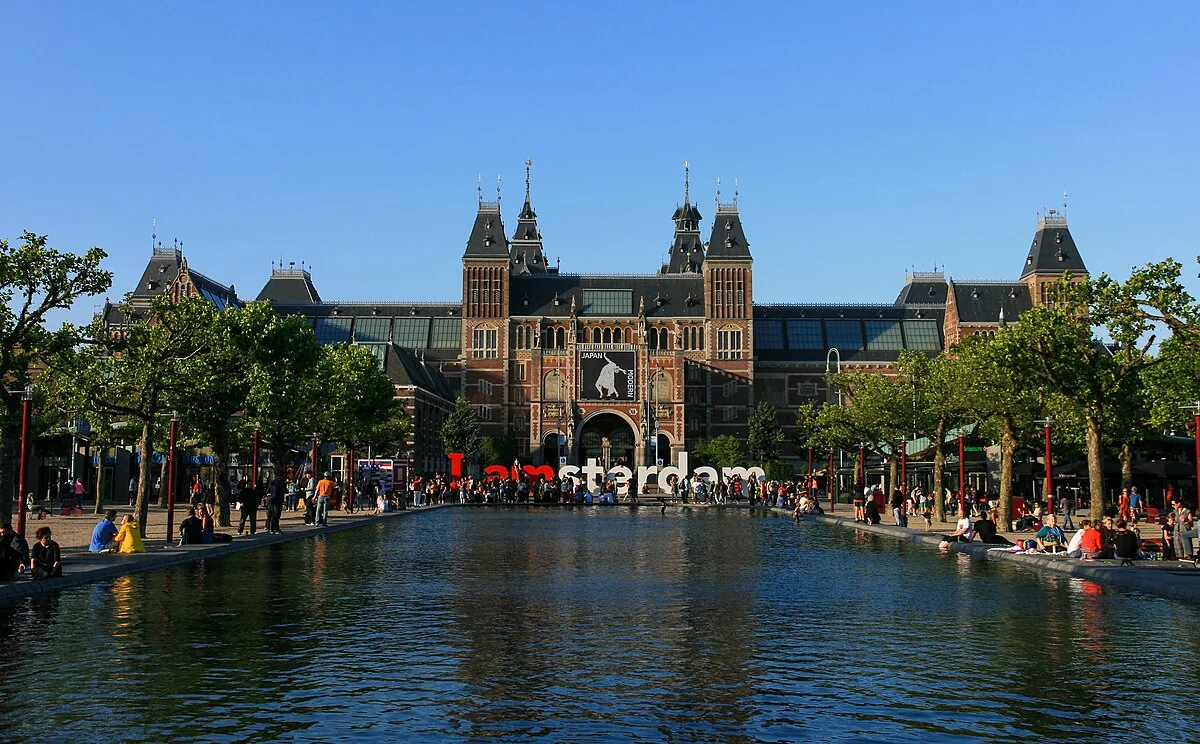
Rijksmuseum, Keukenhof and Hortus Botanicus Leiden are also in the area.
Location
Amsterdam, Netherlands
Type
attraction
Coordinates
52.3694°, 4.8901°
Insider Tips
- 1
The 'secret' Catholic chapel is located at numbers 29 and 30; the door looks like a house, but inside is a stunning Baroque sanctuary.
- 2
Silence is strictly enforced; if you arrive with a large group, you will likely be asked to leave or wait outside.
- 3
Look for the wooden house at number 34; it is one of the most significant architectural relics in the city and has a beautifully preserved facade.
- 4
Visit the small shop near the exit to buy postcards and books that fund the ongoing maintenance of the courtyard residences.
- 5
The English Reformed Church often hosts world-class chamber music rehearsals in the mornings; if the door is ajar, the acoustics are worth a listen.