Start with the Jordan Pass. It's the trip's best-value decision
The Jordan Pass is the first thing to understand, before you book anything else. You buy it online before you arrive, and it bundles your tourist-visa fee (normally 40 JOD) together with entry to Petra and more than 40 other attractions, Wadi Rum, Jerash and the Amman Citadel among them.
There's a catch, and it's a generous one. The visa waiver only kicks in if you stay in Jordan for at least three nights. Almost everyone does. Do the maths and the pass effectively makes your Petra ticket free, because the visa you'd have paid for anyway is folded in. Three tiers (Jordan Wanderer, Explorer and Expert) differ only by how many consecutive days you get inside Petra: one, two or three. Buy the two-day version. You'll understand why the moment you see the scale of the place.
Petra is not a day trip. Give it two
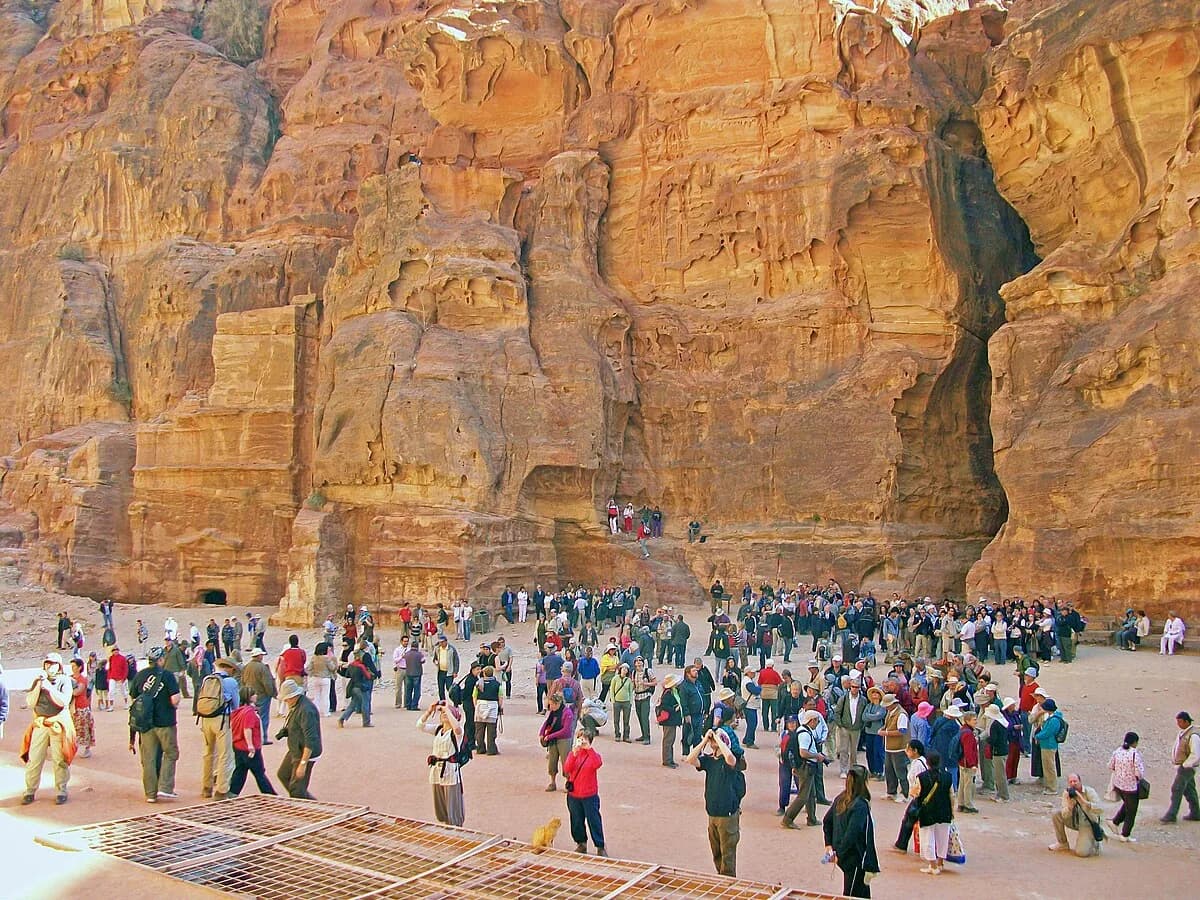
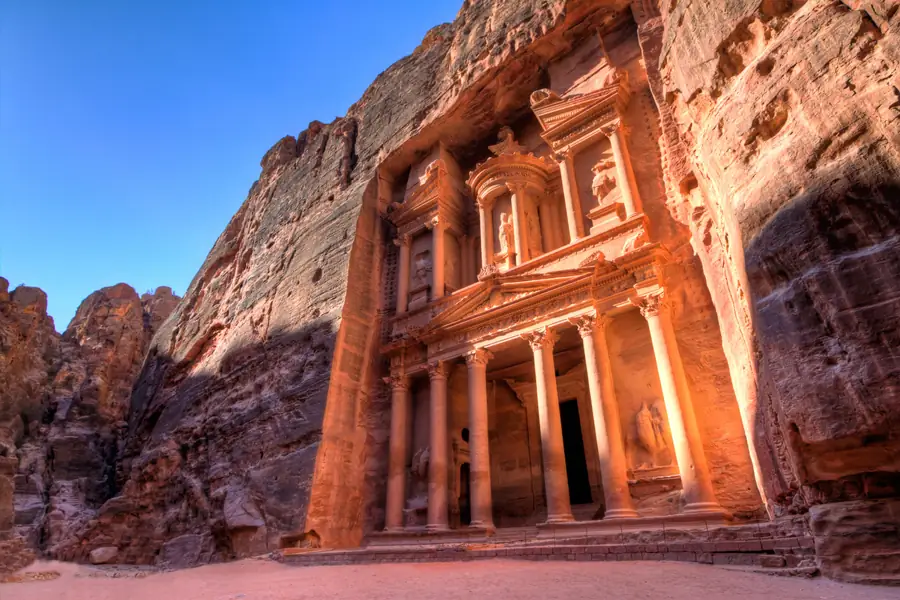
The image everyone carries of Petra is the rose-red Treasury glowing at the end of a narrow canyon. That's the opening act, not the finale. The Treasury (Al-Khazneh) sits just past the Siq, the 1.2 km slot canyon you walk through to enter. Most day-trippers photograph it, wander a little further, and leave having seen maybe a tenth of the site.
Petra is a whole lost city spread across a valley. Tombs carved into cliffs. A Roman-era colonnaded street. A 1st-century theatre. And the Monastery (Ad-Deir), larger than the Treasury and reached by an 800-step climb that thins the crowds beautifully. Two days lets you do the main valley on day one, then the high places, the Monastery and the quieter trails on day two. If your trip allows, Petra by Night (a separate ticket, certain evenings) lights the Siq and the Treasury with 1,500 candles. It's touristy and it's still magic.
Wadi Rum: sleep in the desert that played Mars
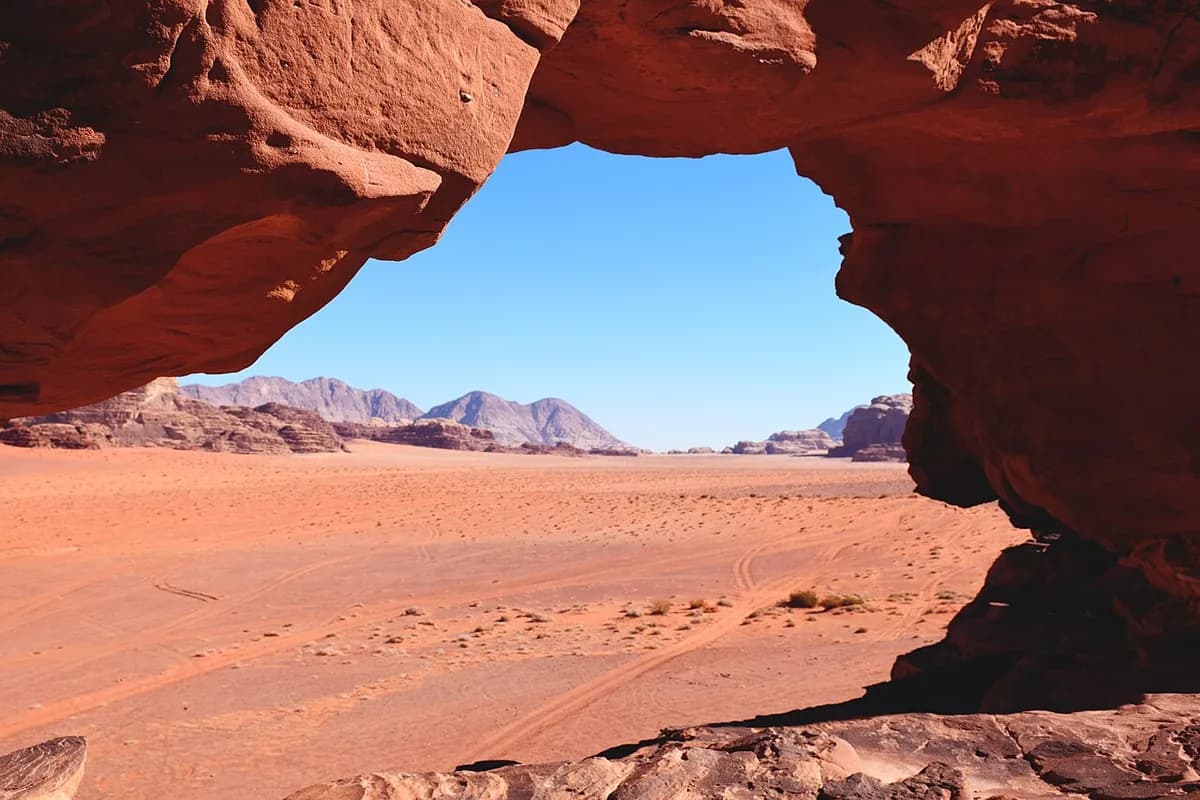
Two hours south of Petra, the sandstone valleys of Wadi Rum are the Jordan that stays with you longest. This is the desert that stood in for Mars in The Martian and Dune, and the comparison is fair: vast ochre sand, wind-sculpted rock arches, and a silence you can feel.
The way to do it is to stay overnight at a Bedouin camp. A 4x4 tour in the afternoon takes you between the rock formations and up the dunes for sunset. Dinner is often zarb, meat and vegetables slow-cooked in an underground sand oven. Then the sky does the thing deserts do, and there are more stars than you knew existed. Bubble camps with transparent domes have multiplied in recent years for stargazing in comfort. Traditional camps are cheaper and, many would argue, truer to the place.
Timing
When to visit Jordan
Jordan is a spring-and-autumn country. March to May and September to November bring warm days and cool nights, comfortable for Petra's climbs and bearable in Wadi Rum. Summer in the desert and at the Dead Sea is punishing, and winter can be cold and even snowy in Petra and Amman.
Average temperature & rainfall in Amman
Temp °CRain mmReal climate averages for Amman (capital). Source: Open-Meteo archive. Rainfall is total monthly precipitation.
Sample route
The perfect 5 days in Jordan
A ready-made 5-day route built from Jordan's top sights. Adjust it to your pace, or generate your own plan.
Budget
What a day in Jordan costs
Hostels and budget guesthouses, local falafel and mansaf, shared taxis or buses, and a basic Bedouin camp in Wadi Rum.
A comfortable hotel, a rental car for the loop, sit-down restaurant meals, and a good overnight desert camp with a 4x4 tour.
Dead Sea spa resorts, luxury bubble camps in Wadi Rum, private guides at Petra, and fine dining in Amman.
These are rough daily costs per person in Jordanian dinar (a strong currency) and exclude flights and the Jordan Pass. Petra's standalone entry is expensive, which is exactly why the Jordan Pass pays for itself.
Don't miss
The best places to visit in Jordan
Taste
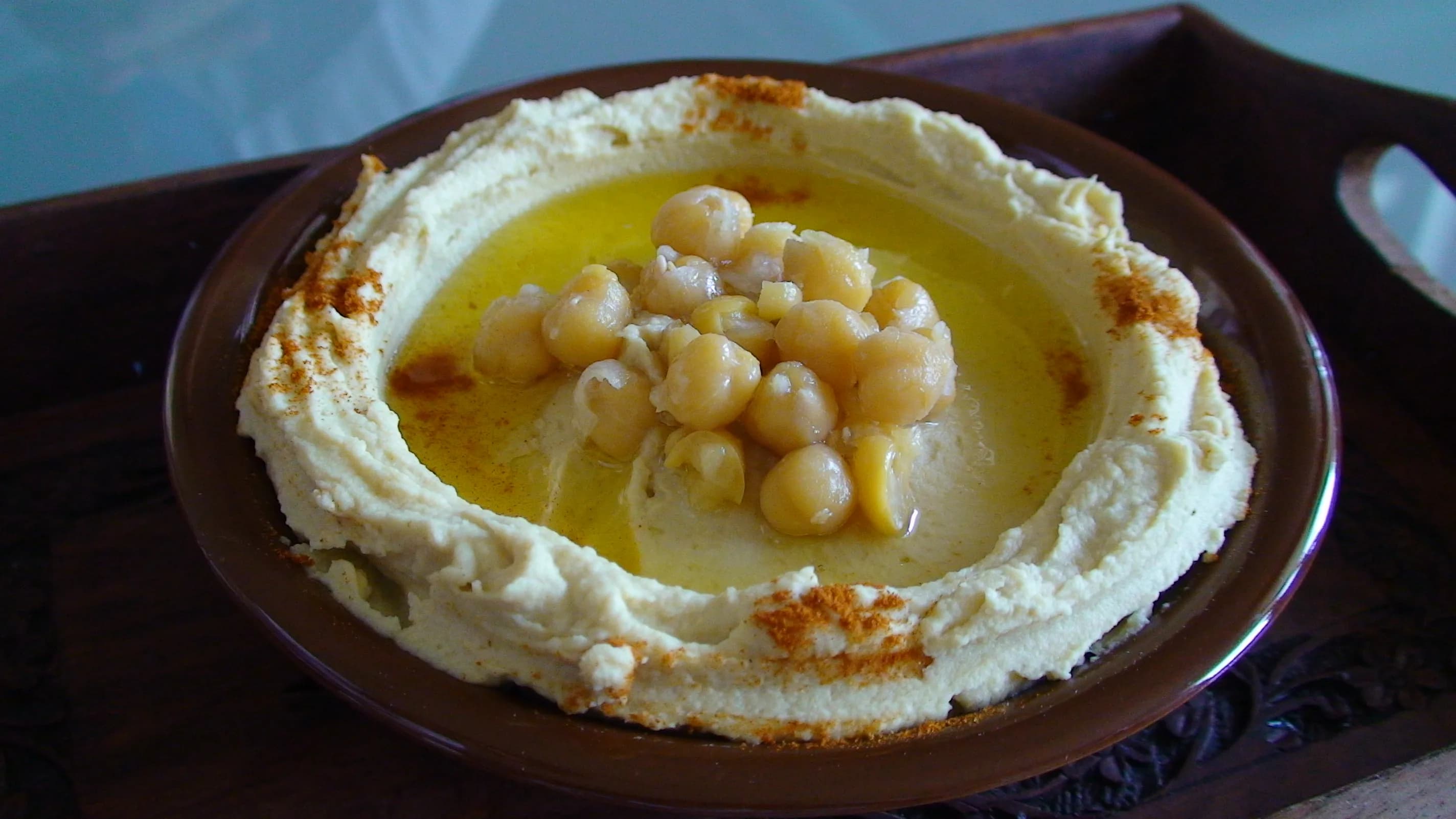
What to eat in Jordan
Float in the lowest place on Earth
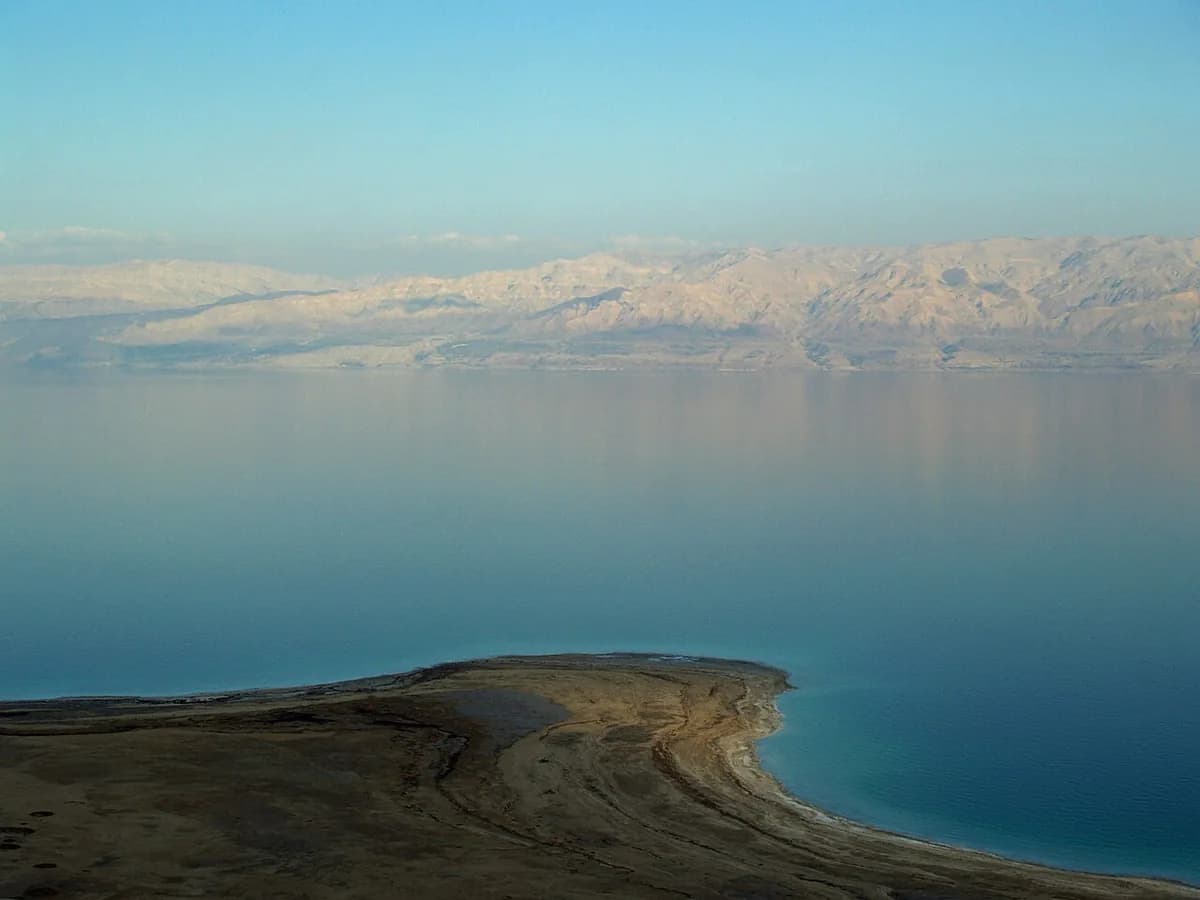
The Dead Sea sits about 430 metres below sea level, the lowest dry land on the planet, and it drops a little further every year. The water is nearly ten times saltier than the ocean. You don't really swim in it. You bob on top, unsinkable, usually while reading a newspaper for the obligatory photo.
Slather on the mineral-rich black mud, let it dry, rinse off, and your skin will genuinely thank you. A few warnings the brochures skip: do not shave beforehand, keep the water well away from your eyes (it stings ferociously), and wear sandals, because the salt crystals on the shore are sharp. Most people visit through a resort or public beach on the way between Amman and Petra, which makes it an easy half-day stop rather than a destination in itself.
Amman, Jerash and the route that ties it together
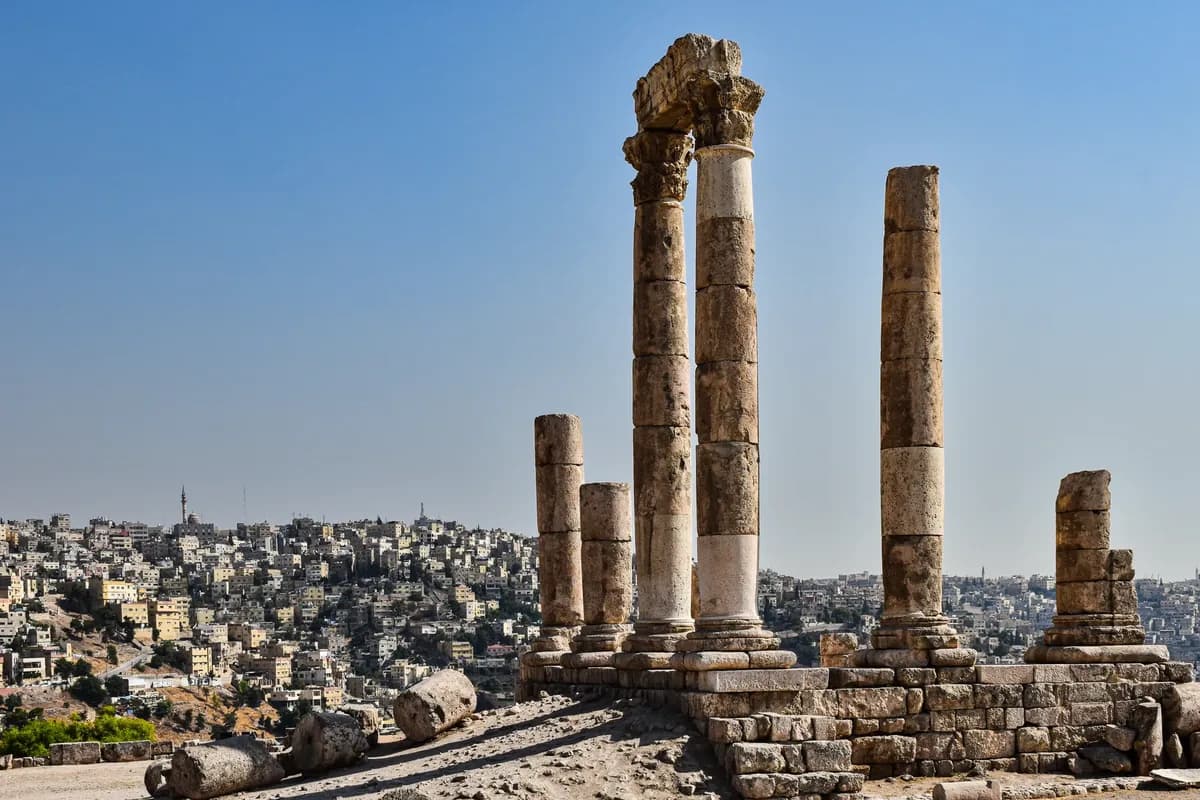
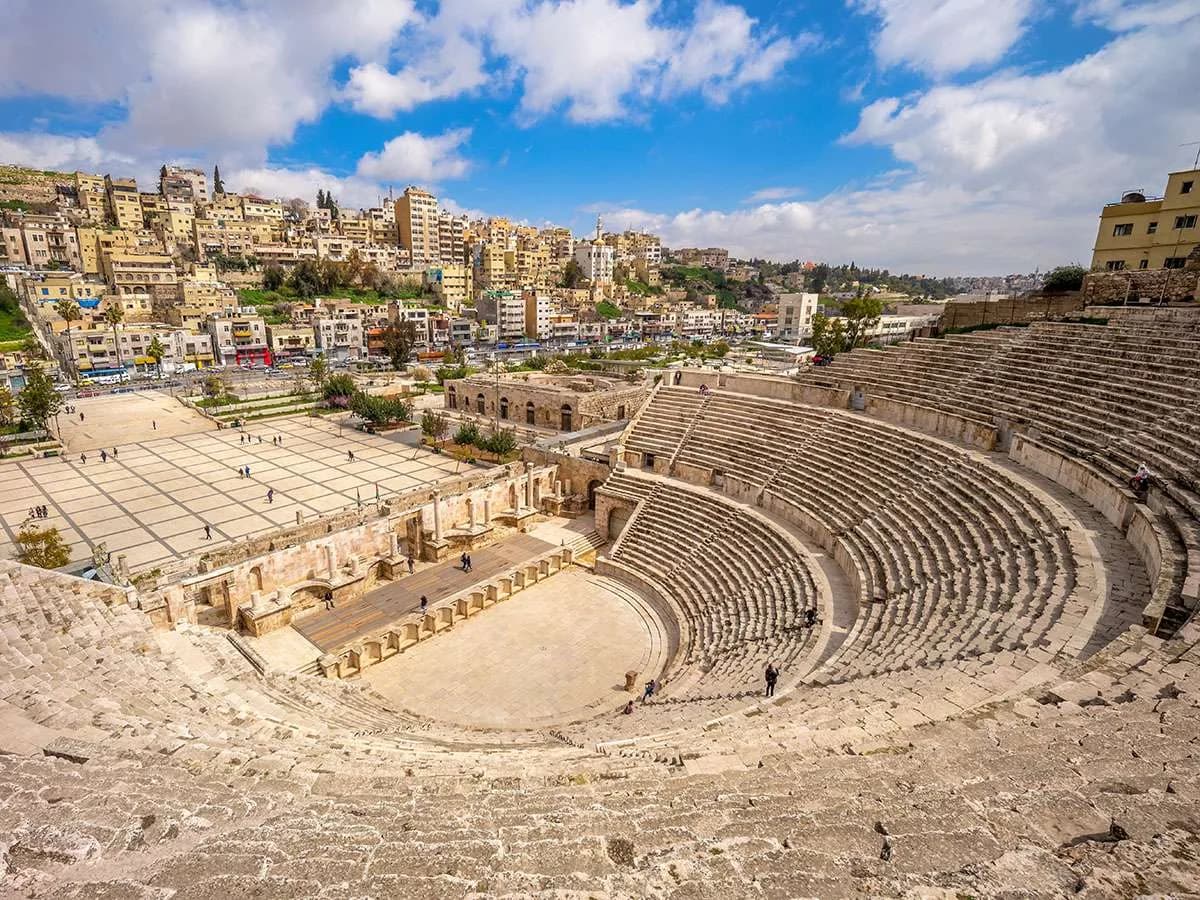
Most trips start and end in Amman, a hilly, hospitable capital built over ancient Philadelphia. The Citadel crowns the highest hill with Roman and Umayyad ruins and a sweeping view, and below it a 6,000-seat Roman theatre still hosts events. Give Amman a day, eat your way through downtown, and use it as your arrival buffer.
An easy day trip north brings you to Jerash, one of the best-preserved Roman provincial cities anywhere, with colonnaded streets, two theatres, and a vast oval forum you can walk through largely alone. The classic week-long route is a loop. Amman and Jerash first, then south down the Desert Highway or the slower, prettier King's Highway to the Dead Sea, Petra and Wadi Rum, finishing at the Red Sea resort of Aqaba if you want to dive or simply collapse on a beach. The whole circuit is compact. Jordan is smaller than it feels, and nothing is more than a few hours' drive.
When to go, what it costs, and is it safe
Spring (March to May) and autumn (September to November) are ideal: warm days, cool nights, and Wadi Rum bearable rather than blistering. Summer in the desert and at the Dead Sea is genuinely punishing. Winter can be cold and even snowy in Petra and Amman.
Jordan is not a budget destination by regional standards. The dinar is strong, Petra's standalone entry is steep (hence the Jordan Pass), and tours add up. A mid-range traveller should budget more here than they would in Egypt or Turkey. Renting a car is the best way to see the country and easier than people expect, with good roads and bilingual signage.
One word on safety. Despite the neighbourhood it sits in, Jordan is one of the most stable and welcoming countries in the Middle East, with a long track record of looking after visitors. Normal precautions are plenty. The hospitality is not a cliché either. Expect to be invited for tea more often than you can politely accept.
Visa & Entry
Do you need a visa for Jordan?
11 countries enter Jordan visa-free. Check the full requirements for your passport →
FAQ
Jordan — your questions
WorldCurio Editorial
Travel writers who plan trips the way locals would, grounded in what actually works on the ground. Visa and entry rules are cross-checked against the latest passport-index data, and climate figures use the Open-Meteo historical archive. Last reviewed June 2026. Always confirm visa and safety details with official sources before booking.
Keep exploring